
Last updated November 16, 2026
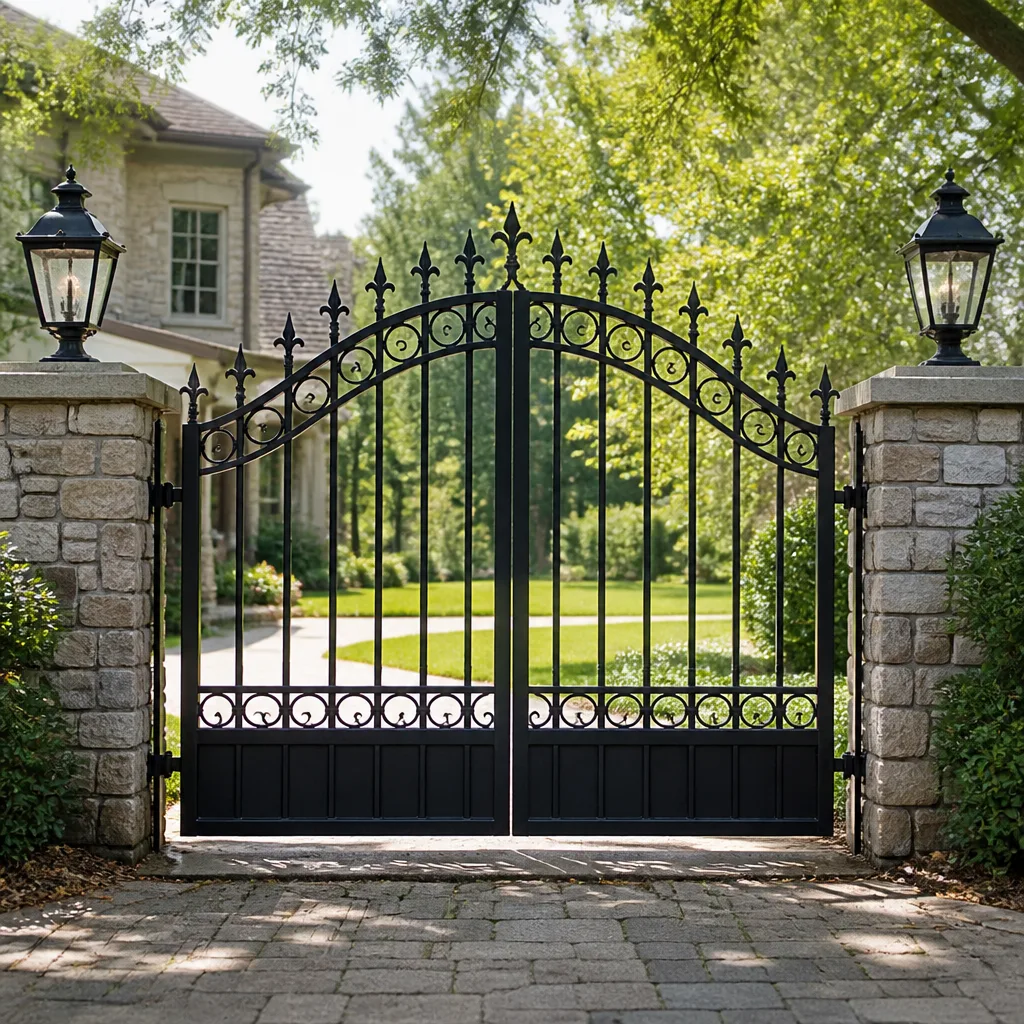 Wrought iron
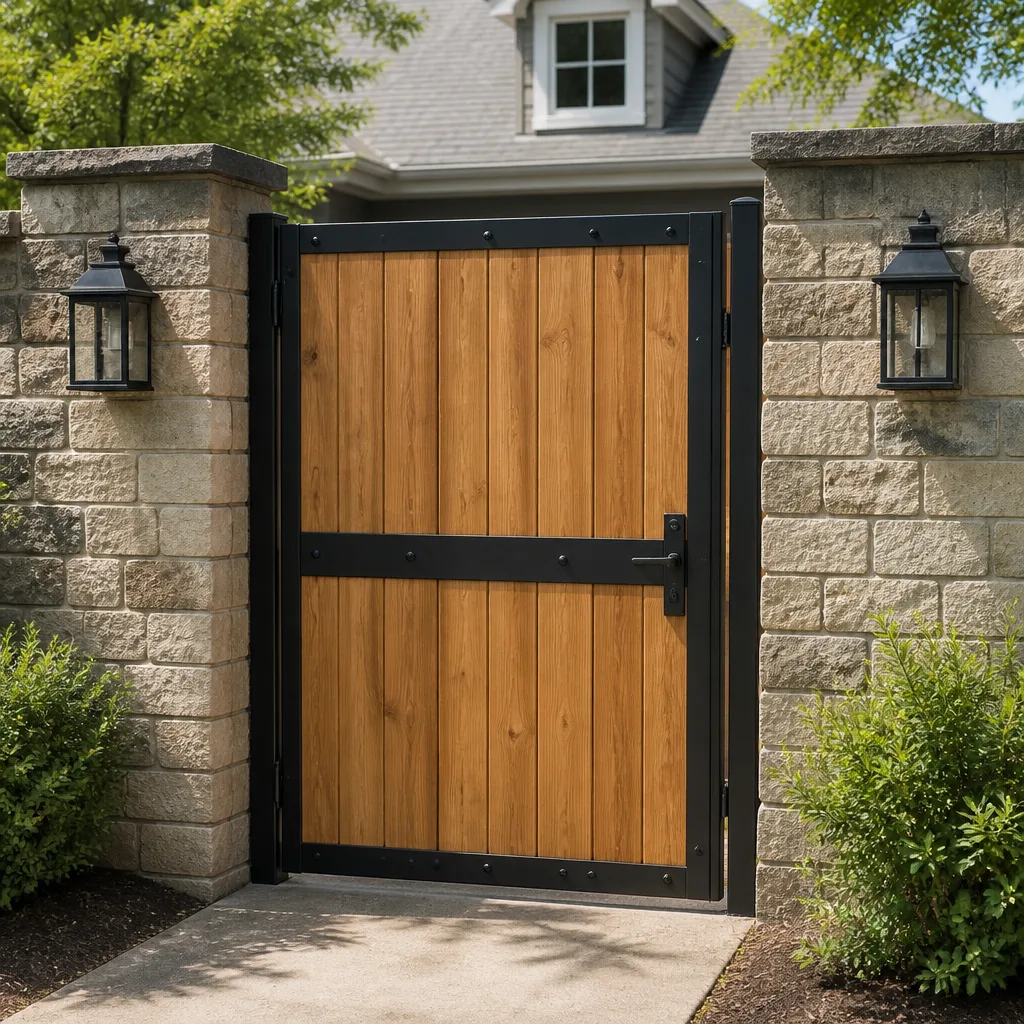 Wood & steel frame
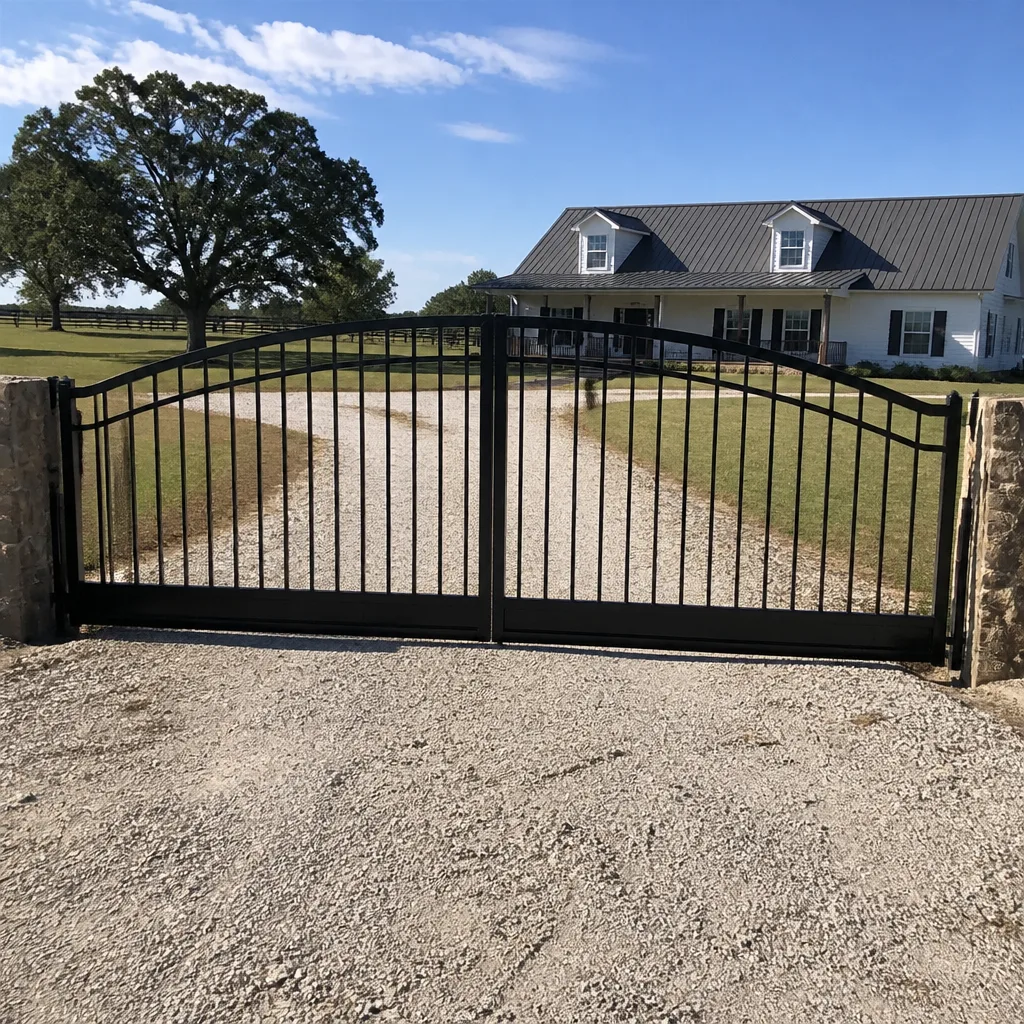 Farm & ranch
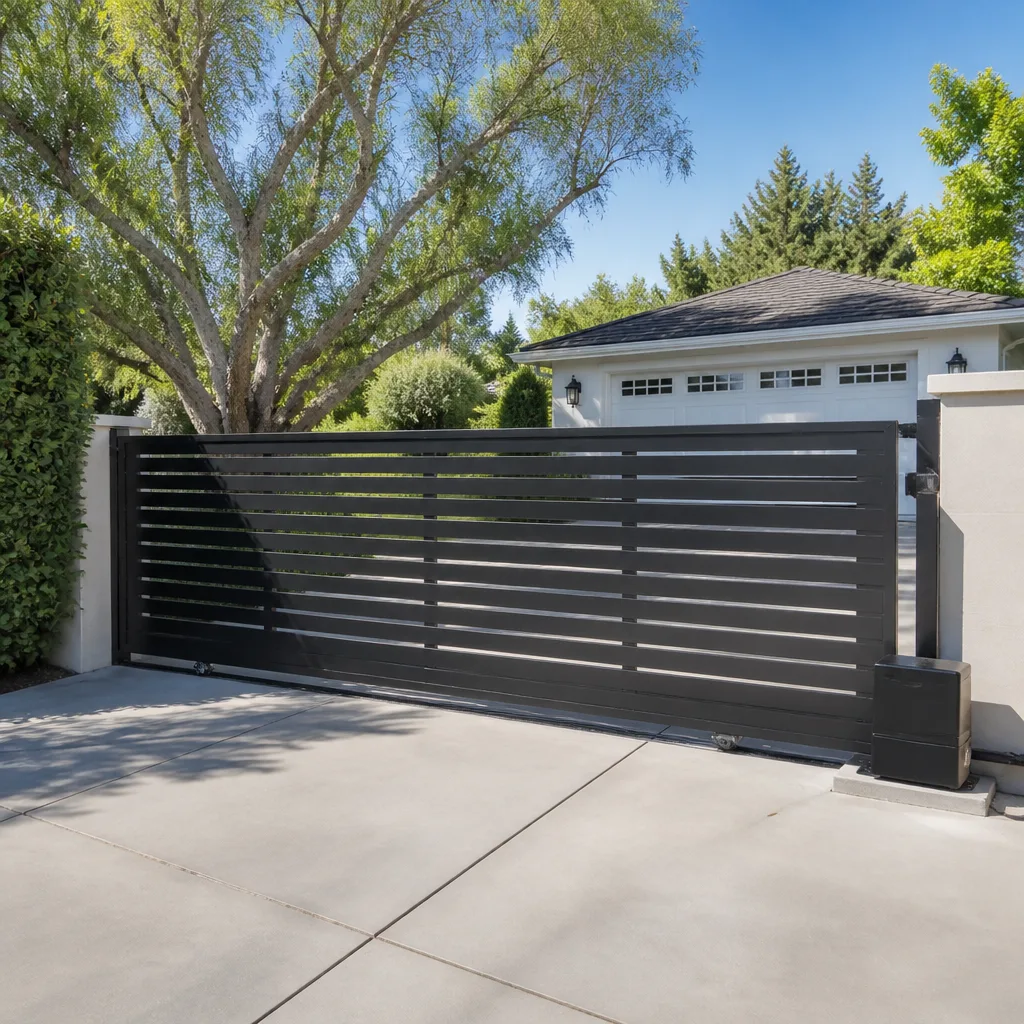 Sliding driveway gates
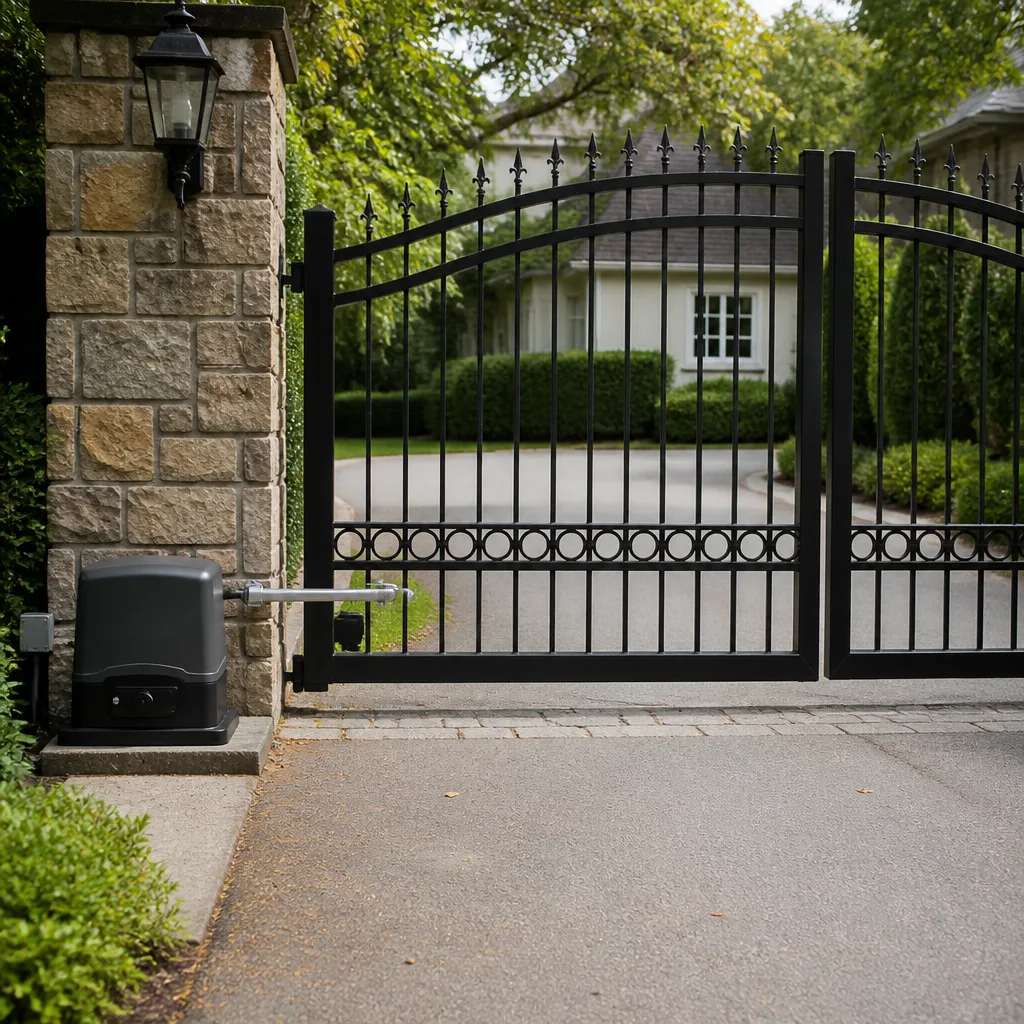 LiftMaster operators
Free on-site gate assessment - hinges, posts, and your LiftMaster or Nice gate operator checked before anything is quoted
The assessment is free and the quote is the invoice.
Get your free estimateGate Repair Maintenance Checklist for Norfolk Homeowners
Lubricating hinges twice a year sounds responsible until you realize you used the wrong lubricant and accelerated rust on a gate that needed a dry coating instead of a wet spray. That’s the trouble with generic checklists: they look thorough while quietly ignoring the conditions your gate actually lives in. In Norfolk, gates deal with tidal humidity, sandy soil that shifts under posts, and storm season that runs for six months. A checklist built for a dry inland suburb will miss all of it. What follows is the maintenance routine we’d hand a Norfolk homeowner directly: specific tasks, real pass/fail criteria, a monthly-to-annual cadence, and the record-keeping that protects your warranty and speeds up any future repair.
Quick Answer
A solid gate maintenance checklist for a Norfolk homeowner covers four things: monthly visual and safety-device checks, quarterly hardware and lubrication work, an annual structural inspection of posts, tracks and control enclosures, and pre-hurricane-season testing of the battery backup and operator. Soil movement and humidity in Norfolk mean post lean and track misalignment deserve more attention here than in most markets. Documenting each pass gives technicians a diagnostic baseline and keeps warranty claims clean.
Styles & brands we work with
- Wrought iron
- Wood & steel frame
- Farm & ranch
- Sliding driveway gates
- LiftMaster operators
Table of Contents
- Why Norfolk Gates Need a Different Checklist
- The Monthly Checklist: What to Check in Fifteen Minutes
- The Quarterly Checklist: Lubrication, Weld Seams and Enclosure Seals
- Soil-Shift and Post-Lean Checks on Flood-Prone Lots
- The Annual Checklist: Full Structural and Operator Review
- Battery Backup Testing Before Hurricane Season
- How to Keep a Maintenance Log That Actually Helps
- Common Mistakes to Avoid
Why Norfolk Gates Need a Different Checklist
Norfolk sits on ground that moves. Lots across the city hold heavy clay soils mixed with sand, and those soils swell and shift with the water table. A gate post set correctly in dry conditions can lean an inch or two by the following spring, and a rolling gate track that was perfectly aligned when installed can go out of plumb without anyone touching it. Homeowners in neighborhoods like Ghent and Larchmont often see this after a wet winter; out toward Ocean View and the lower-lying blocks near the Lafayette and Elizabeth river branches, the same thing happens faster after flooding. A checklist that only looks at hinges and operator buttons will miss it entirely.
Then there’s humidity. Norfolk’s air stays heavy through most of the year, and any unsealed metal surface will rust faster here than it would two hours inland. Weld seams, the bottom rail of a gate frame, and the enclosure around a control board are where that shows up first. This is where we’ve seen the most avoidable damage: not catastrophic failures, but slow corrosion that turns a routine repair call into a frame replacement.
It’s also worth knowing what kind of system you have before you start. A Light-duty residential operator from Ghost Controls or Mighty Mule behaves very differently from a commercial-grade DoorKing unit on an HOA entrance. Manual swing gates, sliding gates, and automated systems each have their own failure points. This guide covers the shared tasks first and flags the automated-only items as we go. If you’re unsure what’s on your property, our team at Gate Repair Norfolk can identify the system on a service visit and build a maintenance plan around it.
The Monthly Checklist: What to Check in Fifteen Minutes
Fifteen minutes once a month catches most problems while they’re still cheap to fix. The point of the monthly pass is observation, not repair: you’re looking for changes since last month and writing them down.
- Run the gate through a full open and close cycle. A healthy cycle is smooth, steady, and consistent from one end of the travel to the other. Any stutter, grind, or hesitation is a fail.
- Test the safety sensors. Wave an object in the path while the gate is closing. The gate should reverse immediately. If it doesn’t reverse, stop using the automatic function and call for electric gate repair before someone gets hurt.
- Look at the gate frame, not just the hinge side. Check the bottom rail and the corners for fresh rust blooms. You’re looking for orange dust, bubbling paint, or a rough patch that wasn’t there before.
- Check the ground under the gate. On a swing gate, look at the clearance under the free end. On a sliding gate, look at the track for grit, gravel, or a low spot that appeared after rain.
- Walk the perimeter fence line for five minutes. A fence post that shifted is often the reason a gate stops latching cleanly. The gate is the symptom; the fence post is the cause.
- Test the manual release. On an automated gate, the manual release should move freely without tools or excessive force. If it’s stiff, the operator is under more load than it should be.
- Write down anything that changed. Even “no-change” goes in the log. A baseline of “normal” is what lets a technician diagnose in one visit instead of three.
If any of the seven items fails, don’t ignore it until the next month. Small changes harden into expensive ones over the wetter stretches of the year. Most of what we see on gate repair calls started as a monthly-check fail that went unwatched for a season.
The Quarterly Checklist: Lubrication, Weld Seams and Enclosure Seals
The quarterly pass is where homeowners who think they’re being careful often make things worse. Lubrication is the biggest trap. The wrong product attracts grit, traps moisture under a film, and speeds up the rust you were trying to prevent. Rule one: match the lubricant to the moving part.
- Hinges: a PTFE-based dry lubricant for exposed hinges. It leaves a dry film that won’t hold dirt or moisture.
- Chain (sliding gates): a chain-specific lubricant, applied sparingly. Never chain wax on a chain that runs outdoors in humid air.
- Track (sliding gates): clean with a stiff brush first, then just a light film. Tracks should be clean before dry, not swimming in oil.
- Locks and latches: graphite or a dry silicone spray. Wet oils seize in cold snaps and hold salt and dirt year-round.
- Operator gear and motor components: usually none. Manufacturer-specified only. This is where backyard mechanics void warranties.
Weld seams deserve a quarterly pass of their own. Run your hand along each one (gloved) and look for a shadow of rust creeping out from inside the weld. On a Norfolk gate, this is the seam most likely to rust from the inside out because moisture sits in the weld’s microtexture. A quick touch-up coat of matching metal paint at the first sign of rust keeps a frame from becoming a replacement job.
For automated systems, the control board enclosure seal is the item that most often gets skipped. Open the enclosure only if you’re comfortable doing so and the power is off at the breaker. Otherwise, look at the door gasket and cable entries for cracks, gaps, or water staining inside. Any sign of moisture intrusion is a call-us-now item, not a wait-and-see item. Panels on a FAAC or BFT operator are not the place for a homeowner to be probing with a screwdriver; let a trained technician handle the electrical side and tell you what to fix.
Soil-Shift and Post-Lean Checks on Flood-Prone Lots
Norfolk’s combination of heavy clay soils and low-lying blocks near tidal water means post lean is a maintenance item, not a one-time install concern. A lean of a quarter inch is cosmetic. A lean of an inch or more is a structural flag that will show up next as a gate that drags, a track that misaligns, and eventually an operator that burns out from strain.
Checking for lean is simple. Use a spirit level against two faces of each gate post and the fence post nearest the latch:
- Place the level vertically on the flat side of the post facing the drive.
- Read the bubble. More than the level’s own margin away from center is worth noting.
- Repeat on the perpendicular face to check lean in the other direction.
- Photograph the bubble position with the post in frame. That’s your baseline for next quarter.
- Compare to last quarter’s photo. If lean is increasing, the post foundation is losing grip, not just settling.
On a sliding gate, post lean shows up as a track that’s no longer level. Slide the gate to various positions by hand and watch for the gate to lift, drop, or rock. A track that is out of level by more than a small fraction will wear the rollers faster than anything else on the gate.
On low-lying lots near the river branches, check after every significant rain event. Water that pools at the base of a post is a red flag; over a few seasons that water undermines the footing and the post moves. Regrading around the base is often enough if you catch it early. If the post has already shifted enough to affect the gate’s travel, that’s a footing issue, not a lubrication issue, and it belongs with a technician who can assess the foundation correctly. Our technicians have up to 9 years of experience with Norfolk soil conditions and know what to look for on a leaning post versus a settling one.
The Annual Checklist: Full Structural and Operator Review
Once a year, do a full walkthrough with time and a notebook. The annual pass is the one that saves the most money over ten years, because it catches the slow structural problems and lets you plan repairs before they become emergency calls.
- Full structural check: all posts, hinges, brackets, and mounts. Photograph each. Compare to last year.
- Frame and paint review: rust blisters, chips, weld-seam corrosion. Plan touch-up work before the wet season.
- Operator service: gearbox oil level (if applicable), motor mounts, drive components, limit-switch adjustment. This is usually best done by a technician.
- Safety reverse test twice: once with the photoelectric sensors, once with the physical obstruction test (a proper block, not a hand or a body).
- Battery and power review: covered in the next section. Do this well before hurricane season.
- Access control and keypad review: change access codes, check the keypad battery, confirm the auto-close timer is working.
- Manual operation test: disconnect the operator and open and close by hand. Any binding is a mechanical issue.
- Documentation update: file the photos, log the date, and note anything you plan to fix.
On commercial-grade systems like a Linear or DoorKing entry installed on an HOA or a small commercial property, the annual pass should also include the access control logs. Reading the logs helps a property manager notice a gate that’s short-cycling or a sensor that’s tripping frequently, both of which signal a problem before the operator fails outright.
Battery Backup Testing Before Hurricane Season
Hurricane season in Norfolk runs June through November. Any automated gate that’s the only way in and out of a property needs a battery backup that reliably works when the grid doesn’t. Testing in May, not August, is the difference between having time to replace a battery and not.
The test itself takes about ten minutes:
- Confirm the battery is connected and the charger is working. Most operators show a status light or a beep pattern.
- Kill power to the operator at its dedicated breaker. Not at the panel main; at the operator’s own breaker if it has one.
- Open and close the gate twice on battery power alone. If the gate slows noticeably on the second cycle, the battery is weak.
- Time the full open and full close. Compare to the operator’s spec. A cycle time that’s stretched is the earliest sign of a dying battery.
- Restore power and confirm the charger resumes. Listen for the charger to kick on.
- Note the test date and results in the log.
Some problems show up only on the battery test. A lift gate operator that cycles perfectly on mains power can stall on battery because the battery is the weakness, not the motor. Others show the reverse: the battery works but the charger has been dead for months. Both are worth knowing before a storm.
Generators and surge protectors interact with gate operators in ways that aren’t always obvious. If you run a portable generator during outages, make sure the operator’s charger has clean power or is disconnected from the generator altogether. Powering the operator’s logic board from a generator without a surge protector is a common way to end up needing a control-board replacement.
How to Keep a Maintenance Log That Actually Helps
A maintenance log does two things: it protects your warranty and it gives a technician a diagnostic baseline they’d otherwise have to build from scratch. Most homeowners keep a log that’s too vague to be useful. “Checked gate, all fine” tells a technician nothing. A useful entry is specific enough that a stranger could read it and rebuild a timeline.
Keep it in one place: a binder by the door, a note on your phone, or a shared file for HOA managers. Every entry needs six fields:
- Date and time. Even rough times help.
- Weather in the last week. Rain event, windstorm, freeze. Norfolk weather affects gates directly.
- Cycle test results. Smooth / stuttered / slowed. Latch or reverse behavior.
- Visual findings. Rust, lean, grit in the track, moisture in the enclosure. Be specific.
- Actions taken. Lubricant applied, screws snugged, nothing done.
- Photos. One of the gate closed, one of the operator, one of any anomaly. Same angles each time.
A log like this is what makes a warranty claim defensible if something fails unexpectedly. It’s also what lets a technician arrive already knowing which brand operator they’re working on, which control board logic they should expect, and whether a mechanical issue has a pattern. Our diagnostic process for Norfolk homeowners starts from whatever history we’re given, so the more specific your log, the faster the fix.
For HOA managers and commercial property owners, keep one log per gate, not one log per property. A seven-gate property with one combined log is nearly impossible to diagnose later.
Common Mistakes to Avoid
- Using WD-40 as a general lubricant. It’s a solvent and water displacer, not a long-term lubricant. It attracts grit and dries out the part it was meant to protect. On Norfolk’s humidity, the mistake shows up as accelerated hinge wear within a couple of seasons.
- Skipping the battery test because the gate “works fine.” A working gate on mains power says nothing about whether the battery will carry it through a storm-season outage. Test in May, not when you need it.
- Ignoring quarter-inch post lean as “settling.” On clay-heavy soil, a small lean grows season by season. It’s the earliest fixable sign of a foundation issue, and the cheapest one to correct.
- Probing an operator’s control board without turning off the breaker. Low-voltage electronics still carry line-voltage feeds from the mains side. This is a genuine electrocution risk, not a cautious warning. Call a technician for the inside of the box.
- Adjusting safety sensors without re-testing them. Sensors that are bumped or moved out of alignment can fail to detect objects while still showing a green light. Always run the reverse test after any adjustment.
- Pressure-washing the control enclosure. The enclosure is weather-resistant, not waterproof under pressure. A high-pressure stream will push water past gaskets that would have held out rain.
- Painting over rust without treating it. Rust that’s painted over keeps spreading underneath. Sand to bare metal, treat, then paint. On a weld seam, this is the difference between a touch-up and a frame replacement.
See the difference
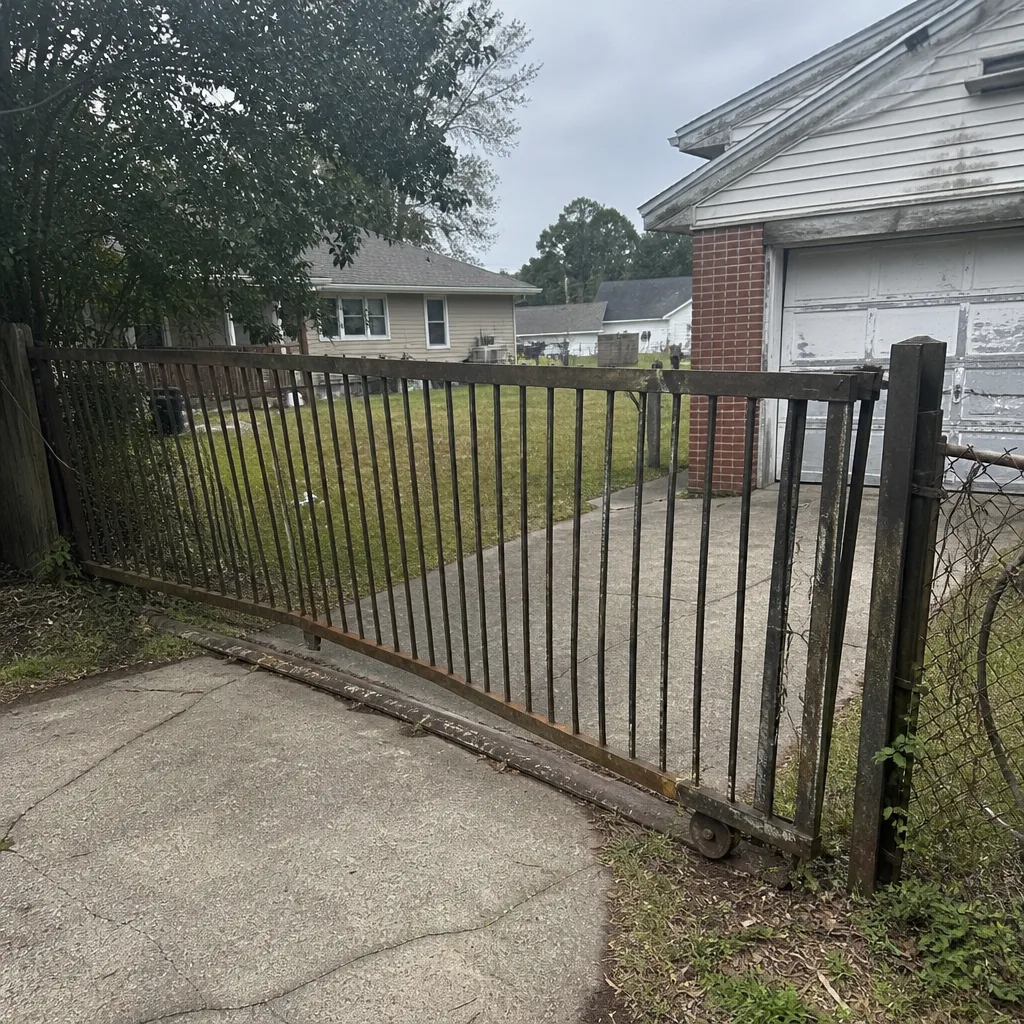 Before
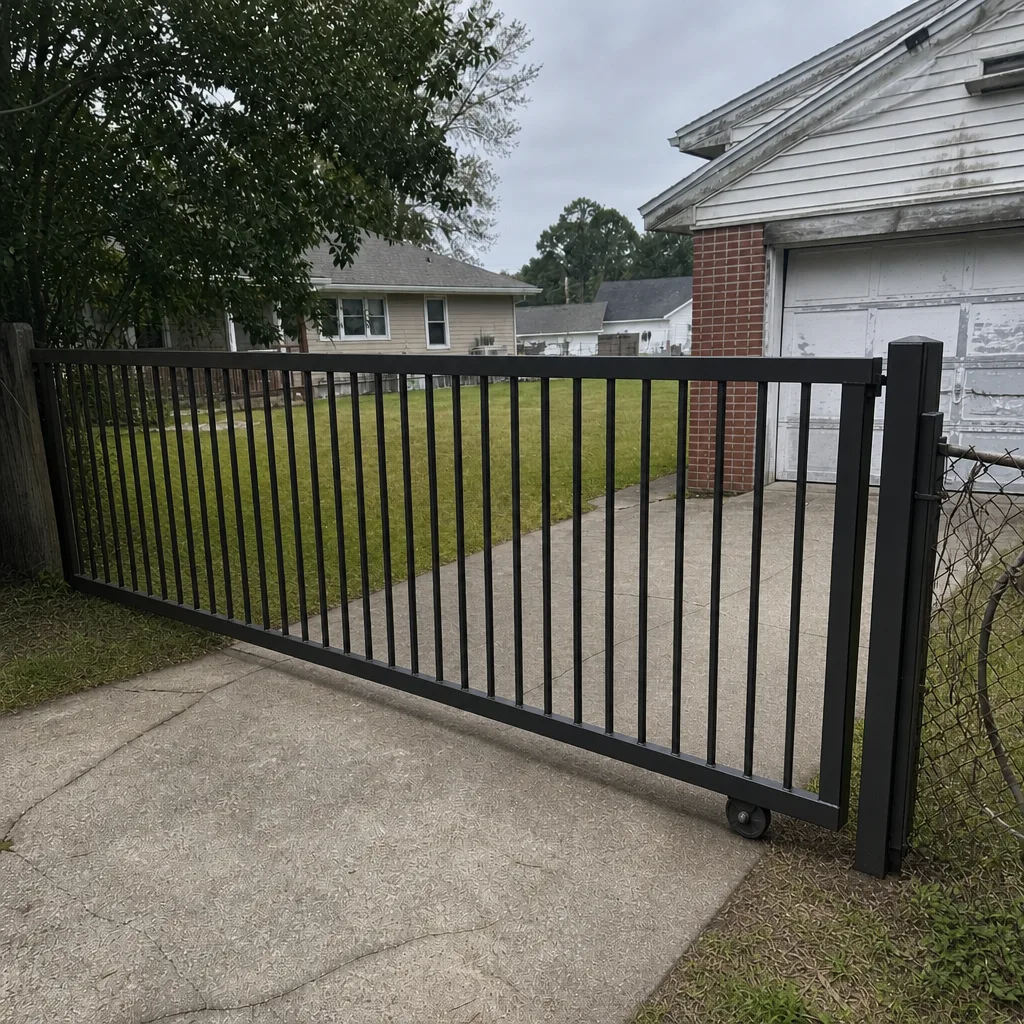 After
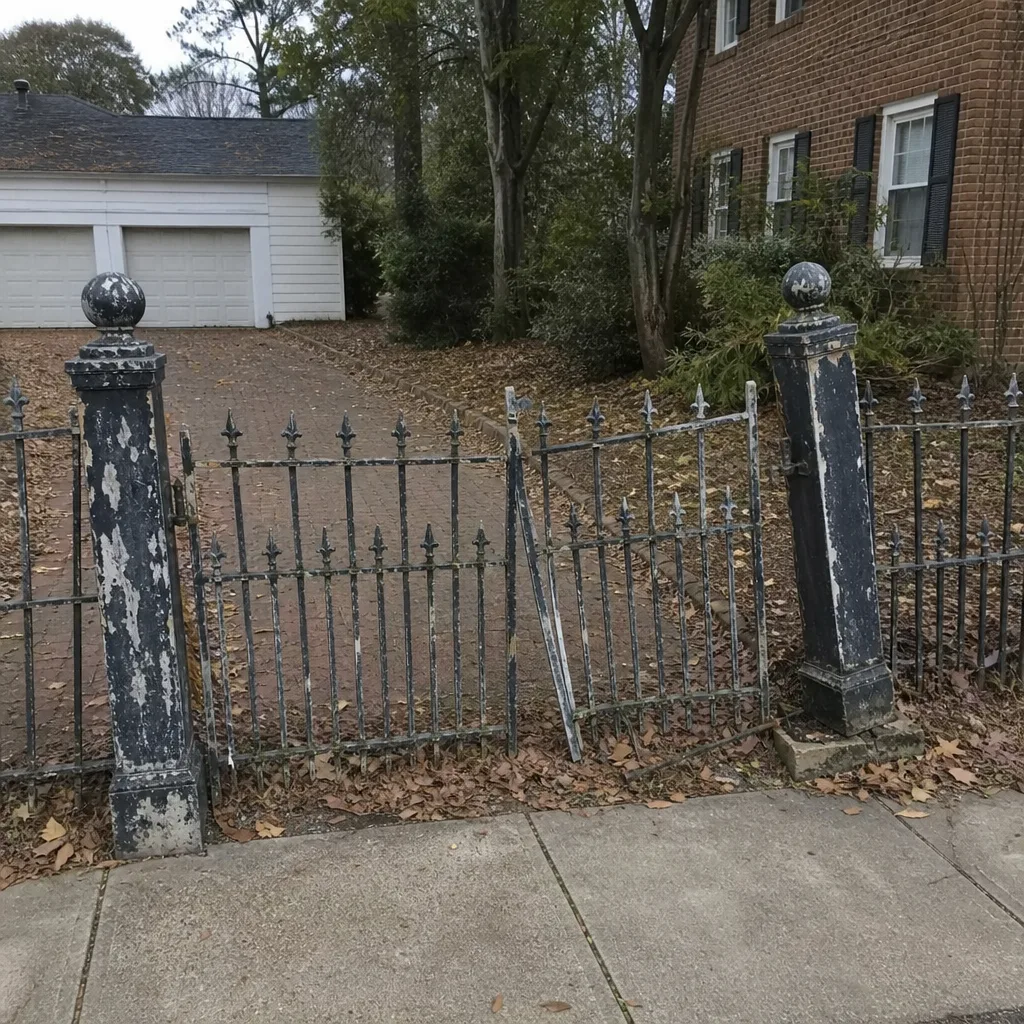 Before
 After
 Before
 After
When to Call a Professional
Some jobs are maintenance. Some are repairs that a homeowner shouldn’t attempt. Call for help in these situations: any change in the safety sensor’s behavior, any sign of moisture inside the control enclosure, any structural lean that’s grown since the last check, any grind or stutter in the operator that wasn’t there before, and any mechanical binding when you operate the gate by hand with the operator disengaged. If the gate has stopped responding to a remote or keypad, that’s usually an operator or access-control issue rather than a mechanical one, and the fix depends on the specific brand’s logic.
Gate Repair Norfolk offers free estimates in Norfolk. Call (844) 410-6351. We answer 24/7. Fast dispatch from 7am to 7pm, Sunday through Friday. If you’re in the middle of a maintenance routine and you’ve hit a problem you can’t categorise, that’s exactly the call to make.
Frequently Asked Questions
A gate maintenance checklist for Norfolk should include monthly cycle and sensor tests, quarterly lubrication and weld-seam inspection, annual structural review with post-lean measurement, and a battery backup test before hurricane season. The Norfolk-specific items are soil-shift checks, control enclosure seal inspection, and rust review on weld seams and lower frame rails. A written log for every pass is the fifth piece and it’s the one that makes everything else more useful.
Lubricate exterior moving parts once per quarter using a PTFE-based dry lubricant for hinges, a chain-specific product for chains, and a light dry film on sliding tracks. Norfolk’s humidity means wet oils will attract grit and hold moisture. Never use general-purpose spray lubricants on hinges or tracks, and never lubricate the inside of the operator housing unless the manufacturer specifies it.
Post lean in Norfolk comes from soil movement. The city’s heavy clay soils swell and shrink with the water table, and low-lying lots near the river branches are especially prone to it after heavy rain. A quarter inch of lean is settling; anything growing between quarterly checks points to a foundation issue. Regrading around the base catches it early, but an established lean needs a technician to assess the footing.
Kill power to the operator at its dedicated breaker, then cycle the gate open and closed twice on battery alone. If the second cycle is noticeably slower or the cycle time is stretched compared to the operator’s spec, the battery is weak. Restore power afterward and confirm the charger resumes. Test in May, before Norfolk’s hurricane season, so you have time to replace a failing battery.
You can and should handle the monthly observation and sensor tests, quarterly lubrication of exterior moving parts, and the maintenance log. You should not open the control enclosure, probe control boards, or adjust operator internals. The mains side of an operator carries dangerous voltage, and a misadjusted limit switch can strain the motor or defeat a safety feature. Brand-specific diagnostics on a FAAC, BFT, Ghost Controls, or similar operator is a service-visit job.
Before a storm, run through the battery test early in the week, confirm the gate’s manual release moves freely, and clear any debris from the track or under the swing path. If a storm is imminent, park the gate in the open position if your property allows it; wind will pass through the opening rather than push against the panel. After the storm, rinse the lower frame rails and walk the fence line for shifted posts.
The Bottom Line
Norfolk gates fail in ways that generic checklists don’t catch: shifted posts, humid weld-seam rust, and battery failures timed badly against storm season. The routine that works is monthly observation, quarterly lubrication with the right products, annual structural review, a May battery test, and a log that’s specific enough to help a technician. Most of this is fifteen minutes a month plus a longer pass once a quarter. Do that consistently and you’ll stay ahead of the repairs that turn a small fix into a full replacement.
When any of the pass/fail tests goes wrong, or when you’d rather have a technician do the annual review and build the log for you, call Gate Repair Norfolk at (844) 410-6351 for a free estimate. We answer 24/7. Fast dispatch from 7am to 7pm, Sunday through Friday. We work on the brand you already have, from Mighty Mule to FAAC, and a technician who knows your operator is faster to the right answer than one who’s guessing.
Written by the team at Gate Repair Norfolk.