
Last updated November 16, 2026
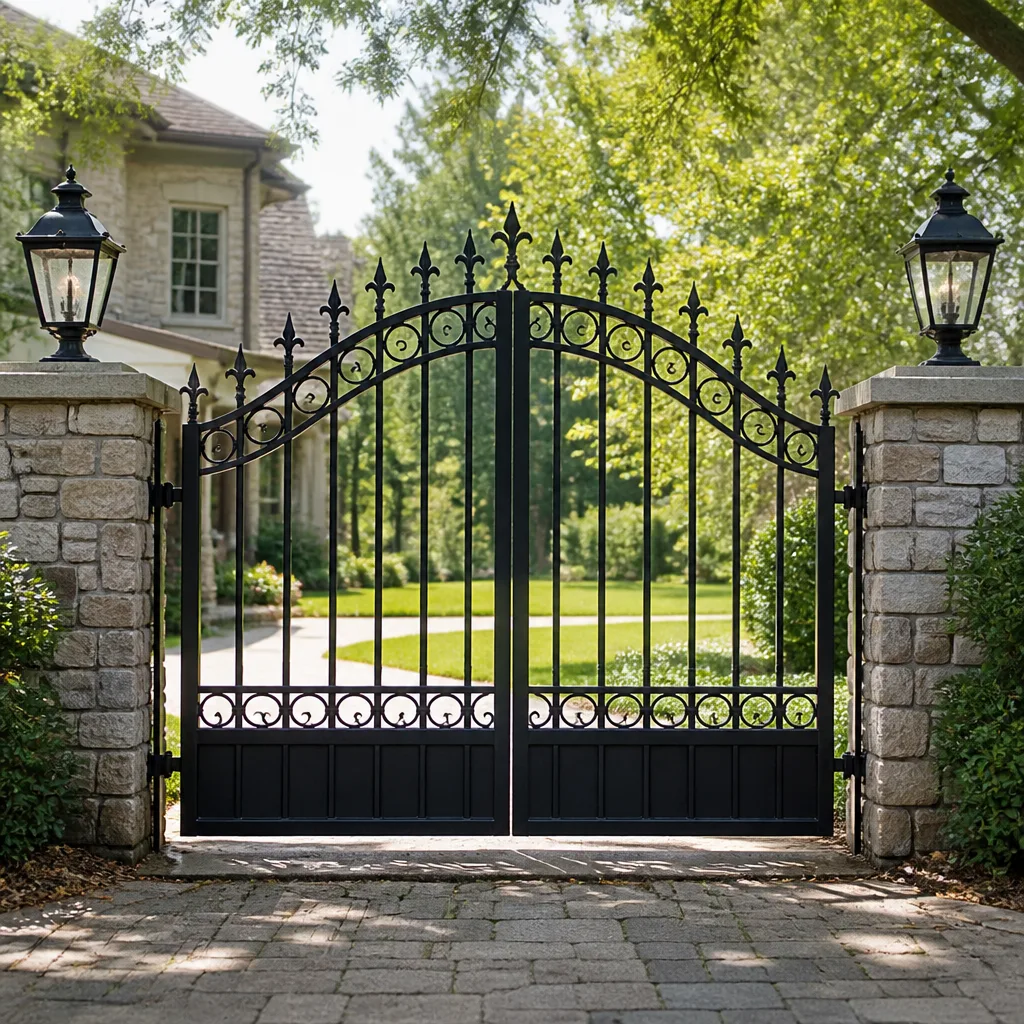 Wrought iron
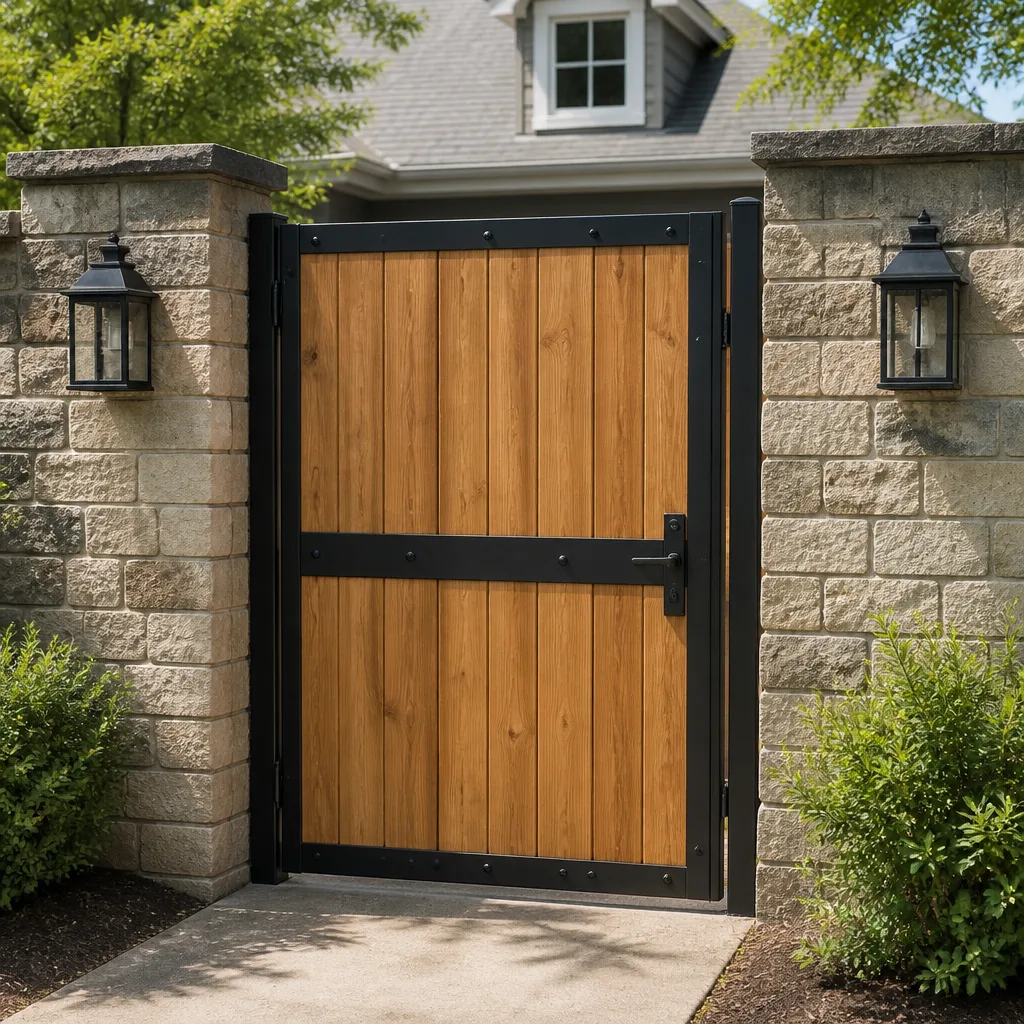 Wood & steel frame
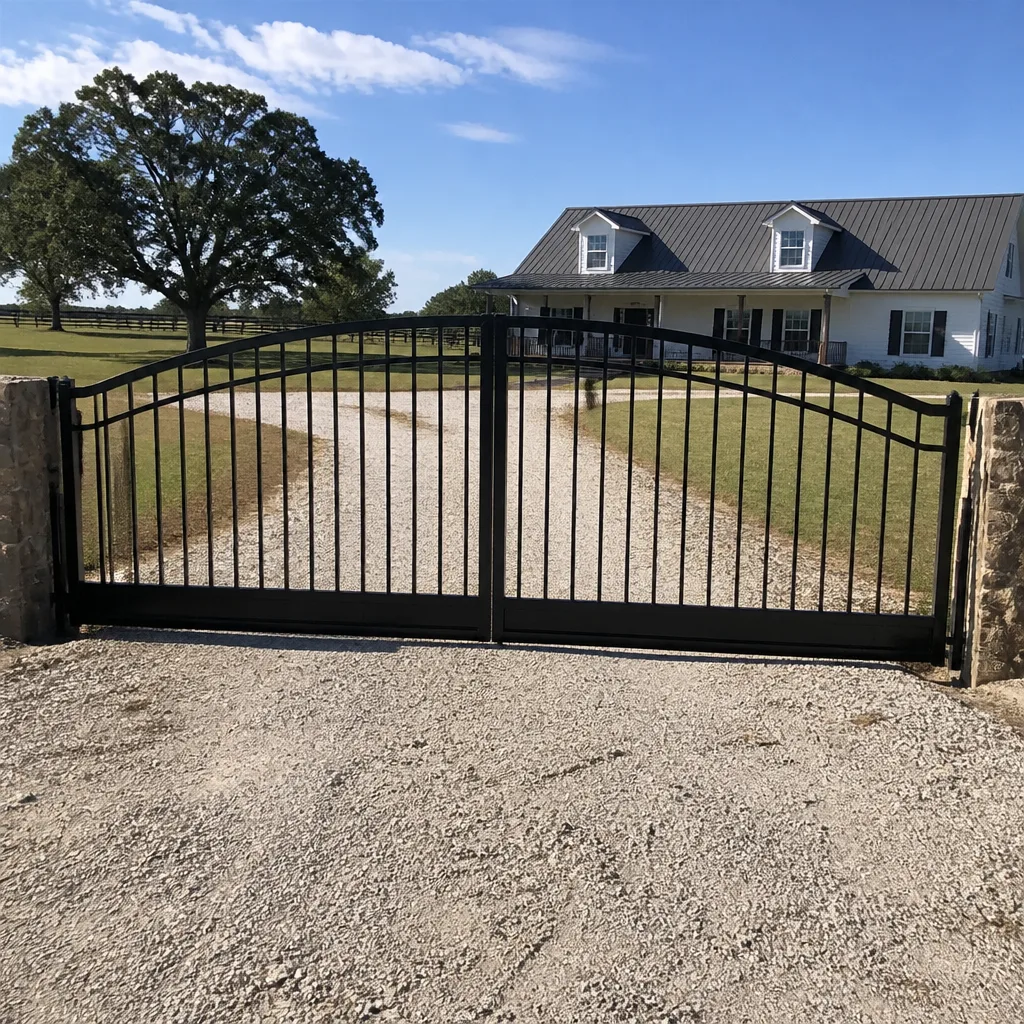 Farm & ranch
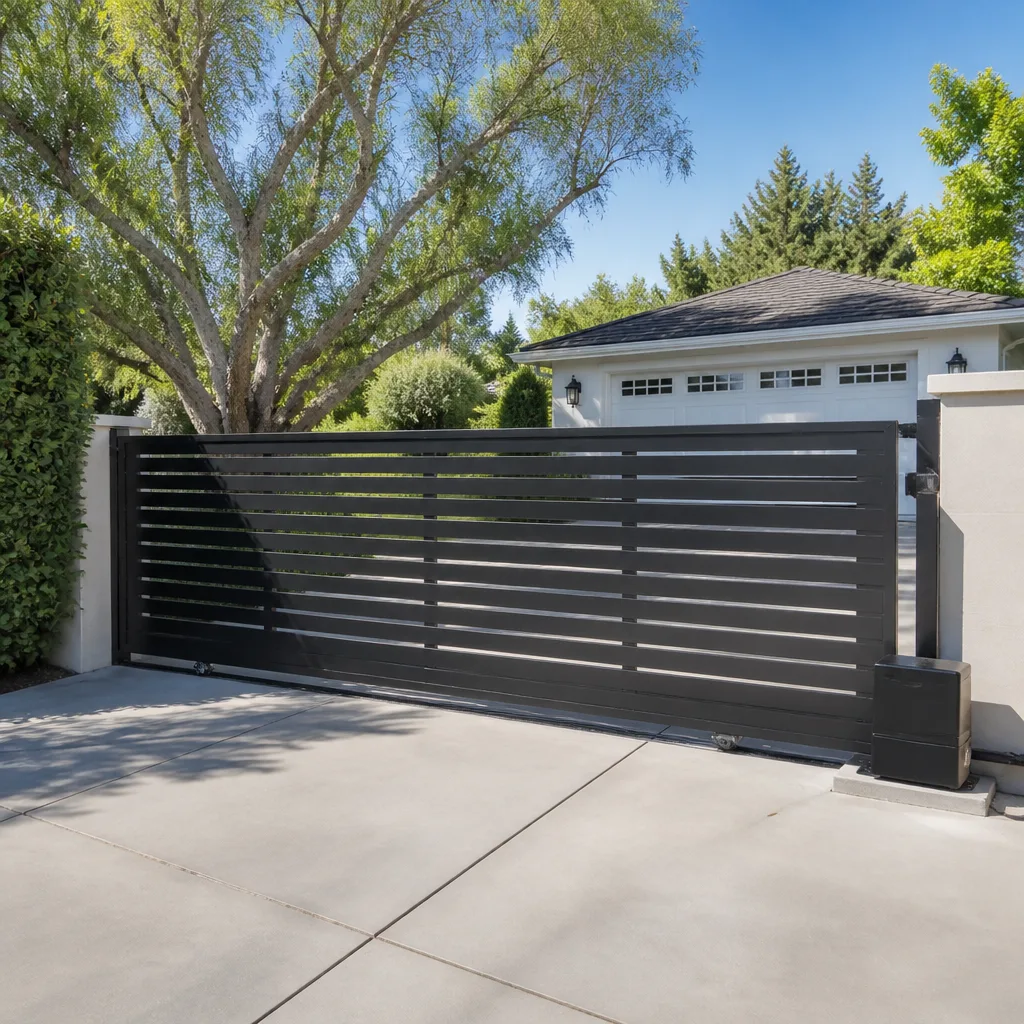 Sliding driveway gates
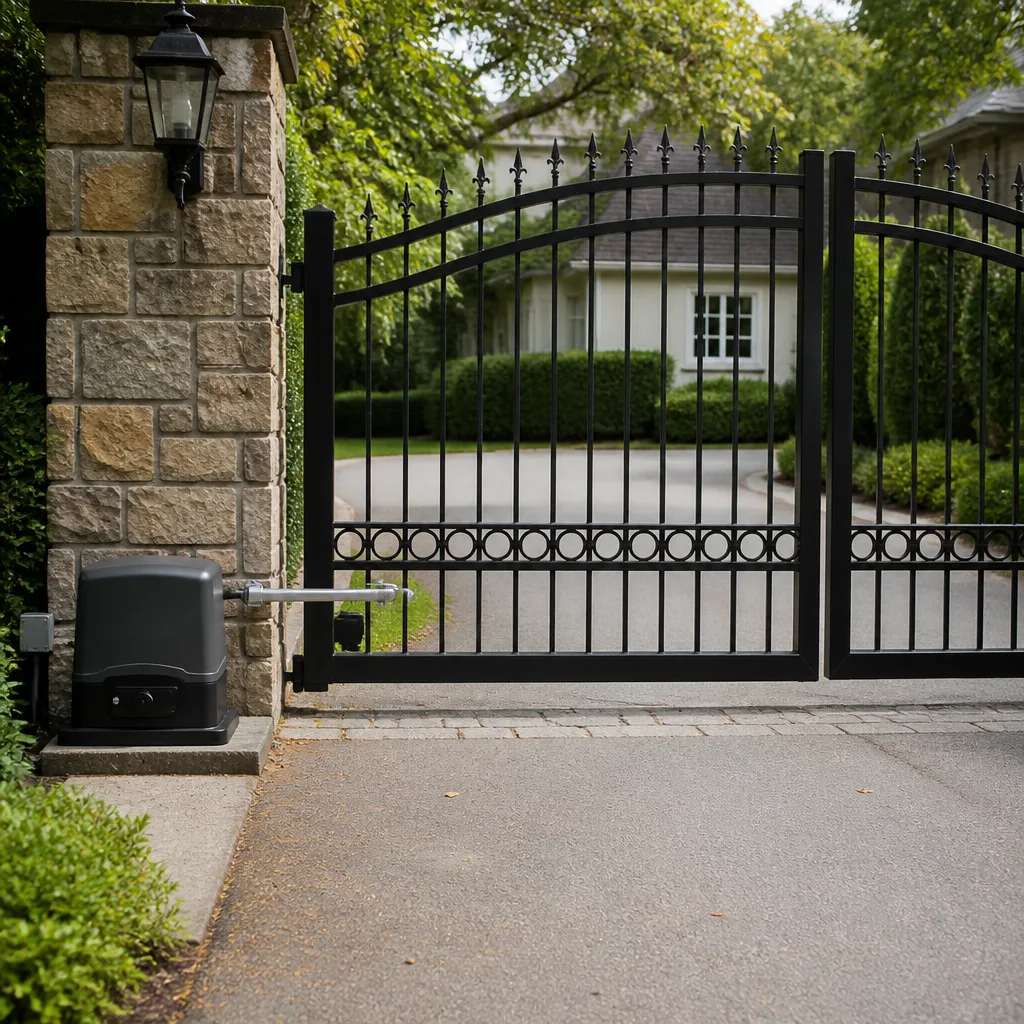 LiftMaster operators
Free on-site gate assessment - hinges, posts, and your LiftMaster or Nice gate operator checked before anything is quoted
The assessment is free and the quote is the invoice.
Get your free estimateGate Repair Troubleshooting in Norfolk: Common Problems and How to Fix Them
A gate that reverses before it closes isn’t broken. It’s communicating. Something in its obstacle-detection loop is telling the control board there’s a car in the way, and the board is doing exactly what a safety system should do. The instinct for most people is to assume the motor failed and start shopping for a replacement. That instinct is usually wrong, and it’s expensive. Almost every gate failure traces back to one of five root causes, and the sooner you can place your symptom in the right category, the sooner the gate works again. This guide walks through those five categories, the checks that separate them, and what to leave to a specialist in Norfolk.
Quick Answer
Gate problems in Norfolk usually fall into one of five categories: power supply, control board, sensor and safety loop, mechanical drive components, or physical obstruction. You can safely rule out obstruction and check battery backup yourself. Loop detectors, board replacement, and motor torque calibration need a specialist who works on your specific brand. Coastal humidity in Norfolk speeds up corrosion on limit switches and sensor wiring, which makes low-voltage wire problems more common here than in drier places.
Styles & brands we work with
- Wrought iron
- Wood & steel frame
- Farm & ranch
- Sliding driveway gates
- LiftMaster operators
Table of Contents
- The Five Fault Categories That Explain Almost Every Gate Failure
- Reading Your Gate’s Symptoms Like a Specialist
- How Norfolk Humidity Attacks Limit Switches and Sensor Wires
- Why the Same Fault Reads Differently on a LiftMaster and a FAAC
- The Two Checks That Are Safe for You (and Three That Aren’t)
- When a Dead Gate Is Really a Low-Voltage Problem From the House
- Manual and Mechanical Gate Problems
- Commercial and HOA Gate Systems
The Five Fault Categories That Explain Almost Every Gate Failure
Every automated gate problem we run into in Norfolk lands in one of five buckets. Learning the buckets is the single most useful troubleshooting skill a gate owner can develop, because a symptom tells you which bucket to open first. Most wasted money on gate repair comes from opening the wrong bucket: replacing a motor when the problem is a sensor loop, or buying a new board when the fault is a corroded limit switch.
Here’s the framework, with the quick test that separates each category:
- Power supply. The gate is completely dead, the operator’s LED indicators are dark, or the board resets intermittently. Quick test: check whether the operator’s power supply is live at its terminal and whether your home breaker for the gate circuit tripped. If the breaker resets and the gate still won’t power, the problem sits inside the operator’s supply path.
- Control board. The gate moves without command, ignores the remote, or shows a blink code with no other pattern. Quick test: read the board’s diagnostic LED. Every manufacturer has its own blink sequence, and the pattern is a direct message. Without knowing the brand’s code, you’re guessing.
- Sensor and safety loop. The gate opens but reverses before closing, stops halfway, or won’t close at all unless you hold the button. Quick test: look for anything in the photo-eye path or loop zone. If the path is clear and the gate still reverses, the sensor circuit itself is suspect.
- Mechanical drive components. The motor hums but the gate doesn’t move, the gate drags or hesitates, or you hear grinding or clicking. Quick test: disconnect the operator (only if your system allows manual release) and see whether the gate slides or swings freely by hand. A gate that binds by hand has a mechanical problem, not an electrical one.
- Physical obstruction. The gate strikes something, stalls at the same repeatable point, or leaves track marks. Quick test: inspect the travel path for debris, a lifted wheel, a sagging gate leaf, or a track that’s bent or blocked.
Most of these tests tell you the category. They don’t tell you the fix, and that’s where it helps to know a specialist. When you’re ready to move from diagnosis to repair, our gate repair page covers what a full visit looks like.
Reading Your Gate’s Symptoms Like a Specialist
Diagnosis in the field isn’t magic; it’s a pattern match. A gate that stalls in the same spot every cycle is a mechanically different problem from a gate that stalls randomly. A gate that reacts to rain is telling you something about its enclosure and wiring, not its motor. Reading symptoms in order saves money because it stops a technician, or a homeowner, from chasing a symptom instead of a cause.
Here’s how the common Norfolk doorway symptoms usually map to a category:
- Opens partway and reverses: sensor loop, photo-eye, or control board believing it sees an obstacle.
- Dead in both directions, no LED on the board: power supply or board fuse.
- Remote works sometimes, button on the operator works always: the fault is upstream of the board, usually the receiver, antenna, or remote battery.
- Motor runs, gate doesn’t move: mechanical drive, usually a stripped gear, worn chain, or slipping manual-release mechanism.
- Gate closes then the operator keeps driving: limit switch, which is the usual victim of long-term humidity exposure.
- Gate works cold and fails warm, or vice versa: a marginal board or a loose terminal that expands and contracts with temperature.
Symptom mapping is not the same as diagnosis. It narrows the field to one bucket, which is the point. A specialist then tests inside that bucket with the brand’s own service literature. If a symptom feels like a mechanical failure but the gate also reverses intermittently, both categories may be involved, and that’s common on gates that have been running without a service in a while.
How Norfolk Humidity Attacks Limit Switches and Sensor Wires
Coastal humidity is the most underrated factor in gate reliability, and it’s the reason Norfolk gates break differently from gates inland. The mechanics aren’t usually the weak point. The electrical interfaces are. Humidity doesn’t destroy a gate; it compromises the small components that tell the operator where the gate is and whether it’s safe to move.
Three failure patterns show up again and again on Norfolk gates:
- Limit switch corrosion. Limit switches sit low on the operator or on the gate frame, exposed to damp air. Contacts corrode, resistance climbs, and the switch stops reporting cleanly. The symptom looks like a board failure or a motor fault, but the fix is a limit switch or its wiring.
- Sensor wire and photo-eye lens degradation. Lens fog, condensation, and wire terminations take on moisture. A photo-eye that reads correctly one day and falsely reverses the next is usually a moisture problem, not a sensor failure.
- Loop detector sensitivity drift. Wire in the driveway loop is insulated, but moisture intrusion at splices changes the loop’s electrical behavior, which can make the detector miss a car or trigger without one.
The practical takeaway: in Norfolk, when a gate acts up intermittently, the first question isn’t “what broke?” It’s “what got wet?” That reframe alone saves owners from buying parts that weren’t faulty. If you want a second opinion on a symptom, our electric gate repair page describes how we approach a diagnostic visit and what we check before recommending parts.
Why the Same Fault Reads Differently on a LiftMaster and a FAAC
Two gates can have the exact same underlying fault, a stuck limit switch, for instance, and behave completely differently because their control boards interpret the fault differently. That’s the single most common reason a homeowner with a gate issue asks “is it the board?” and comes back with the wrong answer. The board isn’t malfunctioning; it’s reporting a fault the way its manufacturer designed it to.
Some real differences we work with:
- A LiftMaster residential slide operator typically signals faults with a blink sequence, and the pattern maps to a specific subsystem: obstacle, limit, safety input, or power. Read the pattern first before touching anything.
- FAAC commercial-grade boards often log a fault code and hold the gate in a safe state rather than cycling repeatedly. On a FAAC, the first visit is about reading the log, not swapping parts.
- Mighty Mule operators, common on lighter residential swing gates, have their own logic quirks, and a misreported obstruction is a frequent false alarm on these units.
- Elite boards tend to behave predictably when their limits are clean and lose logic when the limit switches corrode, which makes the fix feel electrical when the cause is environmental.
This is exactly why we work on the specific brands you already have rather than applying one-size-fits-all fixes. We’re set up for LiftMaster, FAAC, BFT, Linear, Viking, Ghost Controls, DoorKing, Elite, and Mighty Mule, and we work on their actual boards and motors. You can see the full picture of how we handle each system on the main Gate Repair Norfolk page.
The Two Checks That Are Safe for You (and Three That Aren’t)
Some gate troubleshooting is safe for any homeowner. Some is genuinely dangerous, and we’ve seen too many owners get hurt or spend money on the wrong part because a forum told them to try it. The line is simple: anything you can do with the gate’s power off and your hands free of moving parts is safe; anything that requires opening a powered enclosure, adjusting torque, or working on the loop is a specialist’s job.
Safe for you:
- Physical obstruction check. Walk the gate’s full travel path, power off. Clear debris, check that wheels sit in the track, and confirm the gate leaf hasn’t sagged or shifted.
- Battery backup check. If your operator has a backup battery, confirm it’s seated, clean, and not obviously swollen or leaking. A weak battery is often the reason a gate acts strangely during a power interruption.
Not safe, or too easy to misdiagnose:
- Loop detector diagnostics. The induction loop is wired to a powered detector board. Reading its sensitivity and testing for false triggers needs a technician and the right meter, and poking at it live is a real hazard.
- Control board replacement. Boards are matched to specific operators and specific gate geometries. Swapping one without confirming the diagnosis is the fastest way to spend money on a part you didn’t need.
- Motor torque calibration. Torque is a safety setting. Too high and the gate can crush; too low and it stalls and false-reverses. This is not an adjustment to make by feel.
The safety caveat is worth saying plainly: gates are heavy, they move under power, and the operator’s wiring is live. If a fault points to anything inside the operator enclosure, the loop, or the torque settings, call a specialist. Our technicians have up to 9 years of experience, and we bring the meters and the brand knowledge to diagnose in the right order.
When a Dead Gate Is Really a Low-Voltage Problem From the House
This one deserves its own section because it’s the most commonly misdiagnosed fault we see on older Norfolk properties. The gate appears dead. The operator may show a weak indicator or none at all. The homeowner starts pricing a new operator. Then the actual fault turns out to be low-voltage wiring from the home’s main panel to the gate: a buried run that’s been compromised, a junction that’s taking on moisture, or a transformer that’s no longer holding its output. The operator was never the problem.
Older neighborhoods in Norfolk are where this shows up most. If your home or gate predates recent wiring practice, a buried low-voltage run to a gate can be twenty or thirty years old by the time it starts delivering unstable voltage. The gate behaves unpredictably as a result: works on a dry day, fails after rain, cycles short, or drops out mid-cycle. It looks like a board issue because the board is cutting out. The board is doing its job.
How to spot it:
- The gate fails only under specific conditions (wet weather, high load, certain times of day).
- The operator shows weak or flickering indicators before failing to move.
- The gate works fine for hours and then fails randomly.
- Other things on the same circuit also behave oddly.
The fix is not a new operator. It’s diagnosing the voltage at the operator terminal under load and tracing the wiring back to the source. That takes a technician with a meter and the brand’s specs in hand. When we take on a diagnostic like this in Norfolk, we start with power before we start with the board. It sounds obvious, and yet it’s the check most often skipped.
Manual and Mechanical Gate Problems
Not every gate failure is electrical, and a lot of what comes through on older Norfolk properties is pure mechanical. Swing gates with worn hinges, slide gates off their tracks, driveways with settling that changes the gate’s geometry, and posts that have lost their original alignment. A manual gate doesn’t have a control board to lie to you. It has gravity, wear, and geometry, and those all show up clearly once you know what to look for.
The mechanical checks we run most often:
- Hinge and pivot wear. Sagging on swing gates is almost always hinge or pivot wear, not a bent gate. If the gate drags on the ground, watch the pivot while someone swings it. The movement is usually visible at the hardware, not the frame.
- Wheel and track condition on slide gates. Debris and misaligned tracks are the most common cause of a slide gate that binds. Check the wheels for flat spots and the track for bends or lifted sections.
- Post and footing stability. A gate that widens its arc or needs shoving to close often has a post that’s moved. This is a real repair, not an adjustment.
- Latch and strike alignment. Gates that won’t latch cleanly don’t always need a new latch; sometimes the gate leaf has moved slightly out of alignment. Check the hinge and post before replacing the hardware.
We handle manual and mechanical repair alongside electric systems, so you aren’t calling two different companies for two different problems. For a Norfolk property that needs both mechanical work and operator repair, we sort the mechanical side first because a binding gate will keep wearing the operator out no matter how many parts get swapped. If you’re also weighing a full replacement, our Norfolk page covers when a repair stops being the right call.
Commercial and HOA Gate Systems
Commercial gated entries on HOAs, apartment communities, and business parks have the same five fault categories as a home gate, but the stakes are higher and the systems are heavier. A failed access control system at a commercial entry takes out a whole community’s access in minutes, and an HOA board has to explain it to every resident. That’s where brand-specific familiarity matters most: DoorKing access systems, in particular, have control logic that a general handyman won’t know, and misdiagnosis at a commercial entry isn’t just inconvenient, it’s a call from every resident on the block.
What we look at first on a commercial system:
- Access control loop integrity. Commercial driveway loops carry heavier traffic and take more abuse. A loop that reads a car as it approaches but not when the gate needs to close causes the classic stuck-open or false-reverse behavior.
- Safety edges on heavy gates. A commercial gate panel that’s lost its safety edge is a serious hazard. If the edge is damaged, the gate shouldn’t be cycling under power until it’s replaced.
- Power and control board separation. Commercial operators often run power and control in separate paths, and diagnosing one without understanding the other wastes time.
- Access log review. DoorKing and comparable commercial systems log activity, and the log often tells you whether the fault is a hardware issue or a user-side access problem.
For HOA managers, the practical value of a specialist is a clean diagnosis and a repair plan the board can approve without a second opinion. For a business park, it’s a gate that’s back up and running without a rotating cast of contractors who’ve never touched the system. We work on the brand you already have, from Mighty Mule residential swing operators to FAAC and DoorKing commercial-grade systems. Call (844) 410-6351 for a free estimate. We answer 24/7. Fast dispatch from 7am to 7pm, Sunday through Friday.
Common Mistakes to Avoid
- Replacing the operator before diagnosing the sensor. A gate that reverses before closing usually has a sensor or loop fault, not a failed motor. Buying the motor first is the most expensive mistake in gate repair.
- Ignoring intermittent failures during dry weather. If your gate misbehaves only in wet conditions, the fault is moisture-related, and it will only get worse. Norfolk humidity makes this a predictable failure, not bad luck.
- Adjusting torque by feel. A torque setting that’s too aggressive can damage the gate and create a crush hazard on heavy leaves. This is a calibration, not a knob you turn until it works.
- Assuming a new remote will solve a reception problem. If the wall button works and the remote doesn’t, the fault is the receiver or the remote itself, not the whole operator. Test before you replace.
- Skipping power when the gate is dead. On older Norfolk homes, the low-voltage run to the gate is often the failure point, not the operator. Check power under load before pricing a new system.
- Using a general fence contractor for an automated system. Gates have operator boards, safety loops, and torque settings that a fence contractor doesn’t deal with daily. A specialist saves you the second call.
- Leaving a commercial safety edge damaged. On a community or business gate, a broken safety edge isn’t cosmetic. Stop the gate under power until it’s fixed.
See the difference
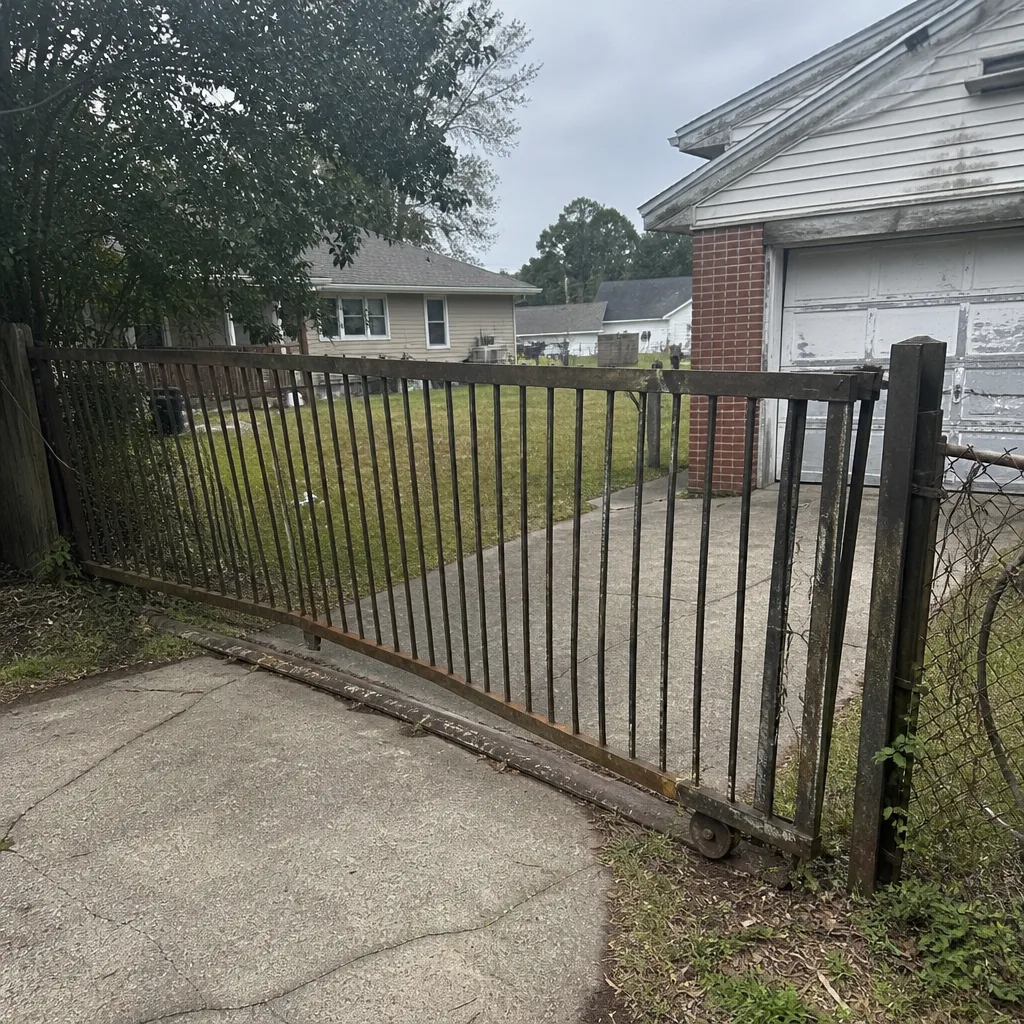 Before
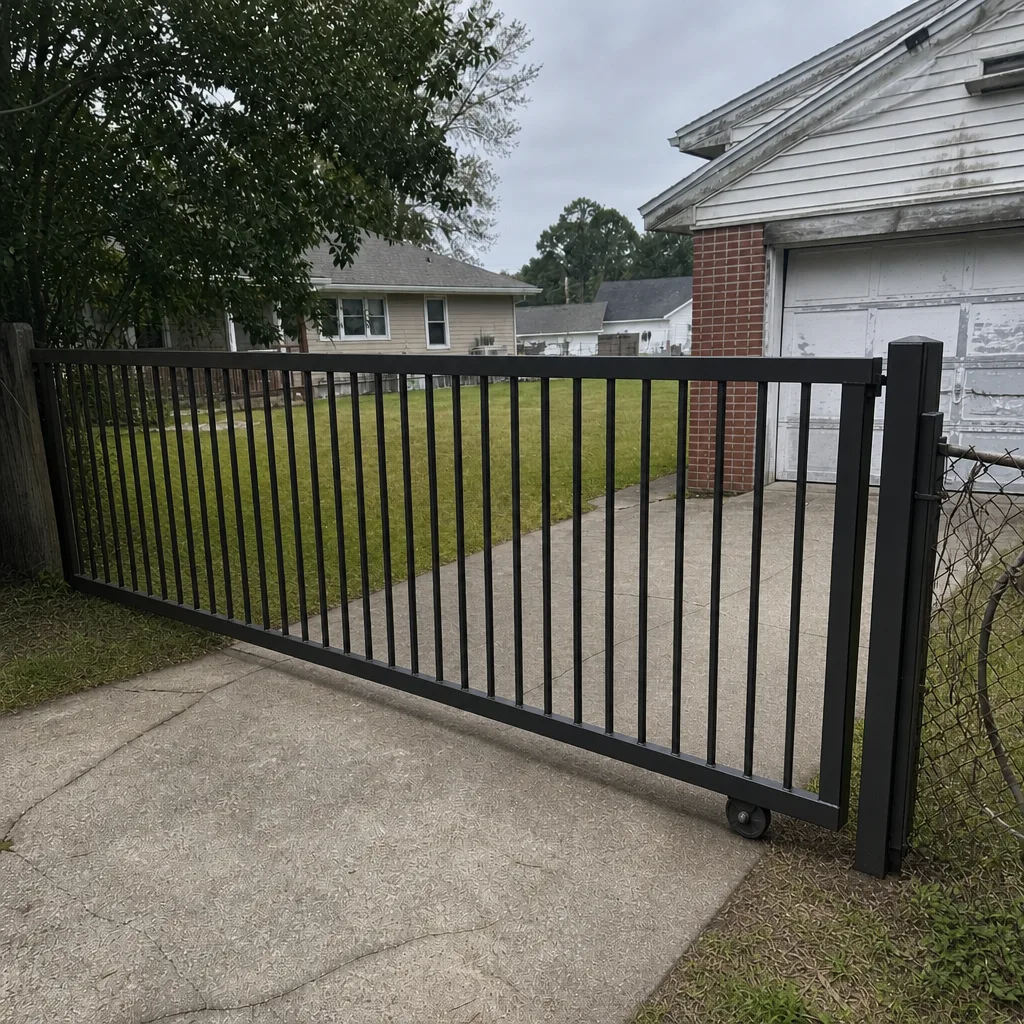 After
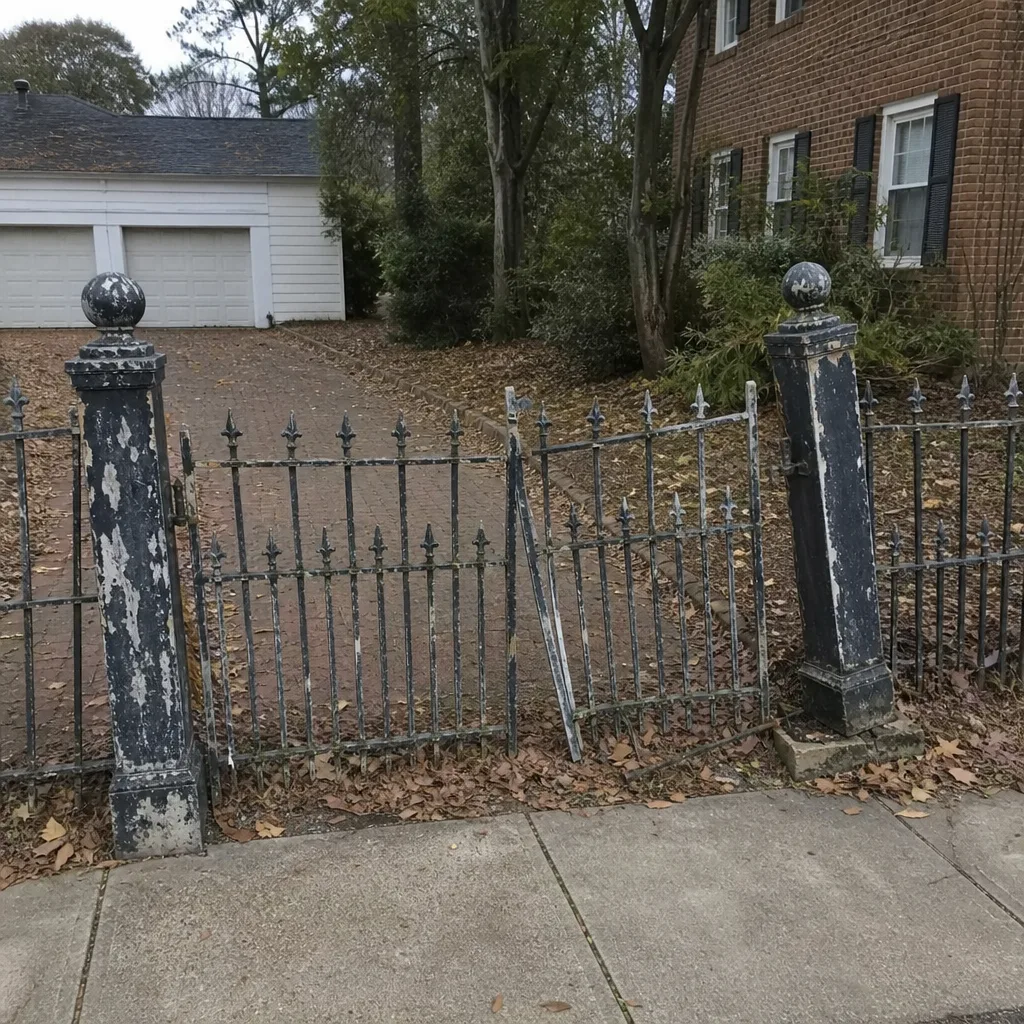 Before
 After
 Before
 After
When to Call a Professional
Call a specialist when any of the following are true: the gate shows a board fault code you don’t recognize; the gate reverses or stops partway and clearing the path didn’t fix it; a safety edge or photo-eye is damaged; the gate is dead and the breaker hasn’t tripped; you’ve replaced a part and the problem came back; or the gate is commercial or an HOA entry and needs a documented repair plan. Those symptoms point to control boards, loop detectors, low-voltage wiring, or torque calibration, and each of them is a job for a specialist with the brand’s own specs. Gate Repair Norfolk offers free estimates in Norfolk. Call (844) 410-6351 to book a diagnostic visit. We answer 24/7. Fast dispatch from 7am to 7pm, Sunday through Friday, and a written price before any work starts.
Frequently Asked Questions
Your gate reverses because its safety circuit is telling the control board it sees an obstacle, even when the path is clear. The usual causes are a dirty or misaligned photo-eye, a loop detector reading a false presence, or a limit switch that’s lost its clean signal. On Norfolk gates, humidity and moisture intrusion at sensor splices are a common trigger. Start by clearing the path, then call a specialist if the behavior continues. Estimates are free, so call (844) 410-6351 for an exact quote on a diagnostic visit.
Gate repair costs in Norfolk are set per job by a written estimate after we look at the system, because the range depends on the fault category, the brand, and the parts involved. A sensor or limit switch fix is a different job from a control board replacement or a low-voltage wiring repair. We quote and agree the price before any work starts, so there are no surprises after the fact. Call (844) 410-6351 for a free estimate on your gate.
We work on nine brands: LiftMaster, FAAC, BFT, Linear, Viking, Ghost Controls, DoorKing, Elite, and Mighty Mule. That covers most residential swing and slide operators and commercial access systems in Norfolk. If you’re not sure which system you have, tell us what’s on the operator cover or the control board and we’ll confirm. Call (844) 410-6351 and we’ll set up a visit.
Repair is usually the right call when the fault is isolated to one component, like a limit switch, sensor loop, or a low-voltage run. Replacement makes more sense when the operator is showing multiple failures at once, the board is obsolete, or repairs have become recurring. We’ll give you a straight answer after diagnosis rather than pushing a replacement. Call (844) 410-6351 for a free estimate and a clear recommendation.
The most likely cause is a power fault inside the operator’s supply path or a low-voltage problem from the home’s main panel, which is common on older Norfolk properties. Don’t open the powered enclosure yourself. We test voltage under load and trace the wiring before recommending parts. Call (844) 410-6351 and we’ll book a diagnostic. Our technicians have up to 9 years of experience with this exact fault pattern.
Yes. We handle commercial and HOA gates alongside residential systems, including DoorKing access control and heavier swing and slide operators. Those systems need the same category-by-category diagnosis, plus a repair plan the board can approve. Safety edges on heavy gates should be replaced before the gate runs under power again. Call (844) 410-6351 for a free estimate and we’ll walk the system with you.
The Bottom Line
Gate troubleshooting gets a lot simpler once you stop asking “what broke?” and start asking “what category does this symptom belong to?” Most Norfolk gate failures come down to power supply, control board, sensor and safety loop, mechanical drive, or physical obstruction. Coastal humidity pushes limit switches and sensor wiring toward failure here more than inland climates do, which is why symptoms show up in wet weather first. Read the symptom, place it in a category, and let the brand’s diagnostics tell you the rest. If the fault points inside the operator, the loop, or the torque settings, call a specialist. Call (844) 410-6351 for a free estimate. We answer 24/7. Fast dispatch from 7am to 7pm, Sunday through Friday.
Written by the team at Gate Repair Norfolk.