
Last updated November 16, 2026
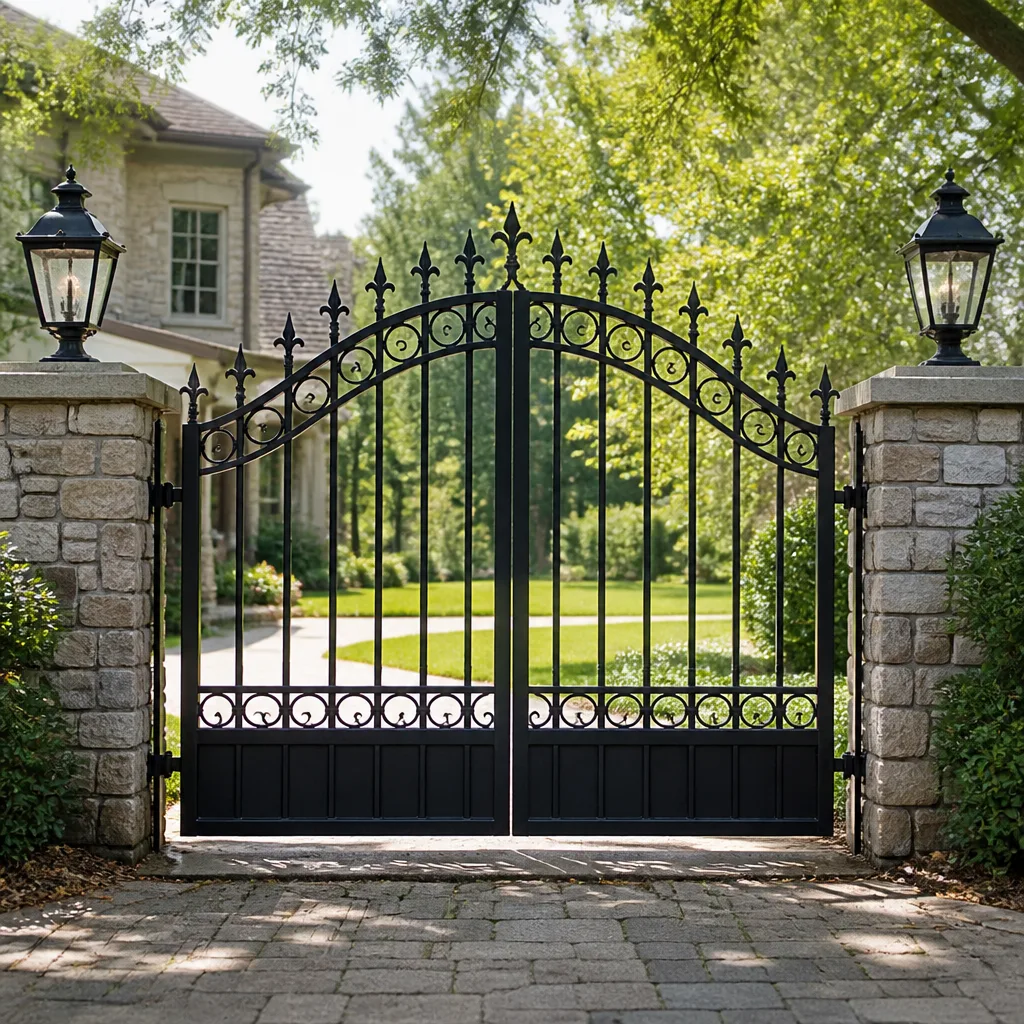 Wrought iron
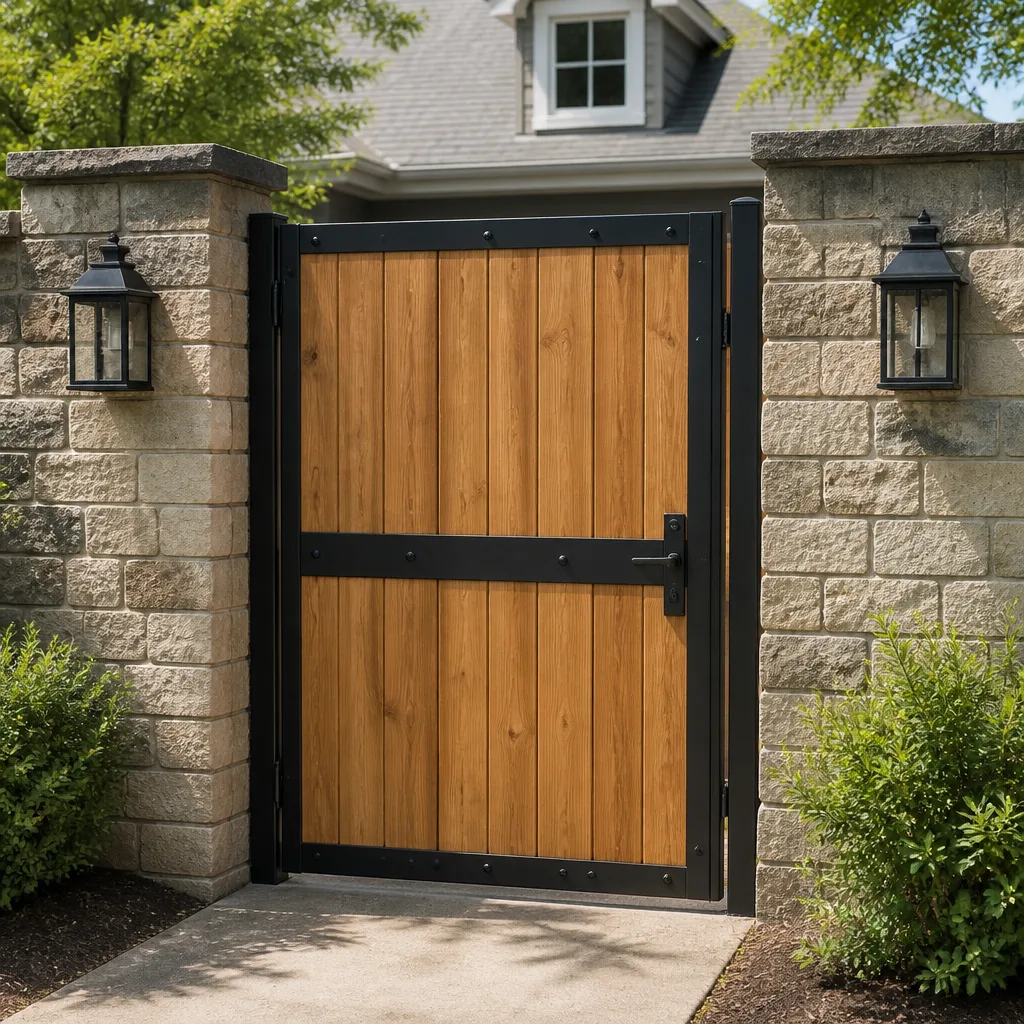 Wood & steel frame
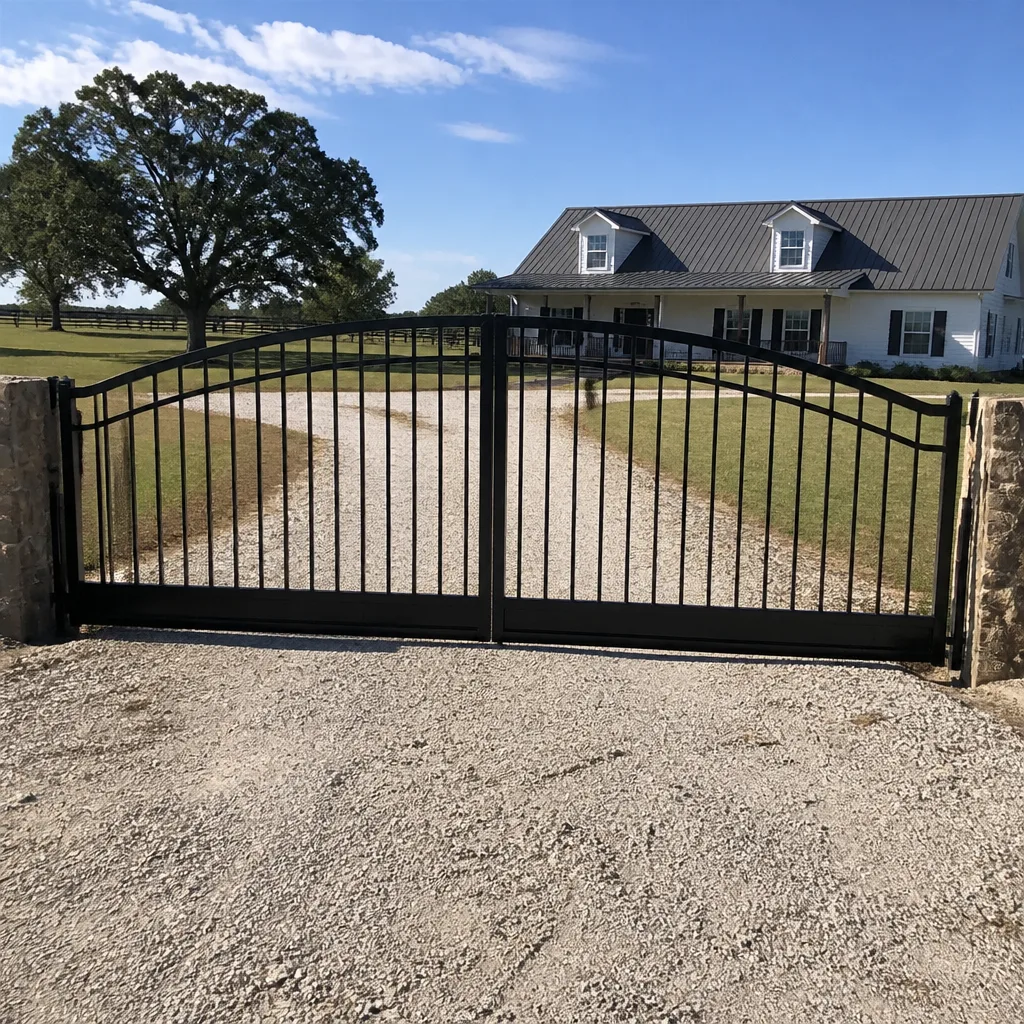 Farm & ranch
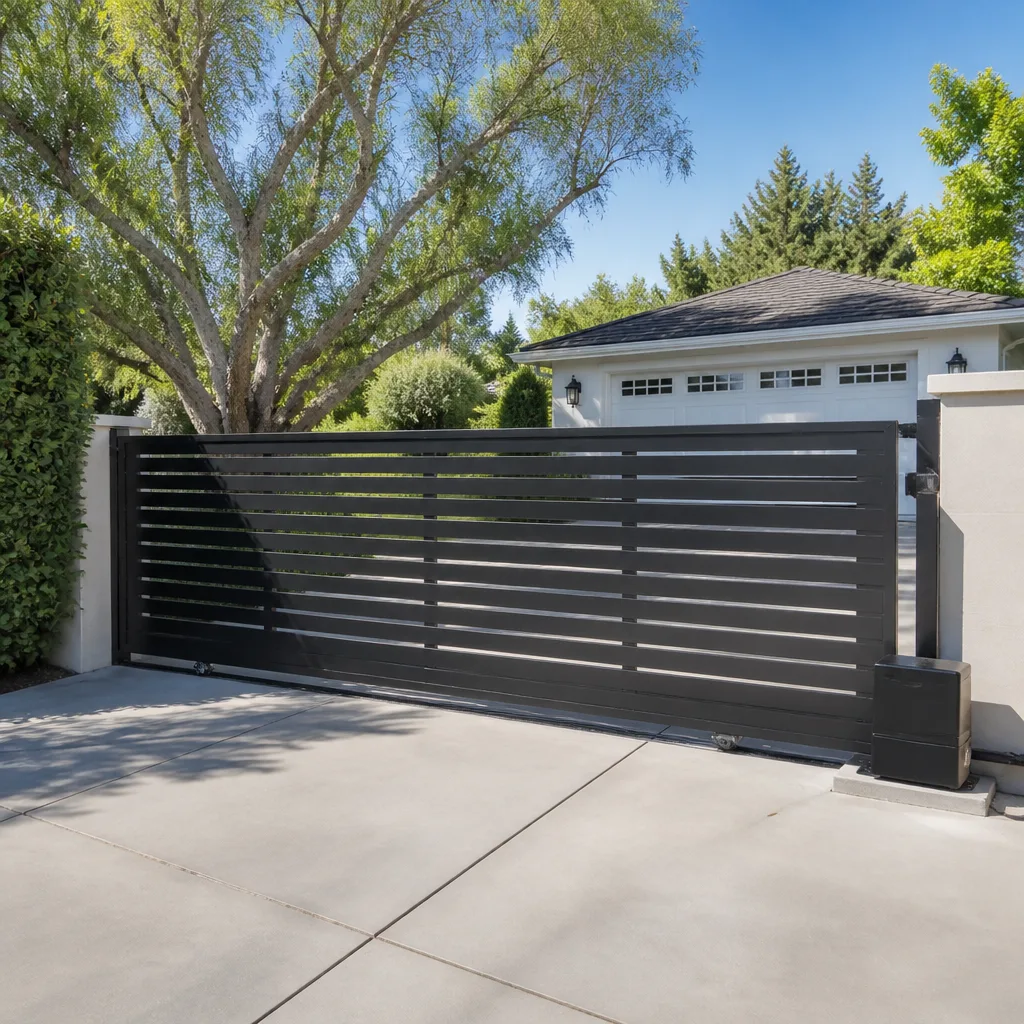 Sliding driveway gates
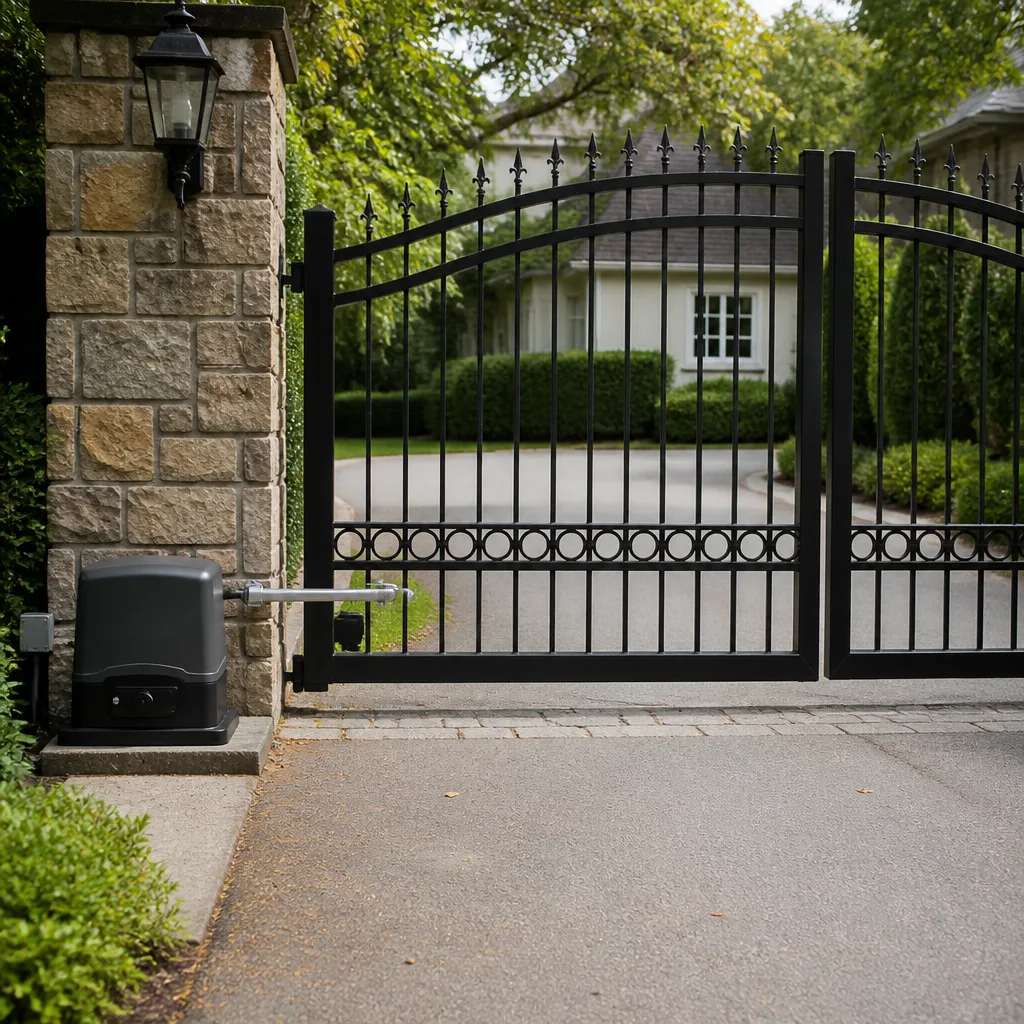 LiftMaster operators
Free on-site gate assessment - hinges, posts, and your LiftMaster or Nice gate operator checked before anything is quoted
The assessment is free and the quote is the invoice.
Get your free estimateGate Repair Cost Breakdown: The Norfolk Homeowner’s Reference for 2026
The most expensive gate repair mistake Norfolk homeowners make isn’t paying too much for a part. It’s paying for a part replacement when a proper diagnostic would have revealed that a simple sensor adjustment was the actual fix. A gate that won’t open looks identical whether the culprit is a misaligned photo-eye, a burned-out control board, or a hinge that’s seized solid. The symptom tells you almost nothing about the cost. This guide breaks down gate repair pricing component by component, explains why the brand on your operator changes the number, and shows you how to read a quote before you agree to it. By the end, you’ll know what a fair estimate looks like in Norfolk and when repair stops making financial sense.
Quick Answer
Gate repair in Norfolk typically runs from about $150 for a sensor realignment or hinge adjustment up to $1,200 or more for a motor or control-board replacement, with most common repairs landing between $250 and $650. The price depends far more on which component failed than on how big the gate is. A written estimate, agreed before any work starts, is what sets the final number.
Styles & brands we work with
- Wrought iron
- Wood & steel frame
- Farm & ranch
- Sliding driveway gates
- LiftMaster operators
Table of Contents
- Why the Same Symptom Produces Wildly Different Quotes
- Component-by-Component Price Ranges for Norfolk Repairs
- How Your Gate Brand Affects Parts Cost
- Diagnostic Fees and Service Call Structures in Norfolk
- When Repair Cost Crosses the Replacement Threshold
- Cost Variables Specific to Norfolk Homes
- How to Read a Gate Repair Quote Line by Line
- Common Mistakes to Avoid
Why the Same Symptom Produces Wildly Different Quotes
“My gate won’t open” is the most common call we get, and it’s also the least useful description of a problem. That single symptom can come from at least a dozen distinct failures, and the parts involved range from a few dollars to several hundred. A photo-eye knocked out of alignment by a bump from a car bumper costs almost nothing to fix. A failed control board on a commercial slide operator is a different conversation entirely. When two Norfolk homeowners compare quotes for what sounds like the same problem, they’re often comparing repairs of completely different components.
This is why the cost logic matters more than the number. When you understand which parts live inside your gate system and roughly what each costs to replace, you can spot a quote that’s charging motor-replacement money for a hinge problem. You can also ask better questions: which component failed, what testing confirmed it, and whether a cheaper adjustment would solve the same fault.
Gate systems break down into two broad layers. The mechanical layer covers hinges, rollers, tracks, latches, and the gate leaf itself. The electrical layer covers the operator motor, the control board, the safety sensors, the limit switches, and the wiring that ties them together. Most repair cost sits in the electrical layer, but a surprising share of “electrical” problems turn out to be mechanical binding that overloads the operator and trips its safety circuit. Separating those two layers is the first job of any diagnosis, and it’s why we ask so many questions before we quote anything.
Here’s the practical takeaway: a quote without a stated cause is a guess dressed up as a price. Fair pricing starts with an identified component and a reason it failed.
Component-by-Component Price Ranges for Norfolk Repairs
These are typical estimated ranges for common gate repairs in the Norfolk market for 2026, covering both parts and labor. The written estimate you receive after an on-site look sets the actual price, since gate size, operator model, and access all shift the number.
| Component | Typical Estimated Range | Notes |
|---|---|---|
| Hinge adjustment or replacement | $150 – $300 | Mechanical; often a set rather than a single hinge on sagging swing gates |
| Roller or track repair | $180 – $400 | Slide gates; binding here frequently mimics an operator fault |
| Safety sensor (photo-eye) realignment or replacement | $150 – $350 | Realignment sits at the low end; a failed pair pushes higher |
| Limit switch adjustment or replacement | $180 – $380 | Gate over-travels or stops short of fully open or closed |
| Control board replacement | $350 – $750 | Brand and board complexity drive most of the spread |
| Operator motor replacement | $600 – $1,200+ | Depends heavily on residential vs. commercial-grade operator |
| Wiring repair or power run fault | $250 – $900 | Depends on distance and whether conduit work is needed |
| Manual latch, drop rod, or cane bolt | $120 – $280 | Common on manual swing and double gates |
Notice the width of those ranges. A control board on a straightforward residential operator and a control board on a commercial DoorKing system are not the same job, not the same part, and not the same price. That’s not padding. It’s the reality of multi-brand gate work, and any estimate that ignores the brand is worth questioning.
What the diagnosis actually tests
A competent technician works through a sequence rather than swapping parts until the gate moves again. The order matters because it isolates cause from symptom:
- Power and circuit check at the operator, confirming the unit has correct supply and that no breaker or disconnect has tripped.
- Safety circuit test on the photo-eyes and any edge sensors, since a blocked or misaligned safety input will stop a perfectly healthy gate from moving.
- Manual release test, freeing the gate from the operator to determine whether the leaf moves easily by hand. If it binds, the fault is mechanical, not electrical.
- Limit switch inspection to confirm the operator knows where open and closed actually are.
- Control board and motor diagnostics, reading fault codes and testing outputs where the manufacturer supports it.
- Wiring inspection along the run, particularly on older Norfolk properties where buried or exposed gate wiring has had years of weather and root movement to contend with.
That sequence is why a proper diagnostic can save money rather than add to it. Skipping straight to a motor replacement because the gate won’t move is how a sensor problem turns into a four-figure invoice.
How Your Gate Brand Affects Parts Cost
Gate operators are not interchangeable, and parts pricing reflects it. Each manufacturer designs its own control boards, motors, and logic, which means the part cost and the labor familiarity both shift by brand. We work with the brand you already have, across nine manufacturers spanning basic residential operators to heavy commercial systems: LiftMaster, FAAC, BFT, Linear, Viking, Ghost Controls, DoorKing, Elite, and Mighty Mule.
Broadly, the brands split into three cost tiers for parts:
- Entry-level residential operators – Mighty Mule and Ghost Controls sit here. Parts are generally the least expensive, and control boards tend to be simpler. Repair economics usually favor fixing rather than replacing.
- Mid-range residential and light commercial – Linear, Elite, and Viking fall into this band. Parts cost moderately more, and the systems have more diagnostic capability built in, which helps isolate faults faster.
- Heavy-duty and commercial-grade – FAAC, BFT, LiftMaster’s commercial lines, and DoorKing. Boards, motors, and accessories cost the most, but these systems are designed to be serviced rather than discarded, so repair almost always beats replacement.
The pattern that catches people is the less-common brand. If you own an operator that a general fence contractor rarely sees, they may quote a full replacement simply because they can’t source or diagnose the part. That’s not dishonesty so much as unfamiliarity. A specialist who works the brand’s actual control boards and logic systems can usually repair what a generalist would replace, and on a DoorKing or FAAC system that difference is measured in hundreds rather than tens of dollars. If you want to understand how the brand question plays out on a real repair, our gate repair page walks through the service itself.
Why brand-specific diagnostics change the price
Every operator has its own fault codes, its own board layout, and its own quirks. Knowing that a Viking unit behaves one way when a limit switch fails and a LiftMaster behaves differently saves diagnostic time, and time is labor. It also prevents the most expensive error in gate repair: replacing an expensive board to solve a problem the board never had. The brand range from Mighty Mule to FAAC is shorthand for that diagnostic breadth, and it’s why a gate specialist is worth calling before you authorize a big parts order.
Diagnostic Fees and Service Call Structures in Norfolk
Diagnostic and service-call structures in the Norfolk market come in a few recognizable shapes, and knowing them helps you compare quotes fairly. The key question isn’t whether a fee exists. It’s whether the fee is disclosed clearly, applied sensibly, and credited or rolled into the repair in a way that’s stated up front.
The structures you’ll encounter:
- Free estimate with repair priced separately – the most transparent model. You get a written price for the repair, agreed before work starts, and there’s no separate charge to come out and look.
- Flat diagnostic fee – a set charge to inspect and identify the fault, with the repair quoted on top. Legitimate when disclosed clearly, but ask whether it applies to the repair cost.
- Diagnostic fee credited toward the repair – same as above, but the inspection charge comes off the final invoice when you approve the work. Reasonable and common.
- Hourly diagnosis with no cap – the least predictable. Ask for a stated diagnostic maximum before authorizing anything.
Red flags in this market are less about fees and more about how they’re handled. A quote that won’t state the cause of the fault is a red flag. So is a diagnostic charge that appears only on the invoice, never before. So is a price that shifts between the phone call and the written estimate without a stated reason.
The standard we hold is simple: the estimate is free, the price is set per job by the written estimate, and you agree to it before any work starts. That matters most on a repair where you don’t yet know what’s wrong. On an electric gate repair, the diagnosis is the whole job half the time, and you should know the cost of the fix before a technician picks up a tool. Call (844) 410-6351 for a free estimate. We answer 24/7.
When Repair Cost Crosses the Replacement Threshold
Repair usually wins, and it wins by a wider margin than most homeowners expect. Gates are built to be serviced. The threshold where replacement becomes the better financial call is higher than most people assume, but it does exist, and it’s worth knowing where it sits before you approve a big repair.
Replacement starts to make more sense in these situations:
- The operator has failed and the system is at the end of its working life. A full operator replacement on an old system can approach the cost of a new, more reliable installation. When it does, a modern operator with current safety features may be the smarter spend.
- Repeated failures of the same component. One board failure is a repair. Two within a short stretch, with no other explanation, suggests an underlying fault in the wiring or power supply that a new system would resolve.
- Obsolete parts with no clear path to sourcing. If the part can’t be found, no amount of skill fixes it. That’s usually a sign to talk about replacement.
- The gate leaf or frame itself is failing. Mechanical structure is a different problem than operator failure, and repeated structural repairs that don’t hold point toward replacement.
- Safety features are missing entirely. An older operator without modern safety sensors is a strong argument for a new installation regardless of price, because the safety gap is the real cost.
The counterintuitive part: a high repair quote isn’t itself evidence you should replace. It’s evidence you should ask what’s being repaired and why it costs that. A five-hundred-dollar board replacement on a solid commercial operator is often the cheaper long-term move by a wide margin. Get the diagnosis in writing, then decide.
If replacement does become the right call, our Gate Repair Norfolk team handles full gate installation as well as repair, so you’re not handing the job to a second contractor mid-stream.
Cost Variables Specific to Norfolk Homes
Norfolk gate systems age in specific ways that show up on the invoice. The region’s humid summers and wet winters put real stress on hardware, particularly the hinges, latches, and rollers on manual and swing gates, and on the exposed wiring and enclosures of automated systems. That stress shows up as wear rather than a single dramatic failure, and it changes what a repair costs.
What tends to add to the number here:
- Hardware replacement rather than adjustment. In a drier climate a hinge might just need tightening. In Norfolk, years of moisture cycling often means the hinge is genuinely worn and needs replacing, which moves a small job into the mid range.
- Wiring run condition. Older properties and established neighborhoods frequently have gate wiring that has seen decades of weather, root movement, and driveway work. Diagnosing and repairing a wiring fault is a bigger job than swapping a part.
- Corrosion-related wear on moving parts. Rollers, tracks, and latches wear faster in humid conditions, and the labor to free a seized mechanism adds up.
- Durability of replacement parts. When a part is being replaced anyway, choosing a better-sealed or more weather-resistant replacement can reduce repeat visits. It’s worth discussing with your technician, and it’s part of why two quotes for the same repair can differ: they may not include the same grade of part.
- Access and gate size. A wide double swing gate on a long drive takes more labor than a pedestrian gate at the property line, regardless of what failed.
The practical answer to Norfolk’s conditions is straightforward: don’t defer small mechanical problems. A worn hinge left alone puts strain on the operator, and an overloaded operator trips its safety circuit, which sends you back to a “gate won’t open” call. Fixing it early keeps the repair in the low range instead of letting it climb. If you’re in the city and want local context on how this plays out block by block, our Norfolk page covers the service area.
How to Read a Gate Repair Quote Line by Line
A good gate repair quote is short and specific. It names the failed component, the part being replaced, the labor, and the total. It doesn’t hide anything behind a vague lump sum, and it doesn’t leave you guessing what you’re paying for. Here’s how to read one before you agree.
- Find the stated cause. The quote should say what failed in plain terms: a specific hinge, a safety sensor, a control board. If it only says “gate repair,” ask for the cause.
- Check the part being replaced matches the cause. A sensor problem shouldn’t come with a motor line item. If the cause and the part don’t line up, ask why.
- Confirm labor is separate or explicitly included. Either is fine as long as it’s clear. What isn’t fine is labor appearing on the final invoice when the quote implied it was covered.
- Ask what happens if the diagnosis changes. A good technician explains that if a second component turns out to be the real problem, you get a revised price to approve before work continues.
- Ask about the brand. The quote should confirm the operator brand and that the replacement part is correct for it. That’s the difference between a repair that lasts and one that fails again.
- Confirm the total before work starts. The written estimate is the number. No surprises on the invoice.
On safety sensors, limit switches, control boards, and any wiring, don’t attempt adjustment or replacement yourself. These components carry mains power and control a heavy moving gate. An incorrectly wired safety sensor can leave a gate that closes on a person, and a heavy panel that comes off its track can cause serious injury. That’s a job for a trained technician with the right test equipment, and it’s a genuine part of where the labor cost goes.
Common Mistakes to Avoid
- Paying for a replacement part before confirming the cause. A motor or board is the most expensive thing in your gate system, and it’s the most often wrongly blamed. Insist on a stated diagnosis first. Two minutes of sensor testing beats a four-figure parts order.
- Ignoring the mechanical side of an electrical symptom. A gate that binds on its hinges overloads the operator and can trip it into fault. If a technician only looks at the electronics, the real problem stays put and you pay twice.
- Choosing the cheapest quote without a stated cause. In Norfolk the low bid is often a guess. A cheap number with no diagnosis is more likely to grow than a clear estimate with a named cause.
- Deferring small hinge and latch repairs in humid conditions. Small mechanical wear compounds quickly here. A hinge replaced early is cheap; a seized gate and a stressed operator is not.
- Hiring a generalist for a brand-specific operator. On a DoorKing, FAAC, or Viking system, the difference between a specialist and a generalist can be a repair versus a replacement. Match the technician to the brand.
- Authorizing work on an hourly diagnosis with no cap. Ask for a stated maximum before anyone starts testing, or ask for a written estimate instead.
- Agreeing to a price with no written estimate. The quote you agree to in writing is the one that holds. Verbal numbers have a way of changing.
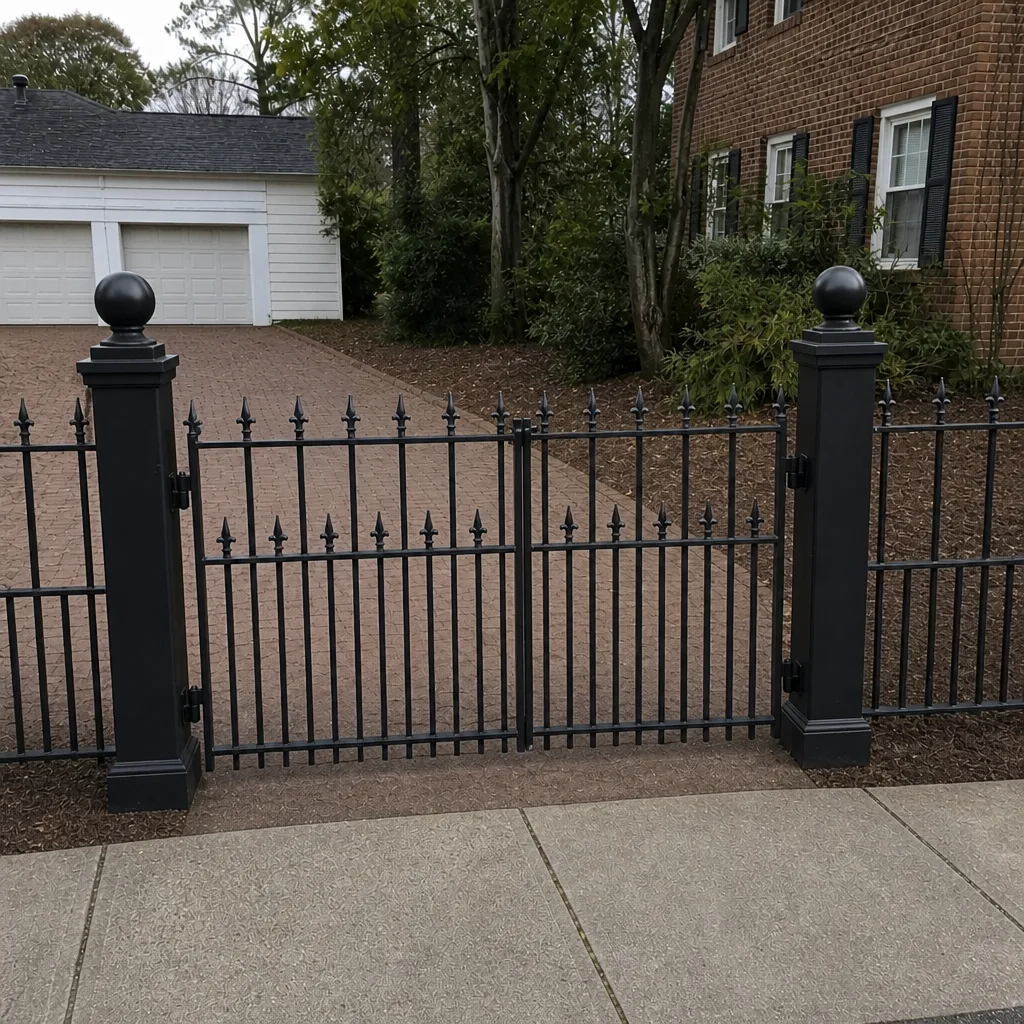
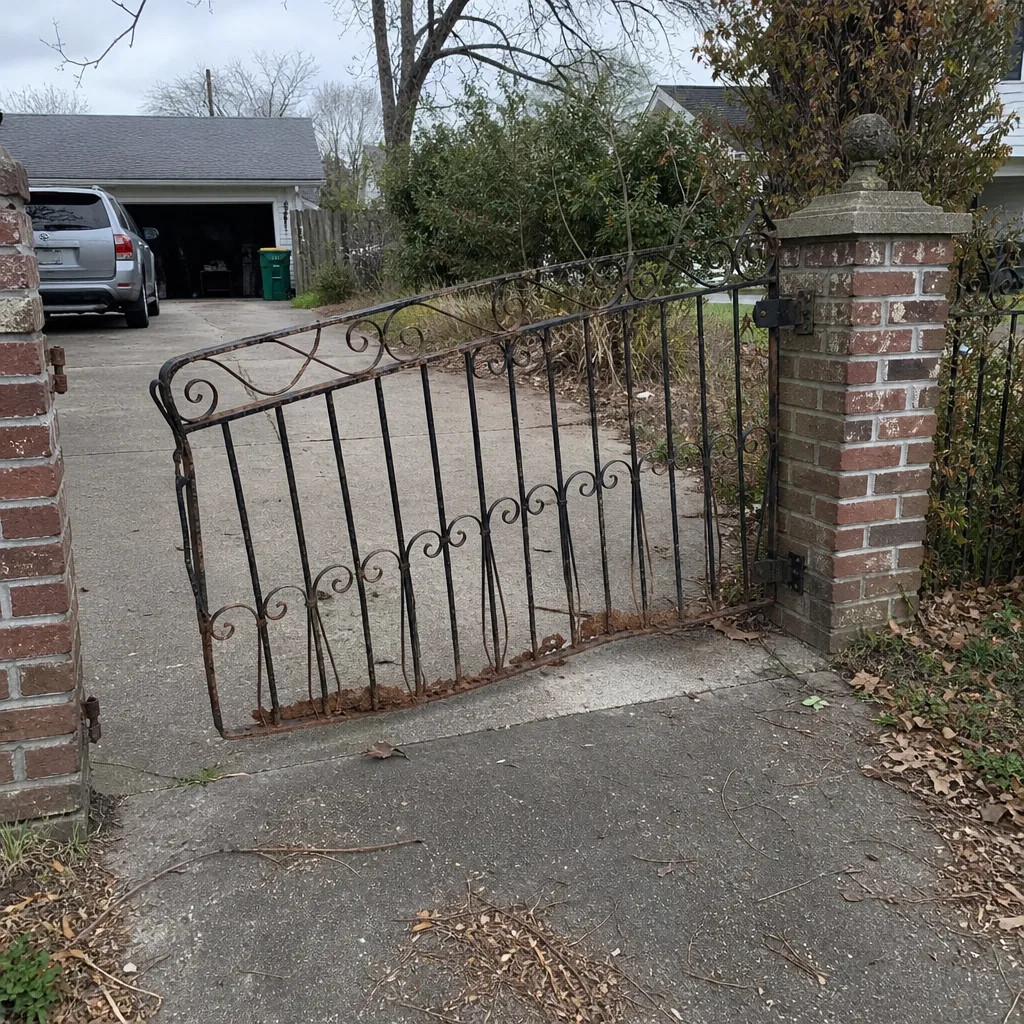
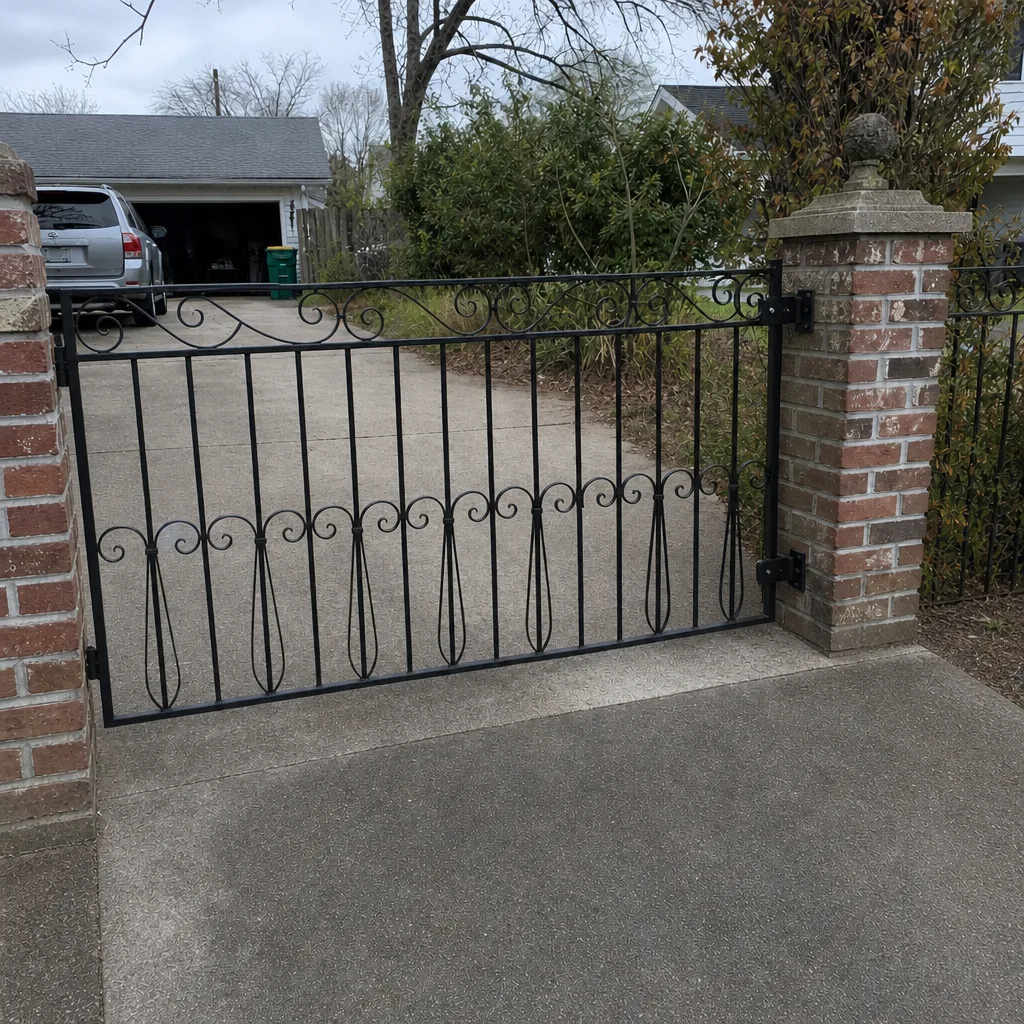
See the difference
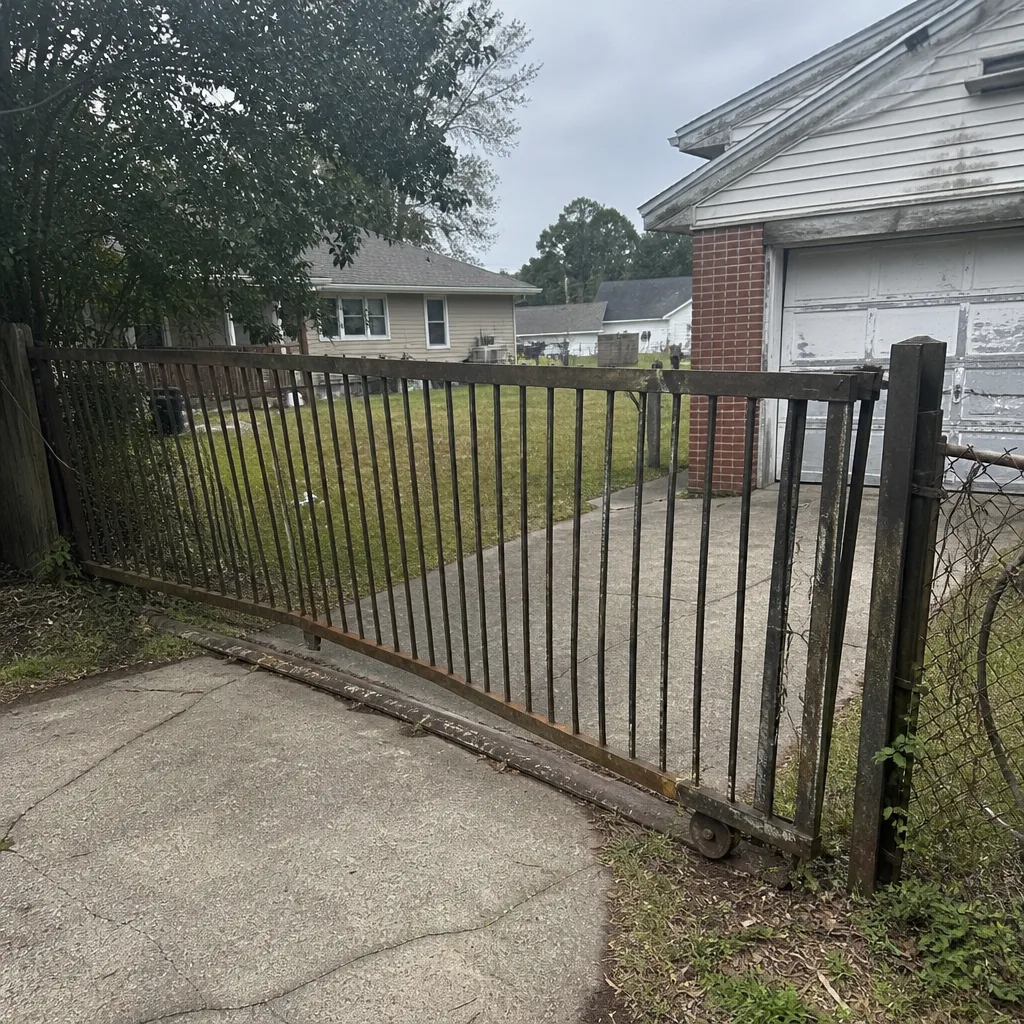 Before
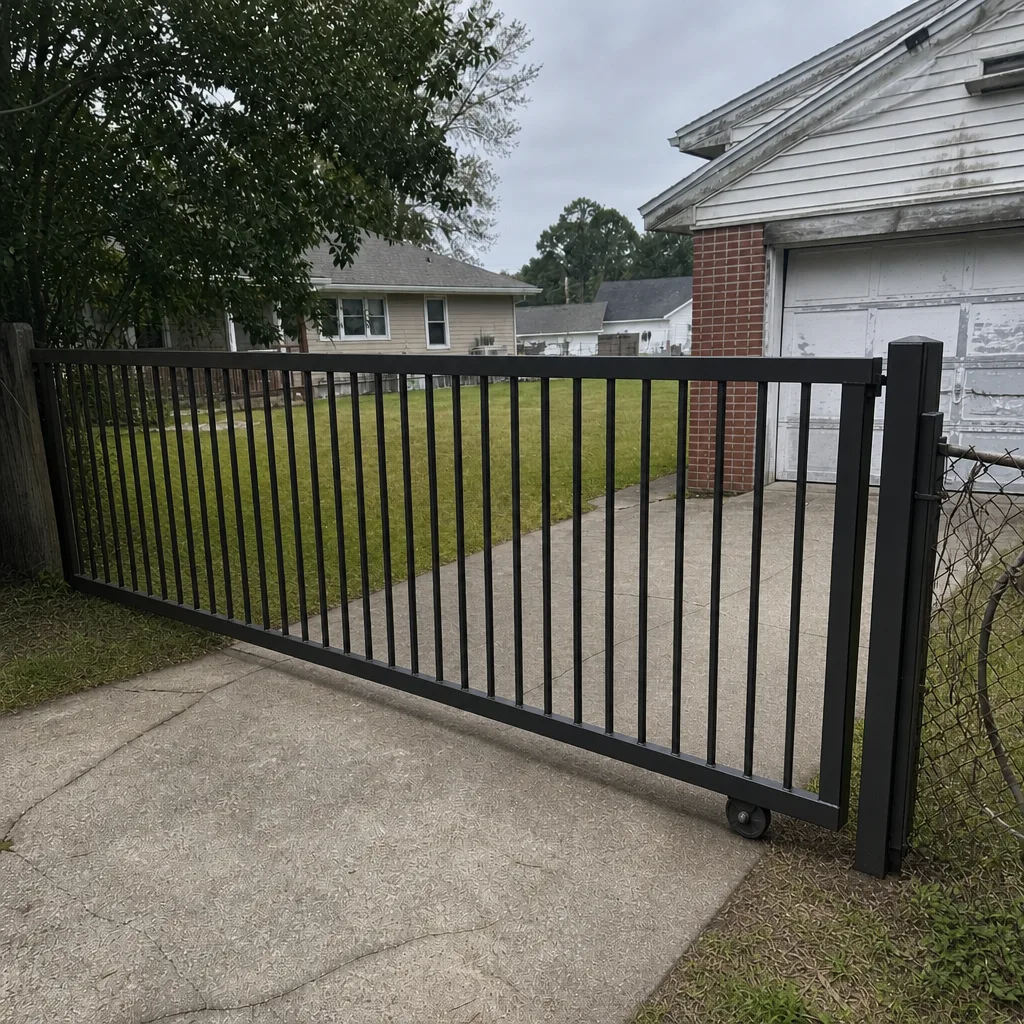 After
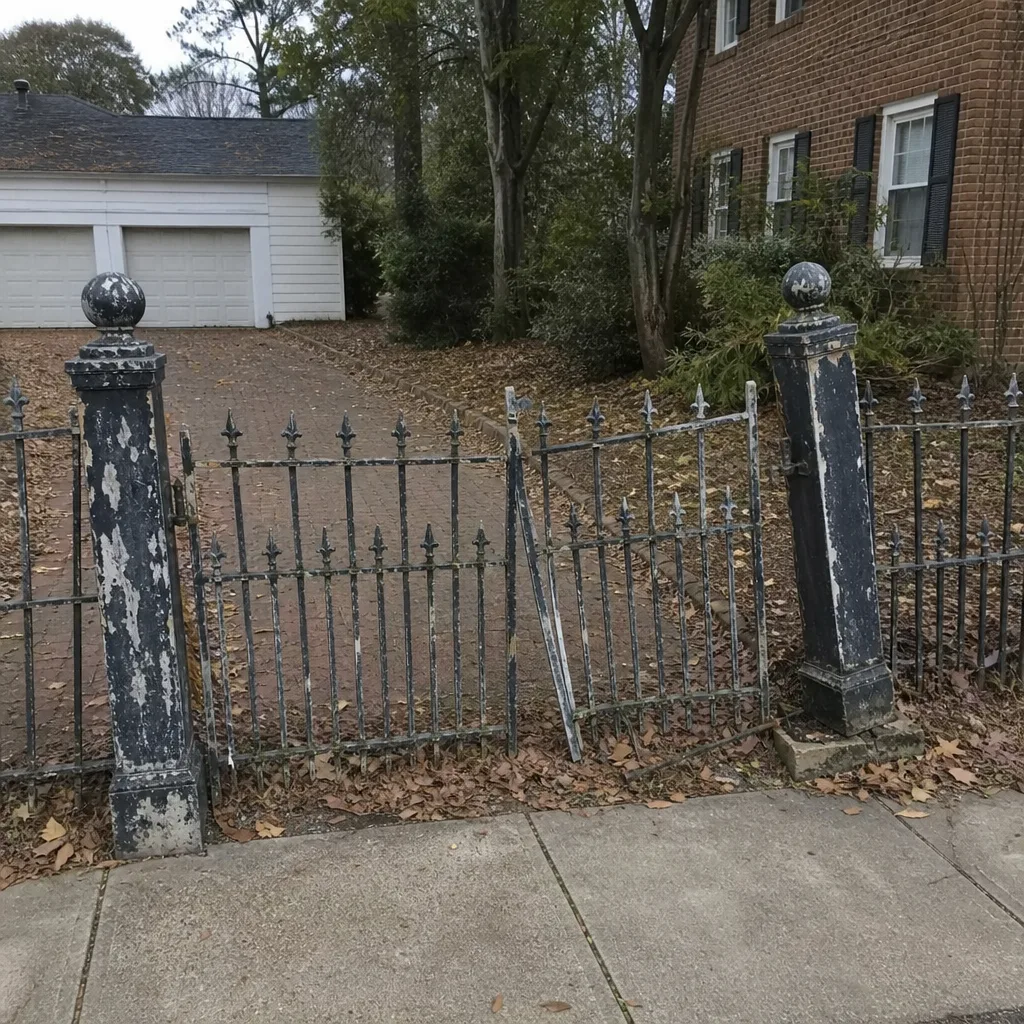 Before
 After
 Before
 After
When to Call a Professional
Call a professional if the gate won’t move and you haven’t identified why, if a safety sensor or limit switch needs adjustment, if you suspect a control board or motor fault, or if any part of the electrical system is involved. Those are the jobs where a wrong guess costs money and a botched repair costs safety. Call us too if your gate binds, if a hinge replacement is past your comfort level, or if the gate has been repaired repeatedly without lasting results – that pattern usually means the original diagnosis missed something. We’re a specialist in both manual and automated gate systems, and we work with whichever brand you already have, from Mighty Mule to FAAC. Gate Repair Norfolk offers free estimates in Norfolk. Call (844) 410-6351. We answer 24/7. Fast dispatch from 7am to 7pm, Sunday through Friday.
Frequently Asked Questions
Most gate repairs in Norfolk land between $250 and $650, with sensor realignments and hinge adjustments at the low end around $150 and motor or control-board replacements reaching $1,200 or more. The price is set by the component that failed, not the size of the gate. Call (844) 410-6351 for an exact quote – estimates are free.
Because the two quotes often aren’t for the same repair – one may have identified a simple sensor fault while the other priced a motor replacement based on the symptom alone. A quote that names the failed component and explains why is easier to trust than a lump sum. Call (844) 410-6351 and we’ll diagnose before we quote.
Yes, same-day service is often available. Call (844) 410-6351. We answer 24/7. Fast dispatch from 7am to 7pm, Sunday through Friday. A call outside dispatch hours is booked into the next opening, Sunday through Friday, 7am to 7pm.
We work with nine brands – LiftMaster, FAAC, BFT, Linear, Viking, Ghost Controls, DoorKing, Elite, and Mighty Mule – spanning residential to commercial systems, including older units other contractors may not recognize. Call (844) 410-6351 and we’ll tell you straight whether we can repair it.
Replacement usually wins when the operator has failed and the system is near the end of its working life, when parts are unavailable, or when safety features are entirely absent. For a solid commercial or mid-range operator, repair almost always remains the cheaper choice. Call (844) 410-6351 for a free estimate and an honest comparison.
The estimate is free and the price is set per job by the written estimate, agreed before any work starts. You’ll know the cause and the total before anyone begins. Call (844) 410-6351 for a free estimate.
The Bottom Line
Gate repair pricing in Norfolk is readable once you know the logic behind it. The symptom says very little; the failed component says almost everything. Expect $150 for a sensor realignment, $250 to $650 for most common repairs, and $1,200 or more only when motors or commercial control boards are genuinely involved. Your brand shifts the parts cost, and the specialist who works that brand’s actual control boards can often repair what a generalist would replace. Don’t authorize a part without a stated cause, and don’t defer small mechanical wear in Norfolk’s humid conditions. Above all, get the price in writing and agree to it before work starts.
Call (844) 410-6351 for a free estimate. We answer 24/7. Fast dispatch from 7am to 7pm, Sunday through Friday.
Written by the team at Gate Repair Norfolk.