
Last updated November 16, 2026
 Wrought iron
 Wood & steel frame
 Farm & ranch
 Sliding driveway gates
 LiftMaster operators
Free on-site gate assessment - hinges, posts, and your LiftMaster or Nice gate operator checked before anything is quoted
The assessment is free and the quote is the invoice.
Get your free estimateGate Repair Maintenance Schedule: What to Do and When
Most gate maintenance guides were written for a generic climate that doesn’t exist here. Norfolk sits in a corrosion zone where high humidity, driving rain, and the occasional hurricane-force wind load age gate hardware two to three times faster than the manufacturer’s service intervals assume. A schedule built for a dry, mild climate will leave your operator failing years early. What follows is a calendar anchored to Norfolk’s actual seasons, the difference between residential and commercial-duty service intervals, and the small parts worth replacing before they take something expensive down with them. We’ll show you what to check, when to check it, and when to stop and call a specialist.
Quick Answer
A gate maintenance schedule in Norfolk should be built around four seasonal checkpoints (spring, pre-hurricane in late May, post-summer, and freeze-prep in late fall), supplemented by a monthly visual walk-around and a cycle-count-driven service interval for automated operators. Residential-duty systems like Viking and Mighty Mule usually need attention every 6 – 12 months, while commercial-grade operators like FAAC and DoorKing should be serviced by cycle count, often far more often on a busy property. The right schedule for your gate depends on its drive type, its daily cycle count, and how exposed the hardware is to Norfolk’s weather.
Styles & brands we work with
- Wrought iron
- Wood & steel frame
- Farm & ranch
- Sliding driveway gates
- LiftMaster operators
Table of Contents
- Why Norfolk Gates Age Faster Than the Manual Says
- The Month-by-Month Gate Maintenance Calendar
- Residential vs. Commercial Service Intervals: Why Cycle Count Beats Calendar Time
- Lubrication: Matching the Product to the Drive Type
- The Three Cheap Parts That Prevent Expensive Failures
- How to Log Maintenance So Trends Are Visible
- Manual Gate Maintenance: The Overlooked Half of the Schedule
- Storm Season Prep and Post-Storm Checks
Why Norfolk Gates Age Faster Than the Manual Says
The manufacturer’s service interval assumes a mild, dry environment where hardware dries out between rain events. Norfolk doesn’t work that way. Average humidity sits above 70% for much of the year, and the mid-Atlantic’s freeze-thaw cycles put stress on hinges, footings, and operator housings that a climate-controlled lab never captures. When you combine summer heat with winter cold snaps that can swing thirty degrees in a day, metal expands and contracts repeatedly, and fasteners work themselves loose.
Add the region’s hurricane exposure and you get three separate stressors acting on the same gate: corrosion from persistent moisture, mechanical fatigue from thermal cycling, and wind load events that push panels, posts, and operator arms harder than a typical residential installation anticipates. That’s why a gate that’s rated for 10,000 cycles in a mild climate may hit its practical service limit far sooner here.
What does this mean for your schedule? It means you can’t just follow the sticker on the operator. You need to shorten intervals, inspect more often during shoulder seasons, and pay attention to the specific weak points that Norfolk weather exposes. We work on the brand you already have, and we’ve seen how the same Linear or Ghost Controls operator behaves very differently here than the manual predicts. If your gate is struggling, a call to our gate repair team is the fastest way to find out whether it’s a maintenance gap or a developing failure.
The Month-by-Month Gate Maintenance Calendar
This calendar maps maintenance tasks to Norfolk’s actual weather patterns. Adjust the months slightly if your gate is unusually sheltered or unusually exposed, but keep the sequence. Each item is a visual or functional check, not a disassembly job. Leave any work on springs, wiring, or the operator internals to a trained technician.
- January – Cold Snap Check: After the first hard freeze, walk the gate and look for cracking at the posts, loose hinge bolts, and any frost heave around the footings. Cold makes metal brittle, and a gate that slams hard in cold weather is putting extra stress on the operator. Check that the gate swings freely by hand (with power off if it’s automated).
- February – Operator Housing and Seals: Inspect the operator housing for cracks or gaps where water can enter. Look at the control box gasket and the wire entry points. Any moisture inside the control enclosure in February will cause logic-board problems by summer. If you see condensation, call a technician.
- March – Spring Tune-Up: This is the big check. Test the safety edges and photo-eyes, lubricate the drive according to its type, check the battery backup, and clear any debris from the track (for slide gates) or the swing path. This is also the right month to test the manual release to confirm it works under load.
- April – Post-Pollen and Hardware Inspection: Pollen and grit collect in tracks, chains, and hinge points. Clean the track and check for buildup. Inspect the chain tension (if chain-driven) and look for loose hinge bolts. Check the gate’s plumb and level.
- May – Pre-Hurricane Season Inspection: This is the most important checkpoint in Norfolk. Before hurricane season starts, have the gate looked at by someone who understands wind load on panels, post anchoring, and operator mounting. Test the manual release. Trim vegetation away from the gate. Confirm the operator’s battery backup holds a charge. If a storm is forecast, know how to put the gate into manual operation before the power goes out.
- June through August – Monthly Walk-Around: Hot, humid months are when corrosion accelerates. Do a monthly visual inspection: look for rust streaks, bubbling paint, and any new noise when the gate moves. Listen for grinding, clicking, or a change in the operator’s hum.
- September – Post-Summer Deep Clean and Lubrication Refresh: Clean the drive thoroughly and refresh lubrication according to the drive type. Check wiring connections for corrosion at the terminals. This is the month to inspect the control board for any signs of heat stress or moisture damage.
- October – Storm Season Wind-Down: Check for any loose panels, bent hinges, or shifting posts after a summer of wind events. Tighten what’s safe to tighten. Inspect the operator’s arm mounting and safety sensors.
- November – Freeze-Prep: Before the first freeze, drain any standing water from the track or low points. Check the battery backup. Lubricate hinges and latches with a product appropriate for cold weather. Confirm the gate’s manual release operates freely.
- December – Year-End Review: Pull your maintenance log and look for trends. If you’ve replaced the same part twice, it’s time for a professional inspection. If your gate is a commercial system, this is when you schedule the annual cycle-count-based service.
This is the calendar a Norfolk gate owner can actually follow. If you want a professional to walk it with you, our technicians have up to 9 years of experience with the brand-specific quirks of Linear, Viking, Ghost Controls, DoorKing, and the rest of the systems we service.
Residential vs. Commercial Service Intervals: Why Cycle Count Beats Calendar Time
Calendar time is a poor proxy for wear on an automated gate. What actually wears out a gate operator is the number of open-and-close cycles it has performed. A residential gate that opens twice a day will run 730 cycles a year. A commercial gate on a busy property might run 200,000 cycles in the same period. Those two gates need completely different maintenance intervals, even if they sit on the same street in Norfolk.
Residential-duty operators like Viking and Mighty Mule are usually rated for a lower cycle count and a lower duty cycle. They’re designed for homes, HOAs with moderate traffic, and properties where the gate opens a handful of times per day. Commercial-duty systems like FAAC and DoorKing are built for higher cycle counts and heavier panels, but they still need servicing based on actual use, not just the calendar.
Here’s how to think about intervals:
- Residential low-traffic (a few cycles per day): A visual inspection every month and a full service every 6 – 12 months is a reasonable starting point. Shorten the service interval to every 4 – 6 months if the gate is heavily exposed to wind or humidity.
- Residential moderate-traffic (10 – 20 cycles per day): Service every 4 – 6 months, with monthly visual checks. Watch the drive components closely.
- Commercial-grade systems (high cycle count): Service by cycle count, not by calendar. Ask your technician to record cycles at each visit. When cycles are climbing, the service interval should shorten accordingly.
The key point: if you own a commercial system and you’re servicing it only once a year because “the manual says so,” you may be running it well past its service point. The opposite is true for a lightly used residential gate. A professional who knows the brand can tell you what interval actually fits your gate, and a brand-specific diagnostic is often the fastest way to discover a developing wear problem. When in doubt, call (844) 410-6351 for a free estimate and a maintenance assessment.
Lubrication: Matching the Product to the Drive Type
Most gate problems we’re called to in Norfolk come down to lubrication, and most lubrication problems come from using the wrong product. A lubricant that’s right for a chain drive can accelerate wear on a belt or a ram arm. Knowing your drive type is the first step.
How to identify the drive type:
- Chain drive: Look for a steel chain running along the operator arm or the track. These are the most common residential systems, including many Viking and Ghost Controls installations. Chain drives need a chain-specific lubricant that stays on the pins and doesn’t fly off.
- Belt drive: Look for a reinforced rubber belt instead of chain. Belt drives are quieter and need a different, lighter lubricant, often a silicone or dry-film product. Never use a heavy oil on a belt.
- Ram arm (hydraulic or linear): Look for a piston-style arm that pushes the gate open. The arm itself is sealed on most hydraulic units and should not be lubricated internally. The pivot points and connections need a grease appropriate for the load.
Why does it matter? Chain lubricants are formulated to penetrate the pin-and-bushing contact area and stay put under load. Belt lubricants protect the belt from drying and cracking without causing it to slip. A heavy grease on a belt can cause it to slip off the pulley, which then leads to misalignment and a much larger repair. A light spray on a chain that sees heavy use can evaporate or fly off, leaving the chain dry and grinding.
A few rules that hold for almost every drive type:
- Clean before you lubricate. Lubricating over grit is worse than not lubricating at all.
- Use the product the operator manufacturer specifies, or ask a specialist who works with that brand.
- Don’t over-lubricate. Excess product collects dirt and creates gum.
- Never lubricate safety edges, photo-eyes, or sensor lenses.
If you’re not sure what drive type your gate has, that’s a sign it’s time to have it looked at. Our electric gate repair team works with the actual control boards and drive assemblies of each brand, so we can tell you what your system needs without guesswork.
The Three Cheap Parts That Prevent Expensive Failures
Three components cost under $15 each to replace proactively, and all three can cause several hundred dollars or more in secondary damage when they fail in service. Replacing them on a schedule is the highest-return maintenance action on any gate.
1. Hinge bolts. A loose or corroded hinge bolt can let the gate sag, which then misaligns the operator arm and puts shock loads on the gearbox. A sagging gate that slams into a stop can crack a weld or bend a post. Hinge bolts should be inspected monthly and replaced when they show wear or corrosion. In Norfolk’s humidity, bolts corrode faster than most homeowners expect.
2. Nylon drive gears. Many residential operators use a nylon gear as a wear point inside the gearbox. It’s designed to fail before the motor does, but when it fails in service it can leave the gate stuck open or closed, and if the operator keeps trying to cycle, it can burn out the motor or the control board. Replacing a nylon gear on a preventive schedule is far cheaper than replacing an operator.
3. Battery backup cells. Battery backup is what keeps your gate working during a power outage, and it’s also what fails silently. A dead backup cell means your gate won’t open when the power goes out, which is the exact scenario it’s supposed to solve. Test the backup at each service visit and replace the cell before it fails.
The parallel point: reactive repairs almost always cost more than the proactive part, because the failed part damages something downstream. A hinge bolt that fails can take out a panel. A nylon gear that fails can take out an operator. A dead battery can leave you locked out. Put the replacement of these three on your calendar and you’ll prevent a category of expensive repairs.
How to Log Maintenance So Trends Are Visible
A maintenance log is what turns a list of repairs into a diagnostic tool. A technician looking at your log can see a pattern that isn’t obvious from a single visit. Without one, every service call is a fresh start, and a slowly developing failure looks like a random breakdown.
What to record at each service visit:
- Date and a short note on what was done (checked, cleaned, lubricated, replaced).
- Operator cycle count if your system tracks it. This is the single most useful number in the log.
- Parts replaced with their condition at replacement (new, worn, broken, corroded).
- Any noise, hesitation, or irregular movement you noticed before the service.
- Weather or event notes (a storm, a freeze, a period of heavy use).
Why it matters: a gate that needs its nylon gear replaced every six months is telling you something is wearing that gear faster than normal. That trend is invisible if you only note the replacement each time. A gate that starts hesitating after a specific storm event is telling you something shifted. When a specialist can see the log, they can diagnose the underlying cause instead of just fixing the current symptom.
Logging is also the best way to answer the question “do we fix it or replace it?” A gate with a long history of small repairs may still be a better repair than a replacement, but a gate that’s been cycling through the same failure is often a signal that the operator is at the end of its service life. If you want help interpreting your log, the team at Gate Repair Norfolk can review it and give you a straight answer.
Manual Gate Maintenance: The Overlooked Half of the Schedule
Manual and mechanical gates get skipped in most maintenance schedules, and they fail in ways that surprise their owners. A manual gate doesn’t have a motor or a control board, but it does have hinges, latches, posts, and a swing path, and all of those need the same seasonal attention as an automated system.
What to check on a manual gate:
- Hinge and pivot points: Lubricate on the same schedule as an automated gate. Corroded hinges can seize, which is a heavy-panel crush hazard as much as an inconvenience.
- Latch and strike alignment: A latch that doesn’t line up is usually a sign the gate has sagged or the post has shifted. Don’t force it. Adjust it or call a technician.
- Post and footing condition: Look for cracks, sinking, or visible movement after wet seasons. Norfolk’s soil and moisture can undermine a post footing over time.
- Panel and frame condition: Check for loose hardware, bent frames, and any warping after seasonal humidity swings.
- Slide gate track: For a sliding manual gate, check the track for debris and wear. A gate that comes off the track is a genuine safety issue, and heavy panels can crush or trap.
Manual gate maintenance isn’t complicated, but it’s also not a place for shortcuts. A heavy gate that comes off its track or a latch that fails under load can cause real injury. If a manual gate has become hard to move, if it’s dragging, or if it shows signs of post movement, stop using it and get it looked at. Our technicians can work on both manual and automated systems, so it’s one call for either type.
Storm Season Prep and Post-Storm Checks
Storm season in Norfolk runs from late May into November, and the gate is one of the most exposed pieces of equipment on a property. Wind load on a wide gate panel can be significant, and a gate that’s already worn or loose is the first thing to fail in a high-wind event. Your schedule needs a pre-season inspection in May and a post-event check after any significant storm.
Pre-season checklist (late May):
- Inspect anchors and posts for looseness or movement. If a post is shifting, a storm will accelerate the problem.
- Check operator mounting hardware for corrosion and tightness.
- Confirm the manual release works. Before a storm, know how to put your gate into manual operation if the power goes out.
- Test the battery backup and confirm it holds a charge.
- Trim vegetation away from the gate so wind and debris don’t catch on it.
- Inspect the control enclosure for cracks or gaps that will let wind-driven rain enter.
Post-storm checklist:
- Look for bent panels, loose hinges, or shifted posts before running the operator.
- Check the control enclosure for water intrusion and let it dry before powering back up.
- Test the safety edges and photo-eyes to confirm they still function.
- Listen for new sounds from the operator. A grinder or a clunk after a storm is a sign something moved.
- If the gate doesn’t operate correctly after a storm, stop using it and call a professional. Continuing to cycle a damaged gate can cause a secondary failure.
The pattern is simple: prepare before the wind, and inspect after the wind. A gate that’s been maintained through the year will usually come through a storm with little more than a check. A gate that’s been neglected is the one that fails in the worst weather, when getting it fixed is hardest. If your Norfolk gate is ready for its pre-season inspection, give us a call and we’ll get it on the schedule.
Common Mistakes to Avoid
- Following the manufacturer’s interval without adjusting for Norfolk’s climate. The manual was written for a milder, drier place. If you’re servicing your gate on the interval on the sticker, you’re likely behind. Shorten the interval and inspect more often during storm season.
- Using the wrong lubricant for the drive type. A chain lubricant on a belt drive or a heavy grease on a chain is one of the most common causes of premature wear. Identify your drive type before you apply anything.
- Lubricating over grit. Adding lubricant to a dirty drive traps the grit against the moving parts. Clean first, then lubricate.
- Skipping the manual gate. A manual gate has hinges, latches, and posts that fail just like an automated gate’s parts do. It’s the half of the schedule most homeowners leave out.
- Ignoring the battery backup until it’s needed. A dead backup cell only matters in a power outage, which is exactly when you discover it. Test it at every service visit.
- Not keeping a log. Without a record of cycle counts and replaced parts, you can’t spot a developing failure trend, and every service call starts from scratch.
- Running a damaged gate. A gate that’s been hit, bent, or flooded should be stopped and inspected, not cycled repeatedly. Continuing to run a damaged gate is how small problems become operator replacements.
See the difference
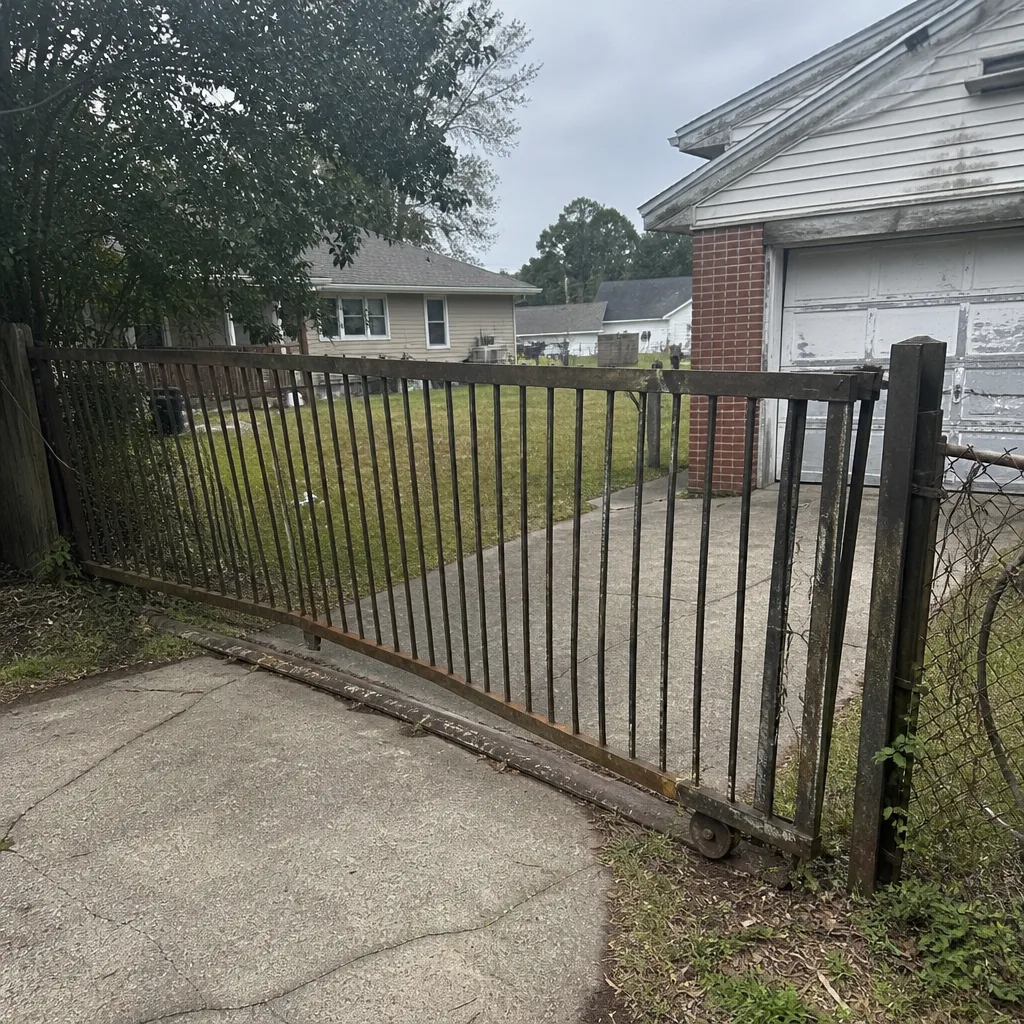 Before
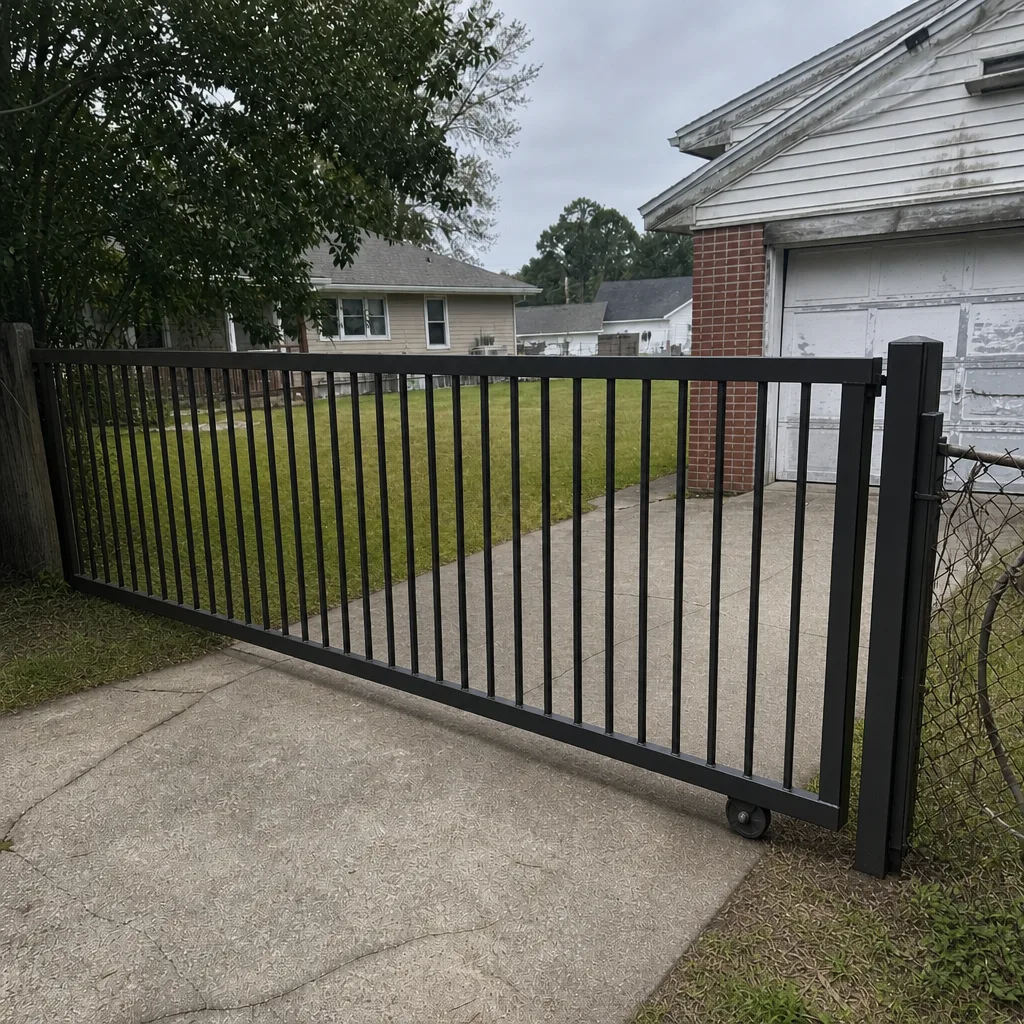 After
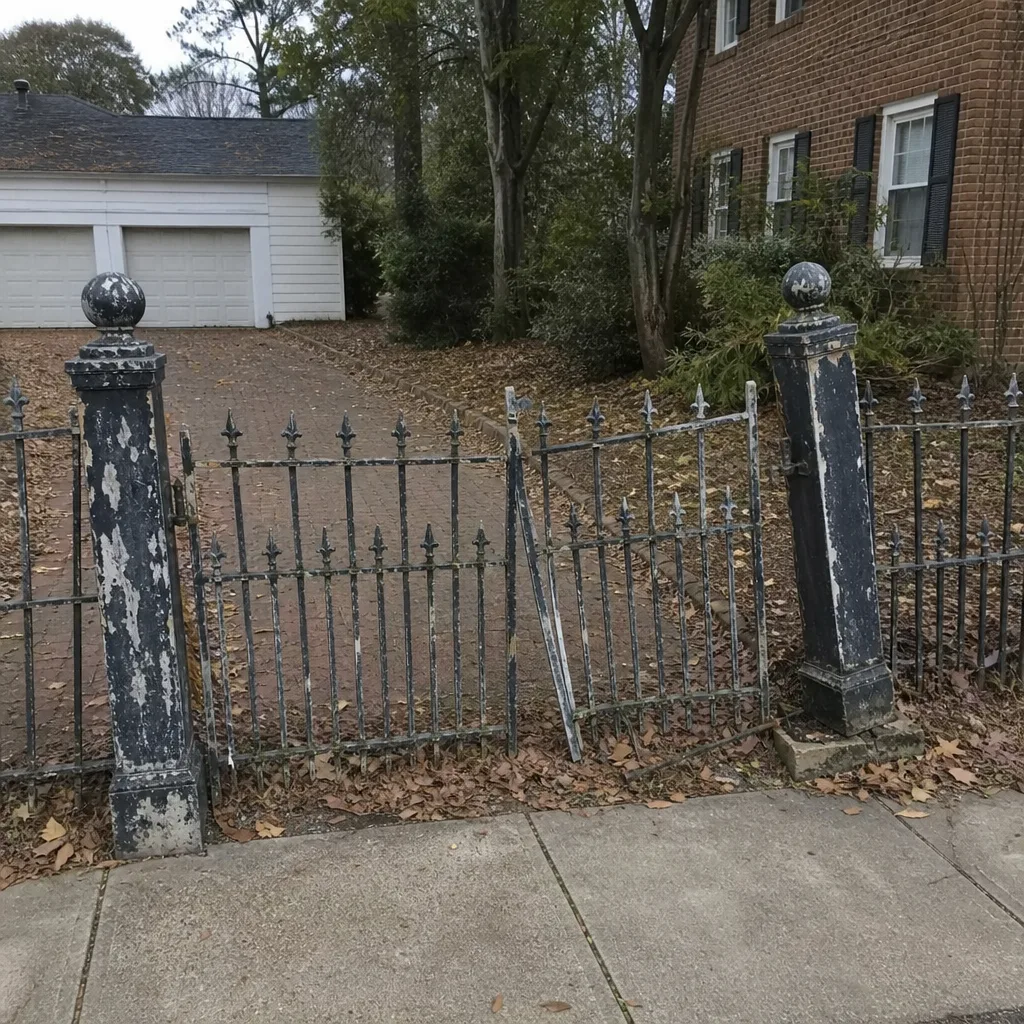 Before
 After
 Before
 After
When to Call a Professional
Some maintenance tasks are safe for a homeowner: visual inspection, cleaning, and checking that the manual release operates. Other scenarios are a clear signal to call a specialist. If your gate has stopped operating, if the operator hums but doesn’t move, if you see sparks or smell burning from the control box, if a panel is bent or a post is shifting, if the safety edges fail, or if your gate is a commercial system that’s due for a cycle-based service, it’s time to bring in a professional. Any work inside a control enclosure or on operator wiring, and any repair involving a heavy panel that has come off its track, is a genuine safety risk and not a DIY task. Gate Repair Norfolk offers free estimates in Norfolk. Call (844) 410-6351. We answer 24/7. Fast dispatch from 7am to 7pm, Sunday through Friday.
Frequently Asked Questions
A residential gate in Norfolk should have a visual walk-around every month and a full professional service every 6 – 12 months, shortened to every 4 – 6 months if the gate is heavily exposed to humidity and wind. Commercial systems should be serviced by cycle count, not by calendar. Call (844) 410-6351 for an exact quote – estimates are free.
Yes. Average humidity above 70% for much of the year accelerates corrosion on hinges, fasteners, and operator housings, and it encourages moisture inside control enclosures. Gates here tend to show wear on a shorter cycle than the manufacturer’s manual predicts. Keeping to the seasonal calendar in this guide is the best way to stay ahead of it.
Late May, before hurricane season, is the most important checkpoint. A pre-season inspection that checks anchoring, panel condition, operator mounting, and battery backup is the single highest-value maintenance action of the year. A post-storm check after any significant wind event is the next most important.
Look at the moving part of the operator. A steel chain is a chain drive, a reinforced rubber belt is a belt drive, and a piston-style arm is a ram arm. Each needs a different lubricant, and using the wrong one accelerates wear. If you can’t identify it, a technician can tell you in a few minutes. Call (844) 410-6351 – estimates are free.
Hinge bolts, nylon drive gears, and battery backup cells. Each costs under $15 to replace preventively, and each can cause several hundred dollars or more in secondary damage if it fails in service. Put them on your calendar and you’ll prevent a category of expensive repairs.
You can safely do visual inspections, cleaning, and checking that the manual release works. You should not open a control enclosure, work on operator wiring, or attempt to fix a gate that has come off its track or has a heavy panel that’s shifted. Those are safety-critical tasks for a trained technician. Call (844) 410-6351 for anything beyond a visual check – estimates are free.
The Bottom Line
A gate maintenance schedule that works in Norfolk is built around the local calendar, not the manufacturer’s sticker. The key points: shorten your service intervals to account for humidity and wind, do a major pre-hurricane inspection in late May, keep a log so trends are visible, use the right lubricant for your drive type, and replace the three cheap parts before they fail. A professional walk-through once or twice a year, plus your own monthly visual checks, will keep your gate working and prevent the expensive failures that come from a missed season. If you’re not sure where your gate stands, the team at Gate Repair Norfolk is here for the brand you already have. Reach out for a free estimate and a maintenance assessment in Norfolk.
Call (844) 410-6351 today for a free estimate. We answer 24/7. Fast dispatch from 7am to 7pm, Sunday through Friday. Whether your gate needs a seasonal tune-up, a brand-specific diagnostic on a Linear or DoorKing operator, or a full installation, we’ll get you back up and running.
Written by the team at Gate Repair Norfolk.