
Last updated November 16, 2026
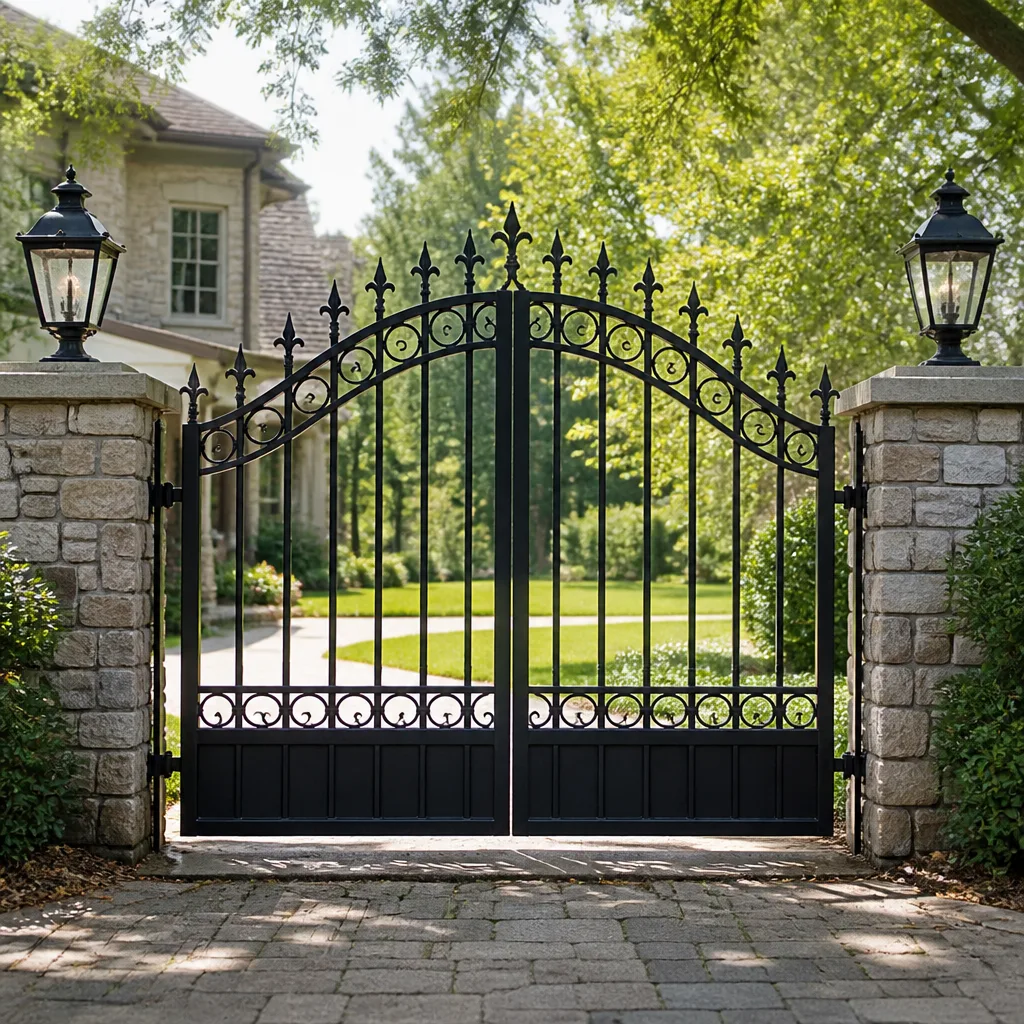 Wrought iron
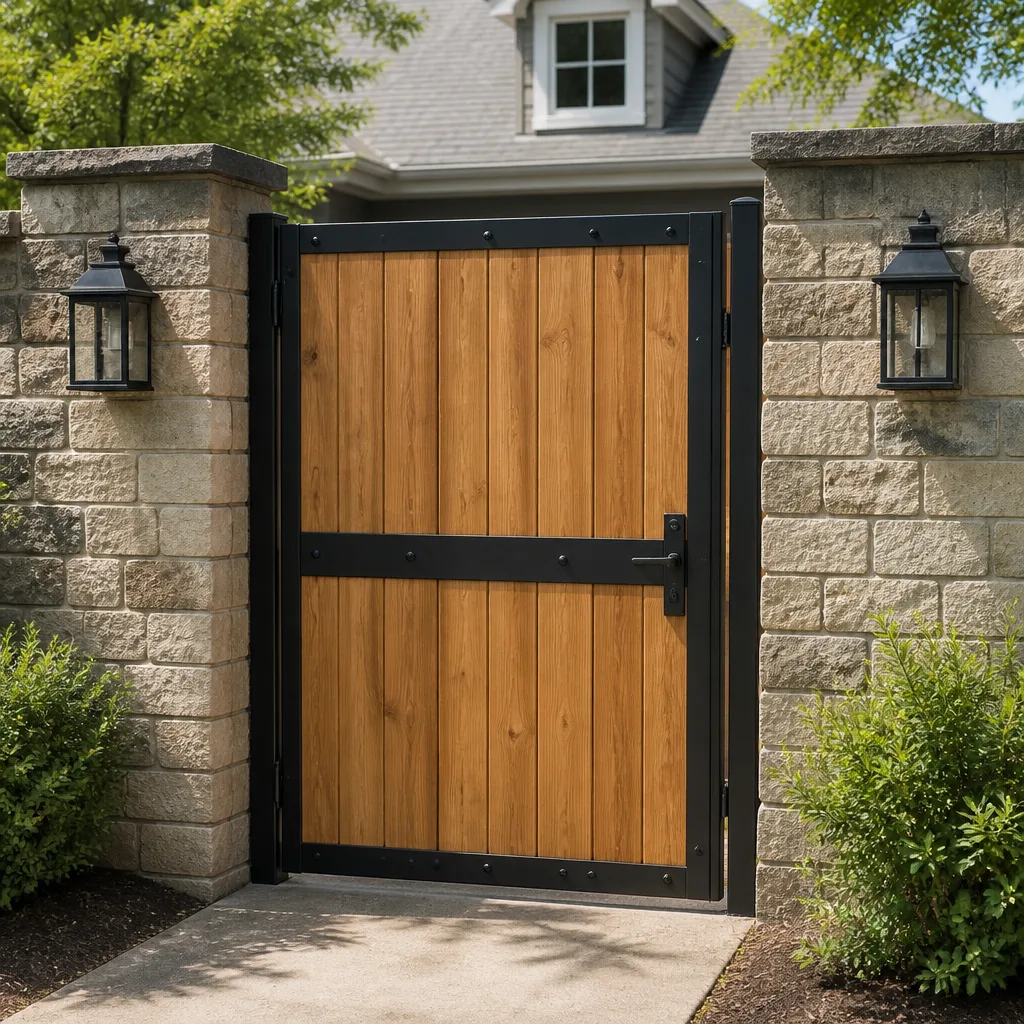 Wood & steel frame
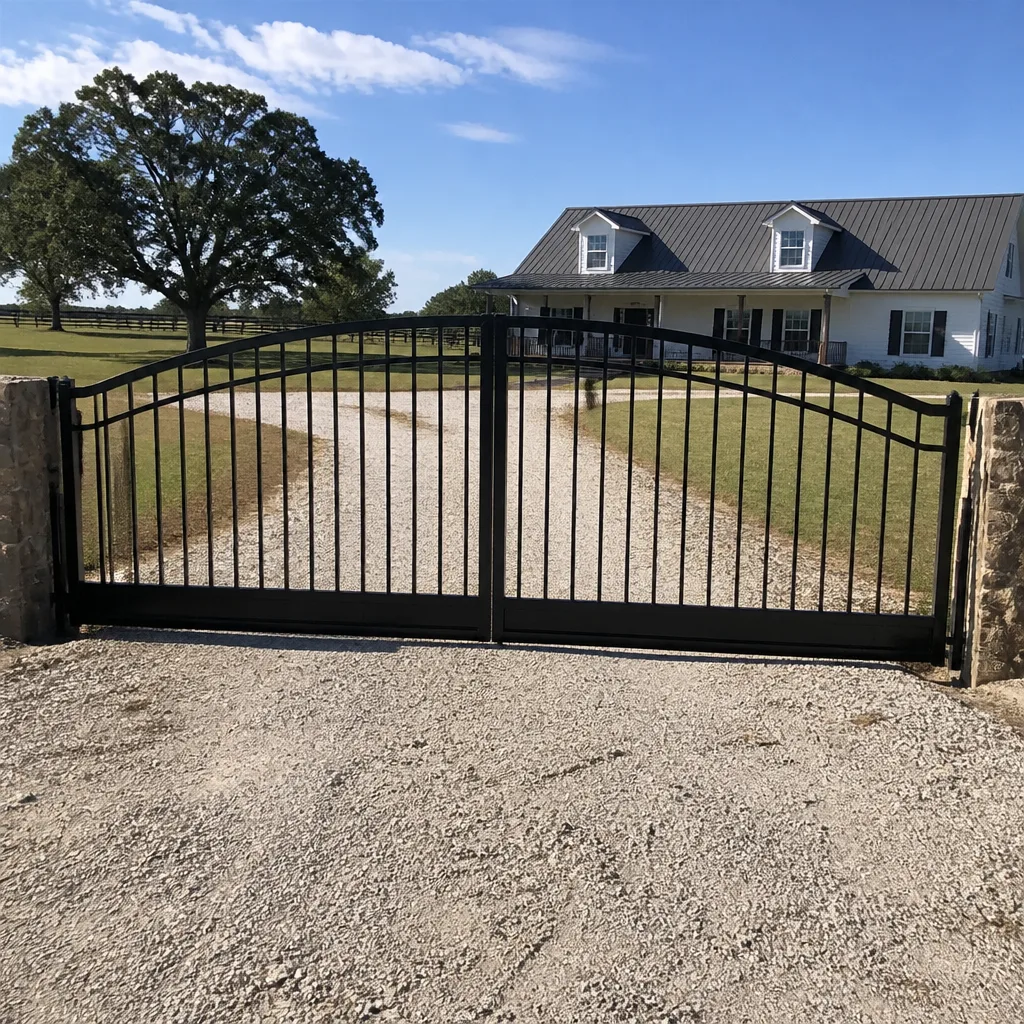 Farm & ranch
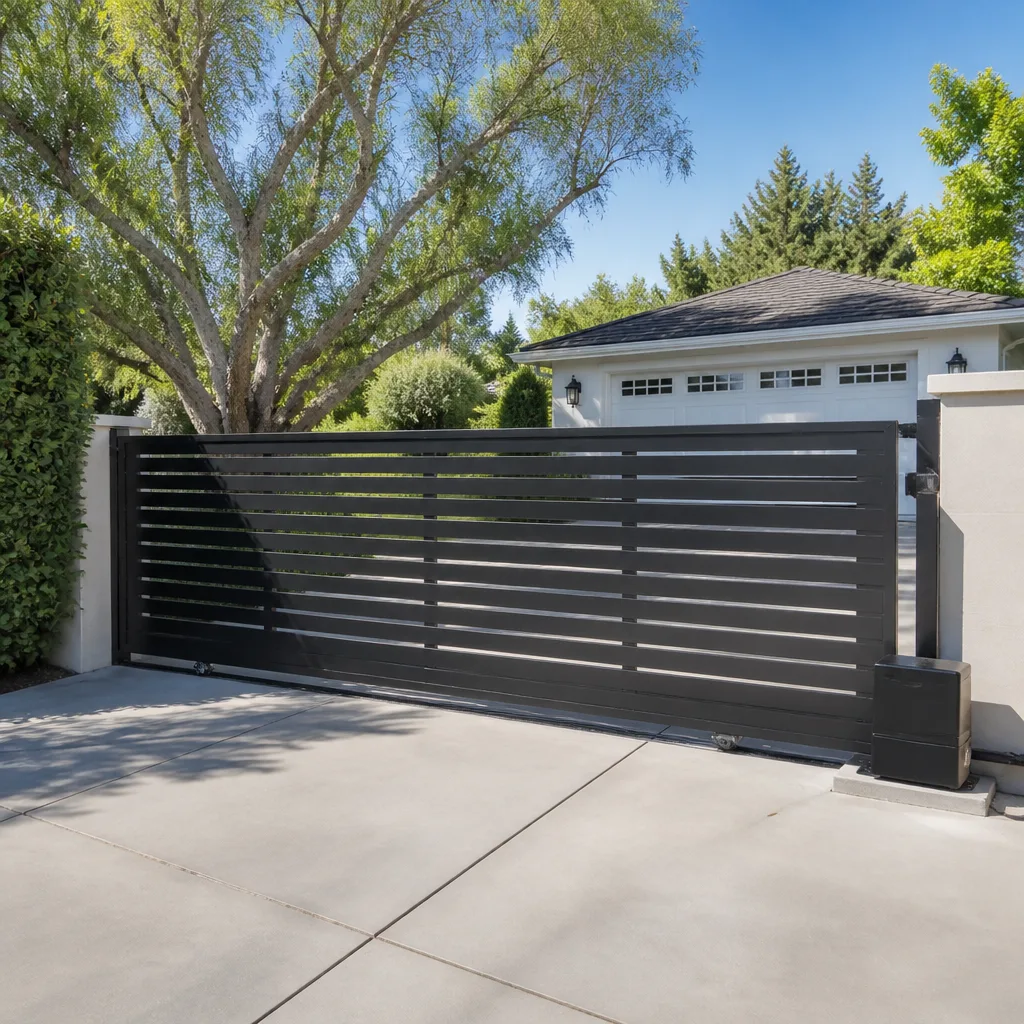 Sliding driveway gates
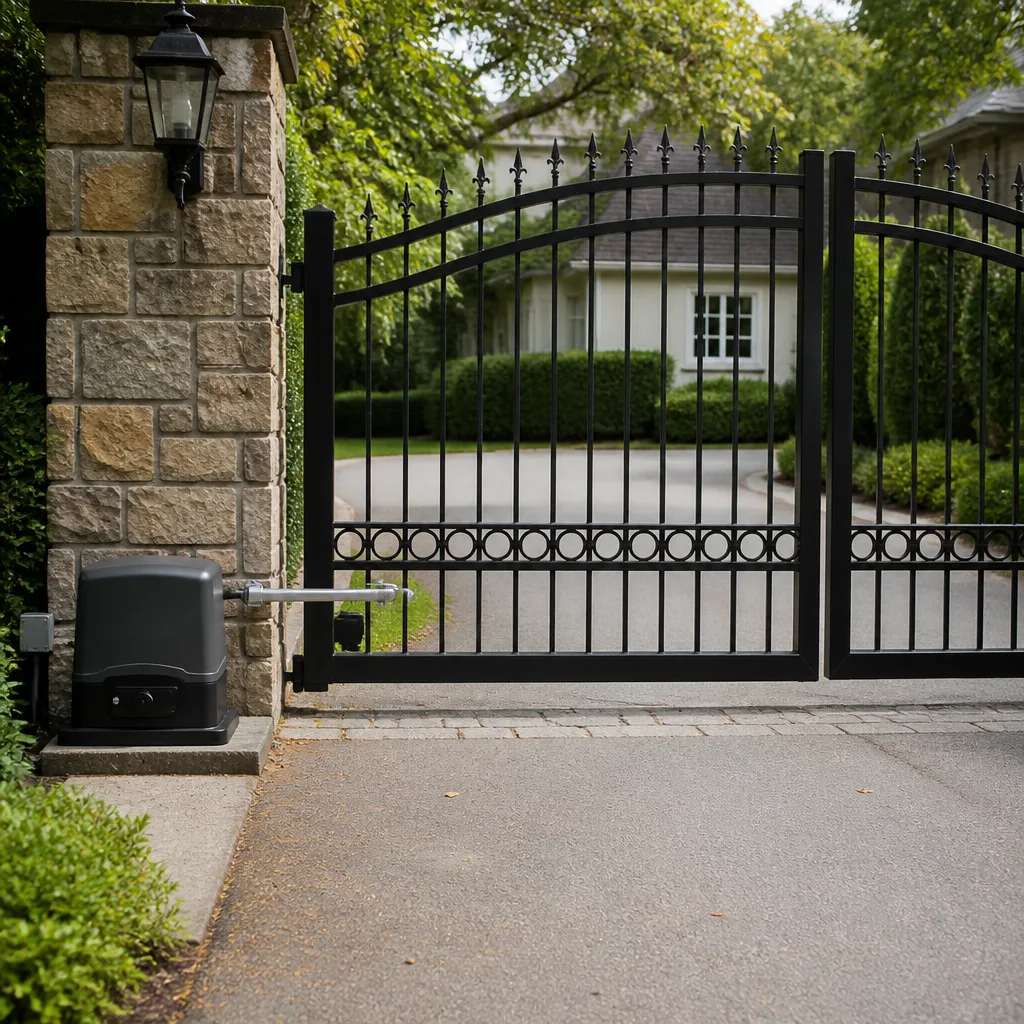 LiftMaster operators
Free on-site gate assessment - hinges, posts, and your LiftMaster or Nice gate operator checked before anything is quoted
The assessment is free and the quote is the invoice.
Get your free estimateDIY vs Professional Gate Repair: The Norfolk Homeowner’s Decision Guide
Most homeowners who search for gate repair advice assume the question is about skill. It isn’t. A stuck latch, a sagging hinge, or a gate panel that drags on the ground is often a genuinely reasonable weekend fix. But the moment the problem lives inside a control board, a motor circuit, or a safety sensor loop on an automated system in Virginia, the question stops being “am I handy enough” and becomes “am I allowed to touch this.” Those are two very different questions, and mixing them up is how homeowners void warranties, create safety hazards, and turn a minor repair into a full replacement. This guide gives you a repair-by-repair decision matrix so you know exactly where your gate sits on that line in Norfolk.
Quick Answer
Manual, mechanical gate problems – hinge lubrication, minor track realignment, latch adjustment, and operating the manual release – are safe and reasonable for a homeowner to handle. Electrical work, control board diagnostics, motor replacement, and safety sensor calibration on automated gate systems should go to a licensed professional, both for liability reasons in Virginia and because branded operators like Linear, Viking, Ghost Controls, and DoorKing require brand-specific knowledge to diagnose correctly. When in doubt, a free estimate costs you nothing and a misdiagnosed control board costs you a lot.
Styles & brands we work with
- Wrought iron
- Wood & steel frame
- Farm & ranch
- Sliding driveway gates
- LiftMaster operators
Table of Contents
- The Gate Repair Decision Matrix: DIY-Safe, DIY-Risky, and Professional-Only
- What DIY Actually Looks Like for Manual Gate Maintenance
- Why Electrical Gate Work Crosses a Legal Line in Virginia
- How Self-Repair Affects Your Manufacturer and Installer Warranty
- The Safety Case: UL 325, Entrapment, and Why Sensor Calibration Matters
- How to Identify Your Gate System Before You Decide Anything
- How to Be a Smart DIY Homeowner and Know When to Stop
- What’s Different About Gate Repair in Norfolk
The Gate Repair Decision Matrix: DIY-Safe, DIY-Risky, and Professional-Only
The single most useful thing you can do before touching your gate is categorize the repair. Almost every gate problem falls into one of three buckets, and the bucket determines your next move. Here’s the breakdown we walk homeowners through every week in Norfolk.
DIY-Safe (Manual Gates)
- Lubricating hinges, rollers, and latches on a manual swing or slide gate
- Adjusting a latch that no longer catches cleanly
- Clearing debris from a slide gate track
- Tightening visible bolts on hinges and posts that have loosened
- Operating the manual release on an automated gate during a power outage
- Wiping down and visually inspecting the gate for wear
DIY-Risky (Mechanical on Automated Systems)
- Realigning a slide gate track that has shifted – doable, but a misaligned track puts load on the operator and can burn out the motor
- Adjusting gate travel limits on the operator arm without the manual
- Replacing a hinge on a heavy automated swing gate – weight and swing arc matter more on motorized gates
- Resetting an operator after a fault without knowing what caused the fault
Professional-Only (Electrical and Control)
- Any work inside the operator housing, control board, or motor
- Safety sensor (photocell) installation, positioning, or calibration
- Wiring, power connections, and low-voltage loop repairs
- Keypad, intercom, and access control integration
- Replacing a failed operator motor
- Diagnosing intermittent faults where the gate opens on its own or stops mid-travel
Notice the pattern: mechanical, visible, and low-voltage-free work is generally fair game for a careful homeowner. Anything that involves current, logic, or the safety loop is not. If you’re not sure which bucket you’re in, that’s a signal to stop and get an on-site assessment. Our Gate Repair Norfolk team handles all three categories, so there’s no penalty for asking.
What DIY Actually Looks Like for Manual Gate Maintenance
Here’s the honest version of DIY gate work: the tasks that are genuinely homeowner-appropriate are simple, repetitive, and low-risk, and they take twenty minutes. They also prevent a surprising number of the repairs we get called out for. If you do these consistently, your manual gate will last far longer between service visits.
Step-by-Step: Basic Manual Gate Maintenance
- Clear the track and hinges. Sweep or blow out dirt, leaves, and grit from the slide track or hinge area. Debris is the single most common cause of a gate that “sticks.”
- Lubricate hinges and rollers. Use a silicone-based lubricant on hinges and roller bearings. Avoid heavy grease on outdoor gates – it traps grit and accelerates wear.
- Check hardware torque. Walk the gate and check every visible bolt on hinges, brackets, and posts. Tighten anything that has worked loose, but don’t over-torque to the point of stripping.
- Test the latch. Open and close the gate slowly and watch the latch engage. If it’s catching on the strike plate, a small adjustment to the strike is usually enough.
- Check post stability. Push gently against the gate post. If it moves at the base, stop here – a loose post is a structural problem, not a maintenance task, and it needs to be assessed.
- Operate the manual release once a month. On an automated gate, find the manual release key or lever provided by the manufacturer and operate it while the gate is unpowered. This keeps the release mechanism from seizing, which is exactly what you don’t want during a power outage.
That’s the whole list. No tools beyond a wrench, a lubricant, and a broom. Anything beyond this on a manual gate – welding, post replacement, panel replacement – is a repair, not maintenance, and it’s worth pricing before you commit.
If your manual gate needs more than a tune-up, professional gate repair is the next step. Mechanical repairs on heavy panels are a genuine crush risk when a gate comes off its track or a post gives way under load.
Why Electrical Gate Work Crosses a Legal Line in Virginia
This is where the DIY conversation changes character. A manual gate is a mechanical device. An automated gate is an electrical system with a motor, a control board, a power supply, and a safety circuit – and in Virginia, electrical work on a property generally requires a licensed electrician or a contractor authorized to perform it. That’s not a technicality. It’s the reason a homeowner’s insurance carrier can decline a claim if a fire or injury traces back to unpermitted electrical work.
Here’s what that means in practice for an automated gate:
- Anything past the low-voltage side is off-limits. The line-voltage connection feeding the operator should be handled by a licensed electrician or a contractor qualified to do that work.
- Low-voltage control wiring still carries risk. Even 24V DC control systems can cause operator malfunction, and miswiring can damage the control board beyond repair.
- Permits may apply. Depending on the scope of electrical work at your property, the City of Norfolk may require a permit. If you’re unsure whether your repair falls under that, ask the city’s permitting office directly before work begins.
There’s a subtler reason to leave electrical work to a specialist, too. Automated gate operators are not interchangeable. A Viking control board handles faults differently than a Linear board, and neither behaves like a DoorKing commercial unit. A general handyman without brand-specific diagnostic experience will often guess, replace a part that wasn’t broken, and leave you with a gate that fails again in a month. When we diagnose a gate, we open the actual control board of the actual manufacturer and read what it’s telling us.
If your automated gate is acting up, professional electric gate repair is the appropriate call – not because the repair is exotic, but because a wrong guess inside a control system is expensive.
How Self-Repair Affects Your Manufacturer and Installer Warranty
Most homeowners don’t read the warranty documentation on their gate operator until something goes wrong. By then, it’s too late. Here’s the part worth knowing now: nearly every branded operator – LiftMaster, FAAC, BFT, Linear, Viking, Ghost Controls, DoorKing, Elite, Mighty Mule – carries a manufacturer warranty that is conditional on the system being installed and serviced in accordance with the manufacturer’s instructions. Opening the operator housing, adjusting internal components, or rewiring the control board yourself typically voids that coverage.
The installer warranty is a separate exposure. If a contractor installed your gate and you call them back for a failure they can trace to your own repair attempt, the callback is likely billable, and the original workmanship coverage may not apply to the affected components.
What Voids Coverage, Typically
- Opening the operator housing beyond the manufacturer-permitted access points
- Adjusting internal limit switches, torque settings, or control board jumpers
- Rewiring any part of the safety sensor loop
- Installing non-manufacturer parts inside the operator
- Bypassing or disabling a safety feature
What Doesn’t Void Coverage
- Routine external maintenance (lubrication, cleaning, hardware torque checks)
- Operating the manual release as designed
- Visual inspections and reporting faults to a service technician
The economics are simple. A control board replacement on a branded operator is a real cost. So is an operator motor. If you guess wrong, you pay for the guess and the repair. A free estimate from a brand-specific specialist costs you nothing and protects the warranty on the equipment you already own.
The Safety Case: UL 325, Entrapment, and Why Sensor Calibration Matters
The UL 325 standard for gate operators exists because automated gates have caused serious injuries and fatalities when safety features fail. That’s the whole reason the standard exists. It governs things like obstruction detection, sensor placement, entrapment protection, and the behavior of the gate when the safety loop is interrupted. It is not paperwork. It is the difference between a gate that stops when a child walks behind it and a gate that doesn’t.
When a homeowner recalibrates a photocell sensor or adjusts operator torque “until it works,” the gate may close smoothly every time – until the one time something is in the path. Sensors that are misaligned by a few degrees, or that have been moved to eliminate nuisance tripping, can fail to detect an obstruction in exactly the zone they were installed to protect. Torque that’s been increased to overcome a dragging track will keep pushing through an obstruction that the sensors should have caught. These are not hypothetical failure modes; they’re the reason the standard was written.
There’s also the crush risk on the gate itself. Automated swing gates are heavy, and automated slide gates that come off their track can fall or swing unpredictably. Both scenarios are worse when the operator is still powered and trying to complete a cycle.
Two rules follow from this, and they’re worth stating plainly:
- Never disable or bypass a safety sensor to stop nuisance tripping. If your gate is reversing on nothing, the sensor, the alignment, or the operator settings need real diagnosis, not a workaround.
- Never increase operator force to overcome a mechanical bind. A gate that needs more force to close has a mechanical problem – the track, the hinge, the post – that force will make worse, not better.
A trained technician can verify sensor function, torque settings, and entrapment protection in a single visit. That’s a service worth paying for, on equipment that moves hundreds of pounds on a schedule you don’t control.
How to Identify Your Gate System Before You Decide Anything
You can’t make a good DIY decision until you know what you’re standing in front of. Manual or automated? If automated, what brand and what type of operator? This matters because the brand determines everything about how the repair should be approached, and it determines whether a generalist can even order the right parts.
What to Look For
- Manual vs automated. Is there a motor housing, a control box, or a power connection anywhere on the gate or post? If yes, it’s automated.
- The brand plate. Find the manufacturer label on the operator housing or the control box. Note the brand name exactly. Common residential brands include Linear, Viking, Ghost Controls, and Mighty Mule. Commercial systems often carry DoorKing, LiftMaster, or FAAC branding.
- The operator type. Swing gates typically use a linear arm or articulated arm operator. Slide gates use a rack-and-pinion or chain-drive operator mounted to the gate. The type tells you which mechanical parts are accessible for maintenance and which are inside the housing.
- The safety sensor setup. Photocells are usually mounted on posts on both sides of the gate path, at a height that catches a child or vehicle. Note whether the sensor lenses are clean, aligned, and unobstructed.
- The manual release. Locate the key or lever for the manual release before you need it. On most operators it’s on the motor housing; on some, on the arm. Knowing where it is in advance is the difference between a calm two-minute procedure and a panicked search in the dark.
Once you know your brand and operator type, the DIY decision becomes much clearer. If it’s a manual gate, most visible mechanical tasks are fair game. If it’s automated, maintenance on the outside of the housing is fair game and everything inside is not. Our Norfolk team works with the brand you already have, from Ghost Controls residential units to DoorKing commercial operators, so there’s no penalty for calling on a brand another contractor might not recognize.
How to Be a Smart DIY Homeowner and Know When to Stop
The best outcome here is not “DIY everything” or “call a pro for everything.” It’s knowing the line and staying on the right side of it. A homeowner who does the right maintenance on a manual gate will get years more life out of it. A homeowner who does the wrong thing on an automated gate will spend money undoing it.
The Smart DIY Playbook
- Do the monthly maintenance. Lubricate, clear debris, torque-check hardware, and operate the manual release. Twenty minutes a month.
- Log faults. When your automated gate misbehaves, write down what happened: the time, the weather, whether the gate was opening or closing, and whether anything was in the path. That log is gold for a technician and it saves diagnostic time.
- Learn the manual release cold. Practice operating it once a season. It’s the one automated-system skill every homeowner should be comfortable with.
- Stop at the housing. The moment you’re reaching for a screwdriver to open the operator or control box, stop. That’s the line.
- Stop at the safety loop. Never adjust, move, clean-and-reposition, or bypass a photocell on your own. That’s the second line.
- Stop at the post. A post that moves under light pressure is a structural problem. It’s not a DIY fix and it won’t be solved by tightening hardware.
Follow that playbook and you’ll handle more of your own gate care than most homeowners do, and you’ll know exactly when to hand off. Our technicians have up to 9 years of experience working across brands and system types, and a free estimate will tell you whether you’re looking at a maintenance task or a real repair.
What’s Different About Gate Repair in Norfolk
Gate work in Norfolk has a few local realities that shift the DIY vs professional calculation. Norfolk’s housing stock is a mix of historic properties with older gates and newer construction with modern operators, and that creates a wide spread in what a “typical” gate looks like from one block to the next. Older gate systems sometimes predate current safety standards entirely, which means a technician needs to assess not just the failure at hand but whether the system meets entrapment protection requirements at all. Newer automated gates with integrated access control add a different layer of complexity – keypads, intercoms, and app-based operators are common on residential systems that would have been manual gates a decade ago.
Weather matters too. Norfolk gets summer heat and humidity, and it gets storm cycles. Heat and moisture both accelerate wear on hinges, rollers, and control enclosures, and storm debris is one of the most common causes of a slide gate that suddenly stops mid-travel. None of that changes the DIY rules, but it does mean maintenance frequency matters more here than in a drier climate. A gate that would get an annual tune-up elsewhere benefits from a more regular check in Norfolk.
If you’re in an HOA or a commercial property, there’s one more consideration: many HOAs and commercial properties have specific requirements about gate maintenance records and approved service providers. Before you do your own repair on a shared gate, check the association’s rules – a self-repair that isn’t documented can create problems at the next inspection.
Common Mistakes to Avoid
- Reaching into the operator housing because a YouTube video made it look simple. A video of a motor swap on a bench is not the same as working on a live, installed system in Norfolk. The video doesn’t show you the wiring, the sensor loop, or the warranty language.
- Increasing torque to fix a dragging gate. Force is not a fix. A dragging gate has a mechanical problem, and added torque turns a repair into an operator replacement.
- Bypassing a photocell to stop nuisance reversing. Nuisance tripping is annoying, but the safe response is diagnosis, not disabling the sensor that protects your gate path.
- Ignoring a loose post. A post that shifts at the base is a structural issue. Hardware tightening won’t fix it, and continuing to operate the gate makes it worse.
- Buying a generic replacement part online for a branded operator. Control boards, limit switches, and sensor kits are not interchangeable across brands. A wrong part can damage a board that was still working.
- Assuming a handyman who does fences also knows gate operators. Fence work and gate automation are different trades. The wiring, the logic, and the entrapment protection requirements are specialist knowledge.
- Waiting until the gate fails completely. A gate that’s slowing down, binding, or hesitating is telling you something. Handle it while it’s a repair, not after it’s a replacement.
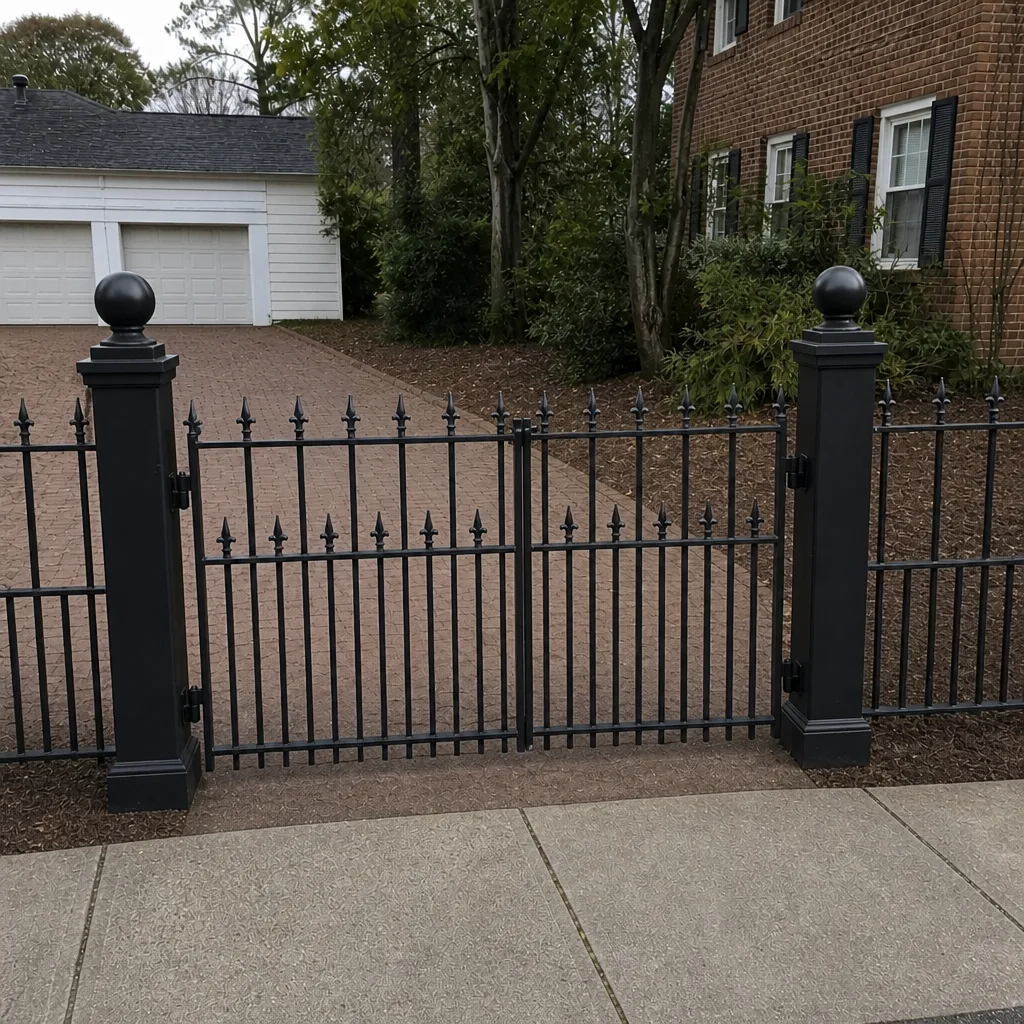
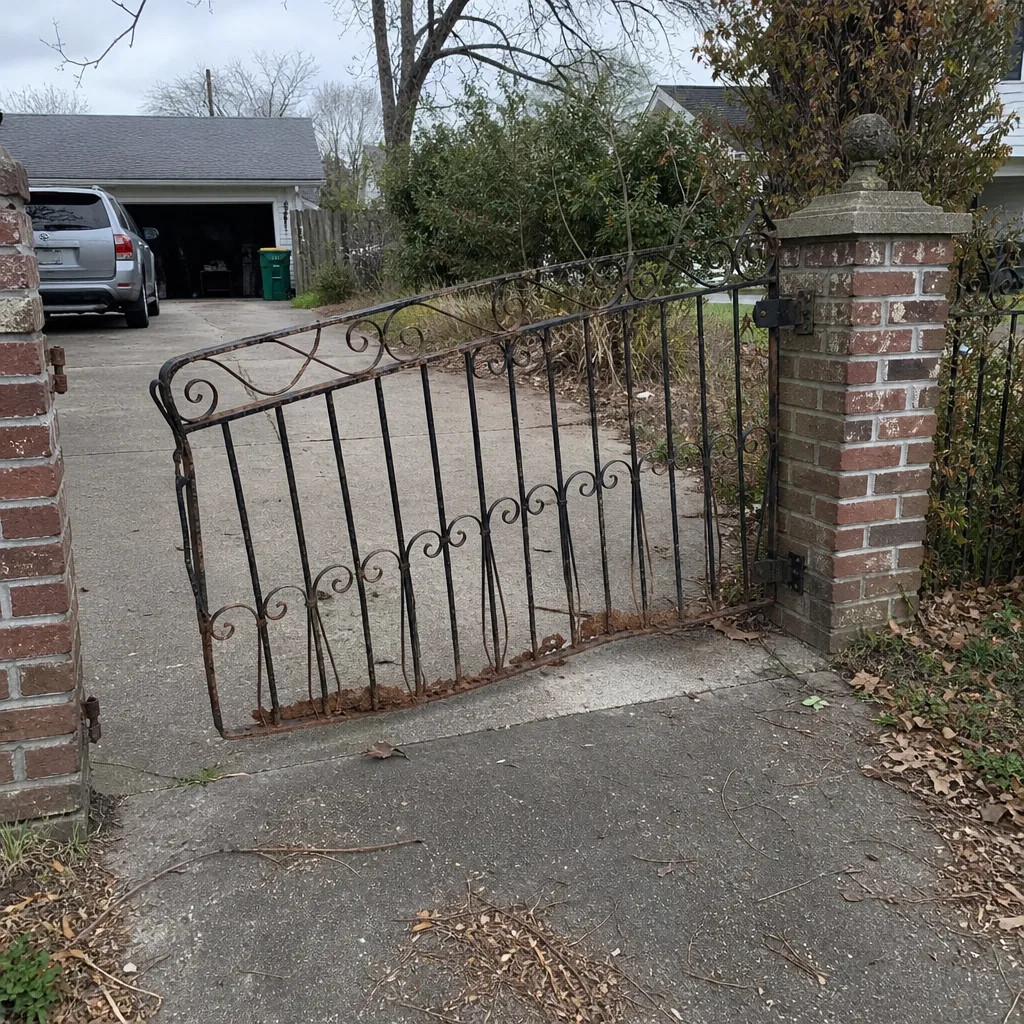
See the difference
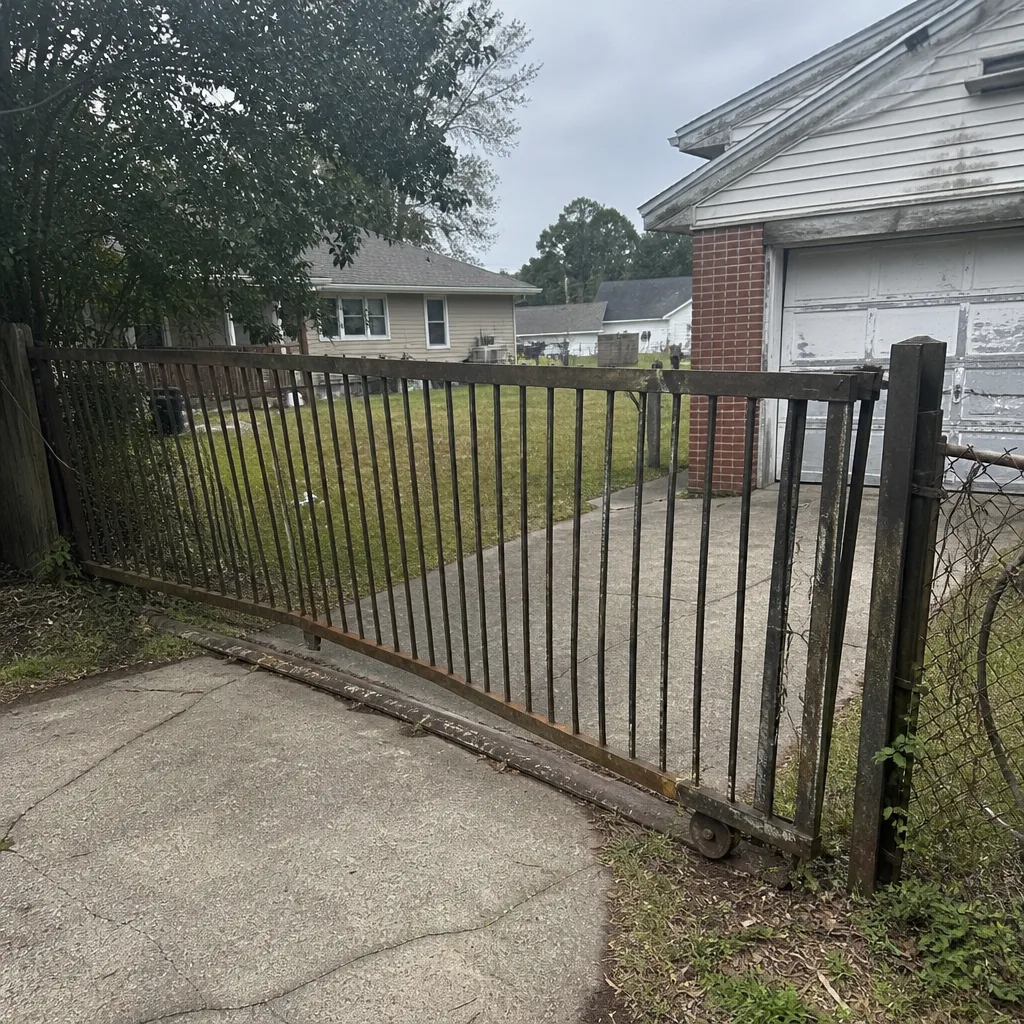 Before
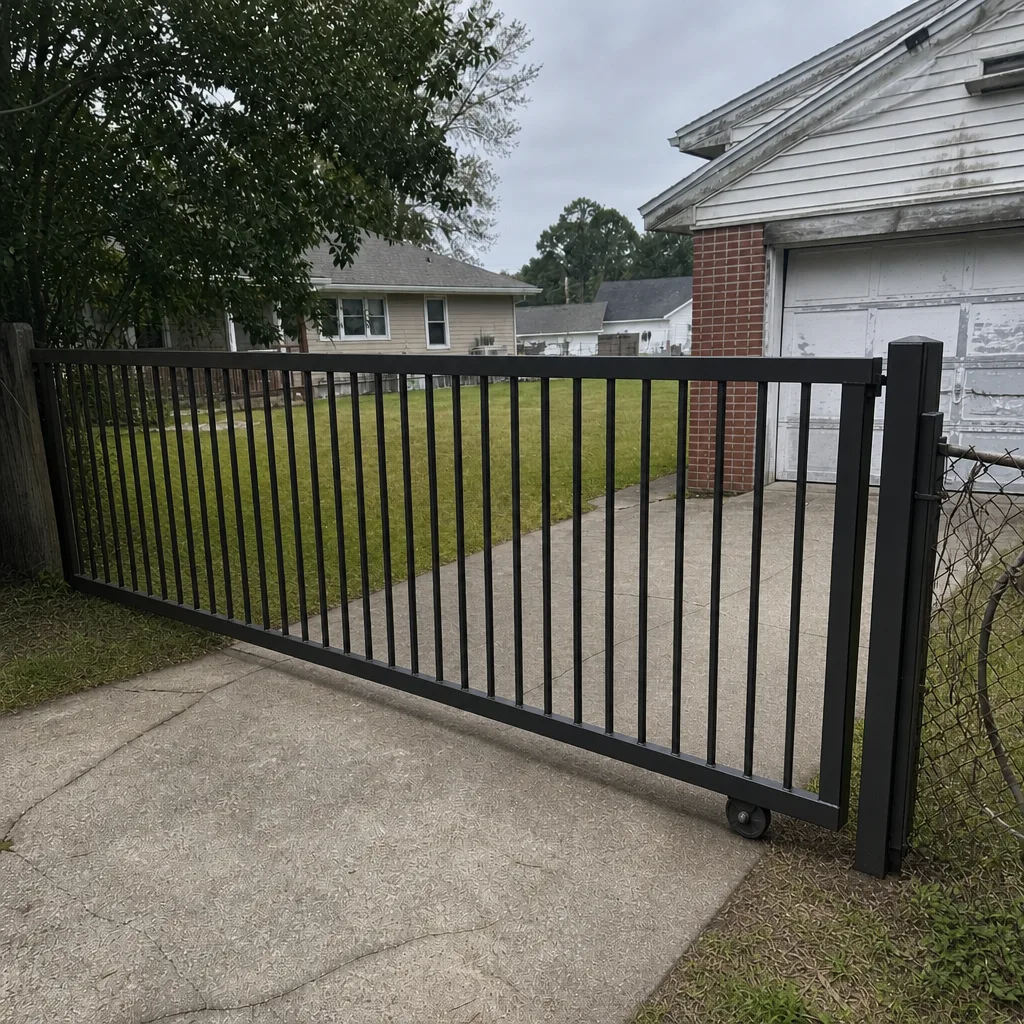 After
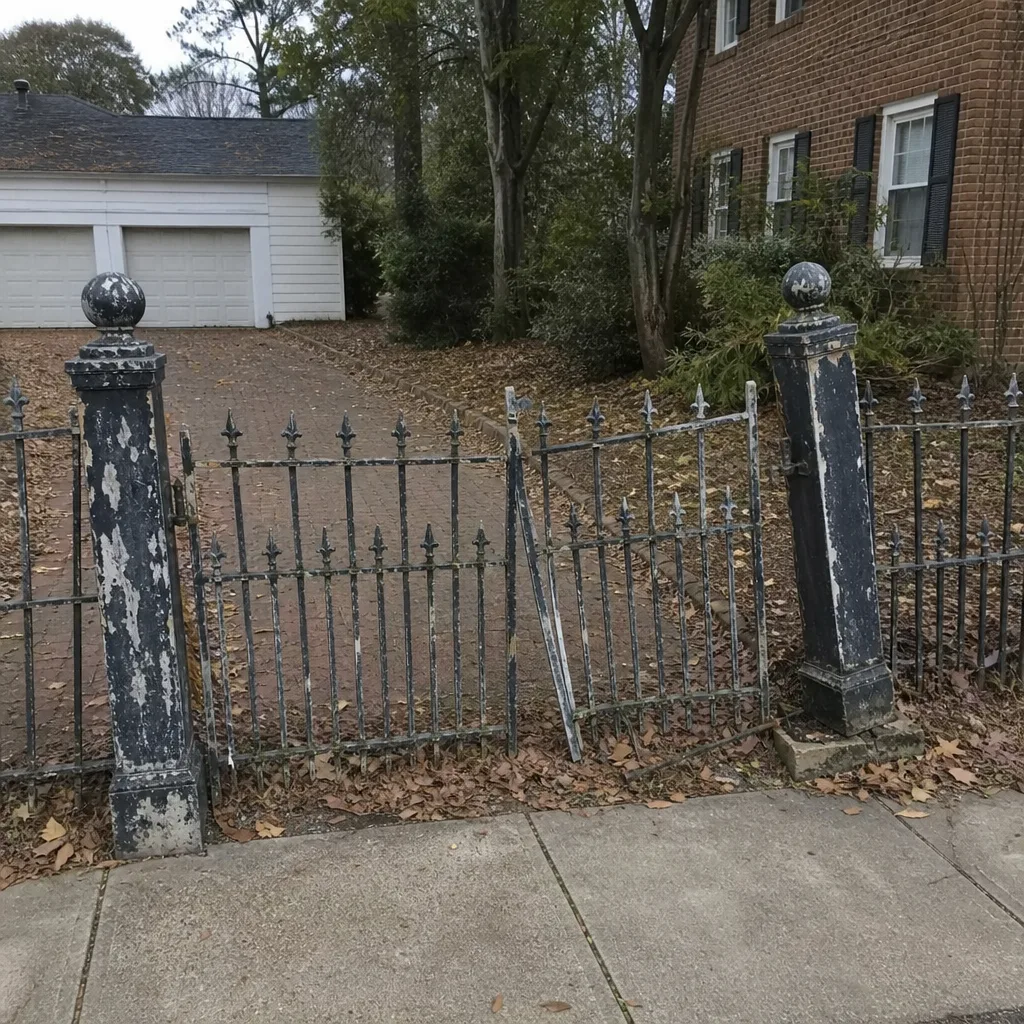 Before
 After
 Before
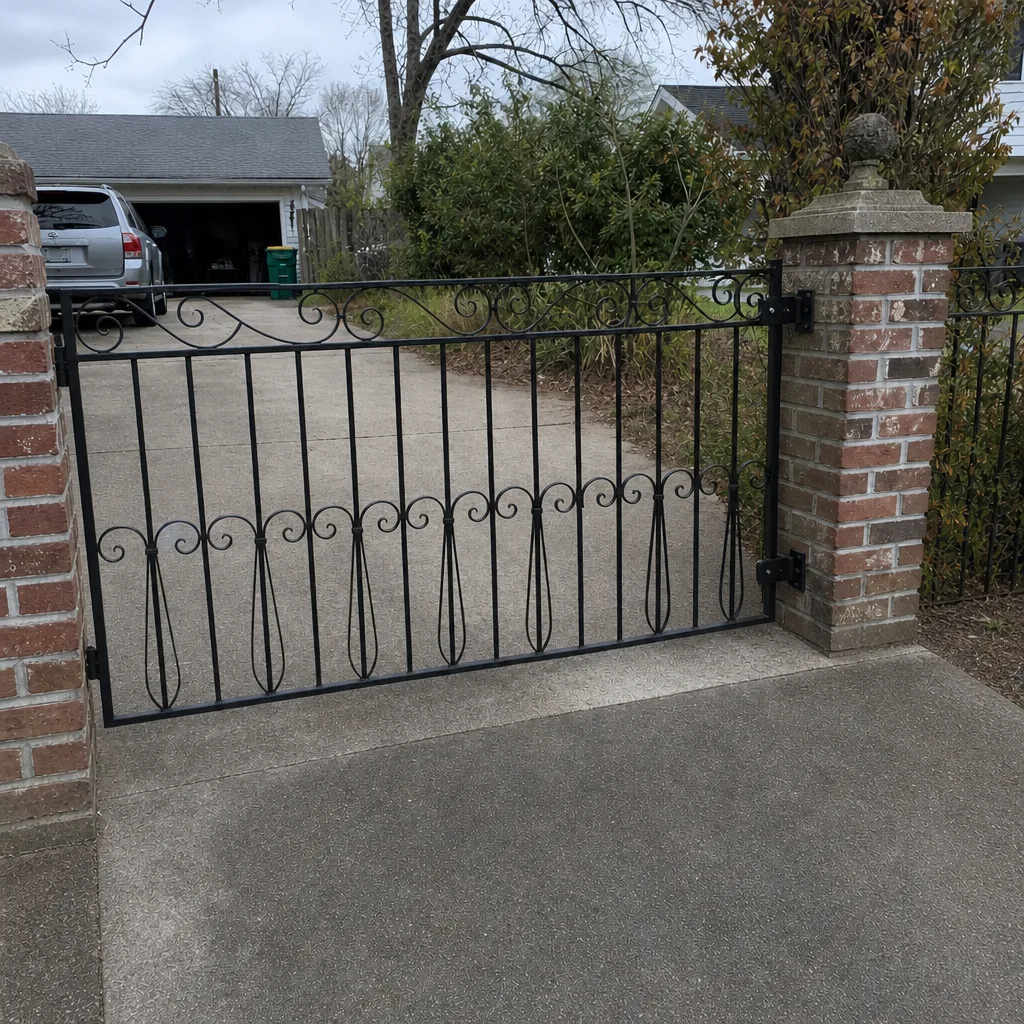 After
When to Call a Professional
Call a professional when the problem is electrical, involves the control board, touches the safety sensor loop, or happens on a branded operator you don’t recognize. Call when the gate moves with the operator off, or refuses to open with the manual release. Call when the post moves, the panel is cracked, or the gate has come off its track and needs to be lifted back onto it. Call when you’ve tried the maintenance steps and the problem persists. And call if you’re simply not sure which category you’re in – a wrong guess on a control board is expensive, and a wrong guess on a safety sensor is worse. Gate Repair Norfolk offers free estimates in Norfolk – call (844) 410-6351. We answer 24/7, with fast dispatch from 7am to 7pm, Sunday through Friday.
Frequently Asked Questions
It’s safe for manual, mechanical tasks like lubricating hinges, clearing tracks, adjusting latches, and tightening hardware. It is not safe to open an operator housing, touch the control board, or adjust safety sensors on an automated gate. Those are the repairs that require a professional, both for safety and for warranty protection.
No, not safely or legally for the electrical portion. Electrical work on a property in Virginia generally requires a licensed contractor, and control board or motor work on an automated system falls into that category. Mechanical maintenance on the outside of the gate is fair game; anything inside the operator is not. Call (844) 410-6351 for a free estimate – estimates are free and we work with the brand you already have.
It can, yes. Most branded operators – LiftMaster, FAAC, BFT, Linear, Viking, Ghost Controls, DoorKing, Elite, and Mighty Mule – carry warranties conditional on installation and service being performed to the manufacturer’s instructions. Opening the housing or adjusting internal components can void that coverage on the affected parts. A free estimate protects the equipment you own.
Don’t. Nuisance reversing means the safety sensor, its alignment, or the operator logic needs diagnosis – not adjustment. A sensor that’s been repositioned to stop the nuisance tripping may fail to detect an obstruction in the exact zone it was installed to protect. This is a call-a-professional repair. Call (844) 410-6351 and we’ll diagnose it correctly.
Manual gate repair covers mechanical work – hinges, latches, tracks, posts, and panels – on a gate without an operator. Electric gate repair covers the motor, control board, wiring, safety sensors, and access control on an automated system. We handle both, which means you make one call regardless of which type of gate you have.
Yes. We work on nine named brands: LiftMaster, FAAC, BFT, Linear, Viking, Ghost Controls, DoorKing, Elite, and Mighty Mule. That spans residential units like a Ghost Controls DIY-installed gate through commercial-grade operators like DoorKing. Brand-specific diagnostics mean we open the actual board of your actual manufacturer rather than guessing. Call (844) 410-6351 for a free estimate.
The Bottom Line
The DIY vs professional question on gate repair comes down to category, not skill. Manual gate maintenance is a legitimately homeowner-friendly task and doing it consistently will extend the life of your gate. Automated gate work – anything electrical, anything inside the operator, anything touching the safety sensor – belongs with a professional, both for Virginia liability reasons and because the safety standard exists for real reasons. Be a smart DIY homeowner: maintain what’s safely maintainable, log what isn’t, and know exactly where your line is. When your gate crosses that line, a free estimate tells you what you’re actually dealing with before you spend anything. Call (844) 410-6351 for a free estimate. We answer 24/7, with fast dispatch from 7am to 7pm, Sunday through Friday.
Written by the team at Gate Repair Norfolk.