
Last updated November 16, 2026
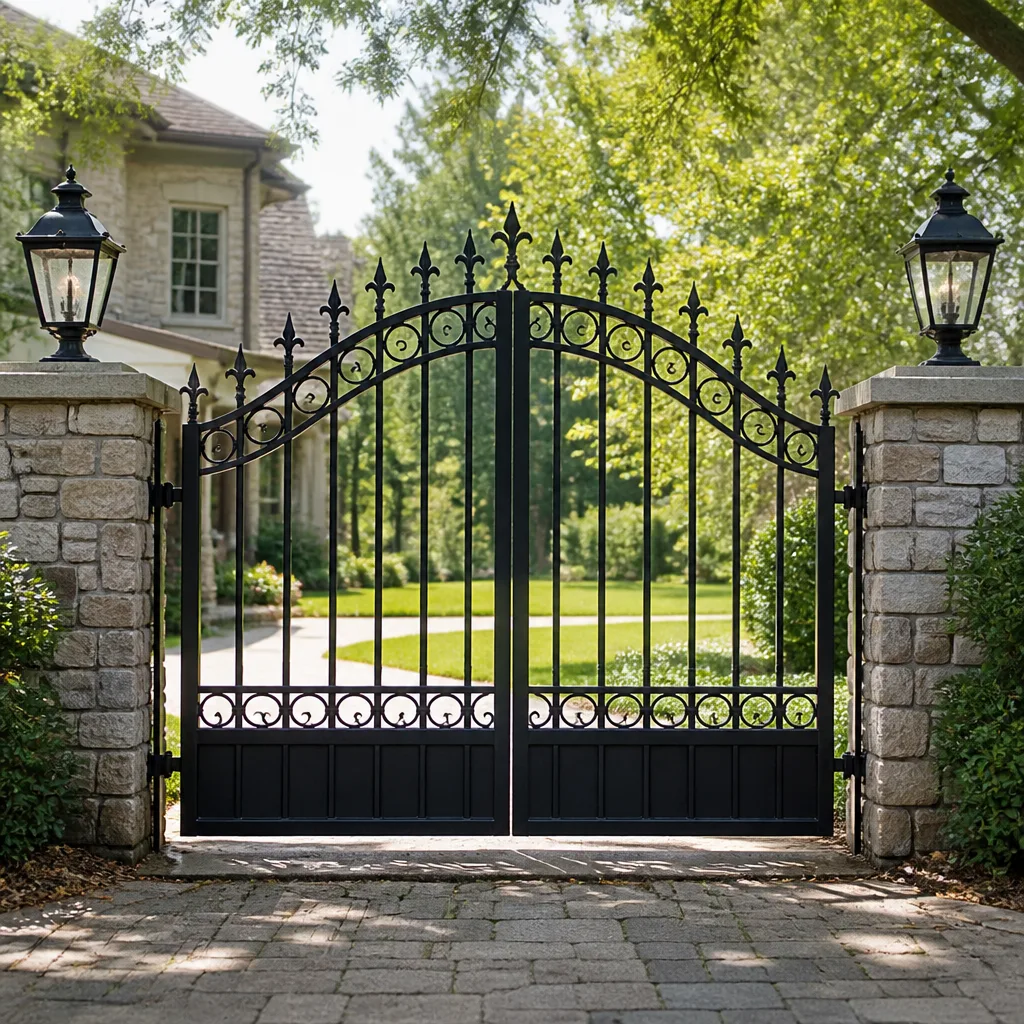 Wrought iron
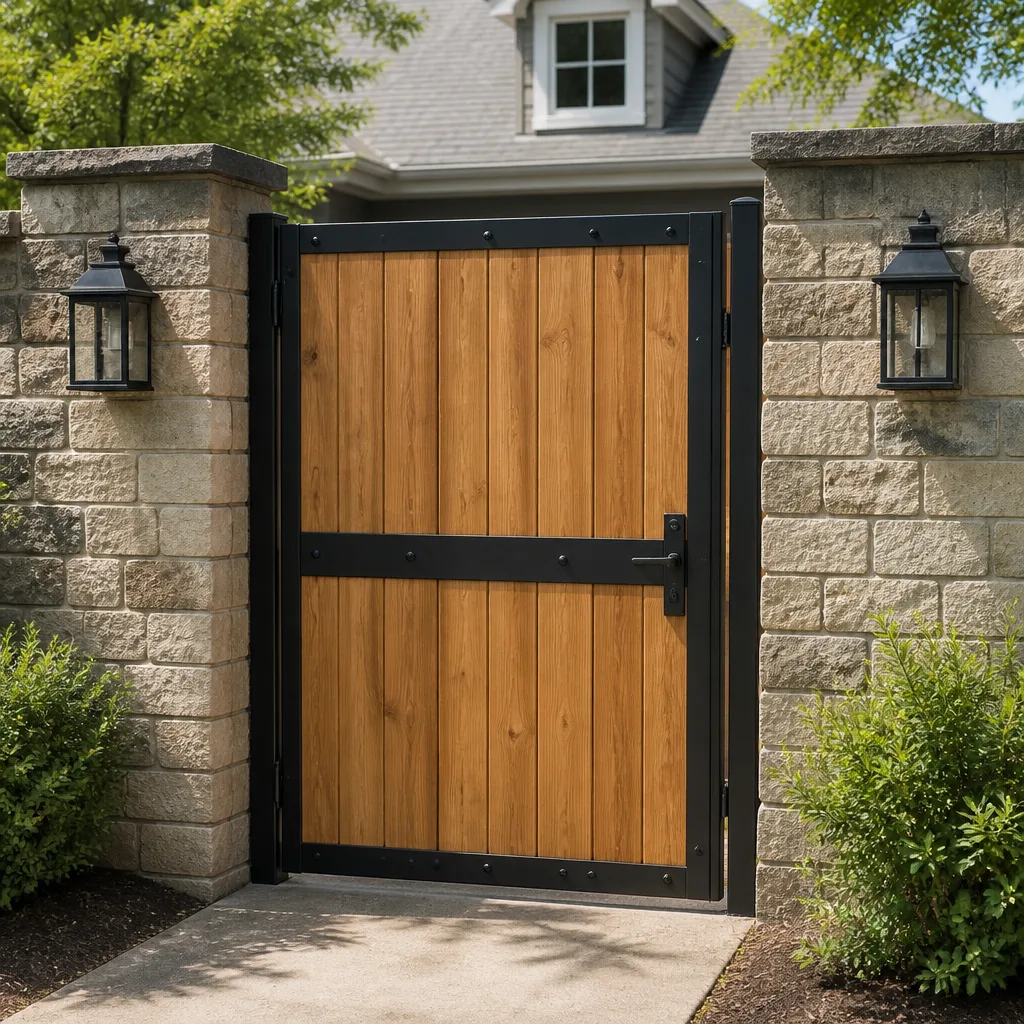 Wood & steel frame
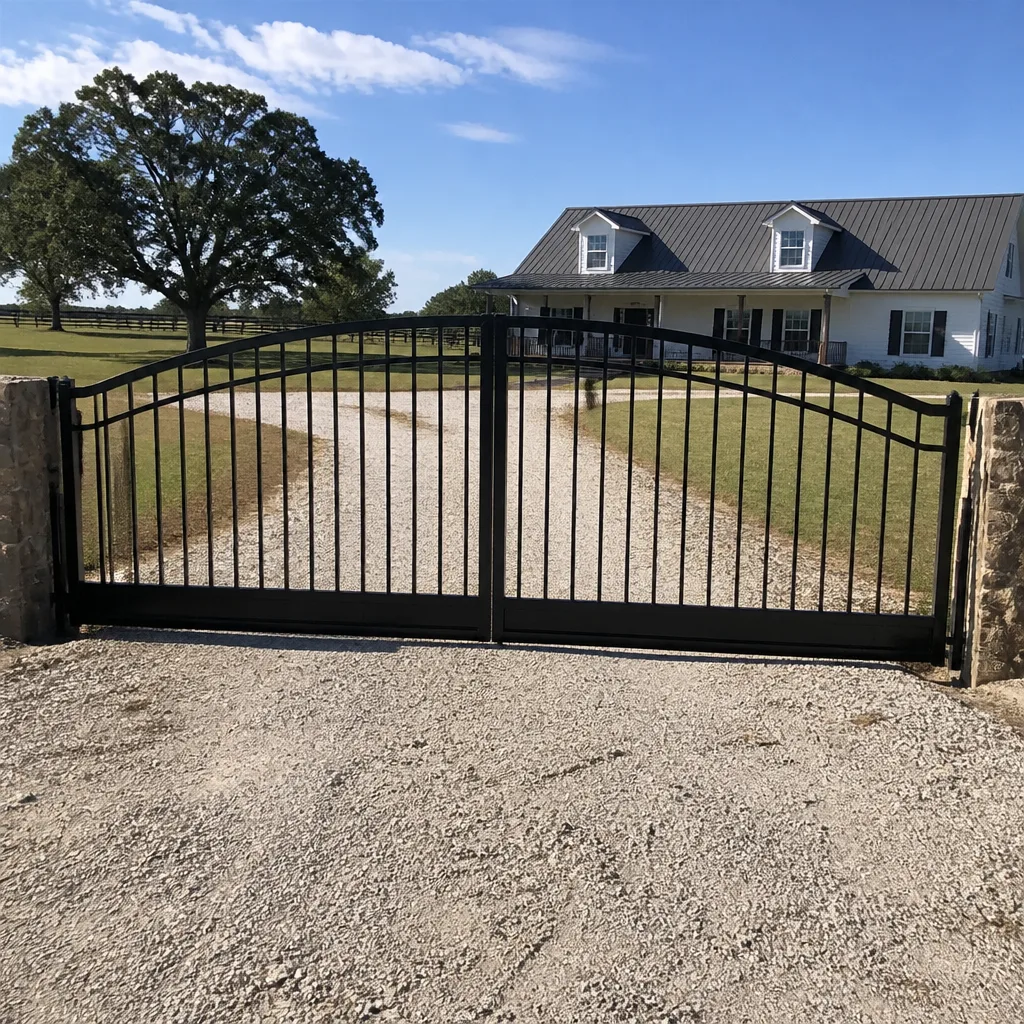 Farm & ranch
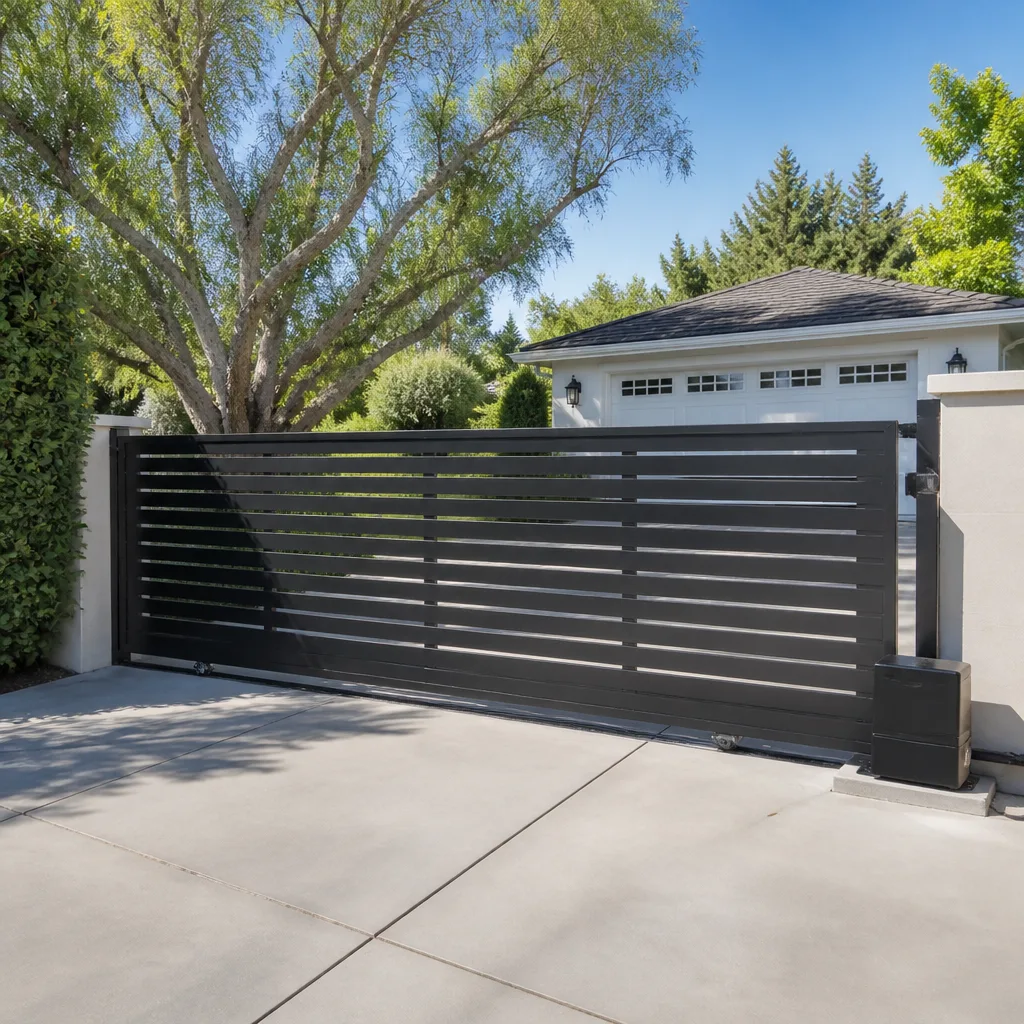 Sliding driveway gates
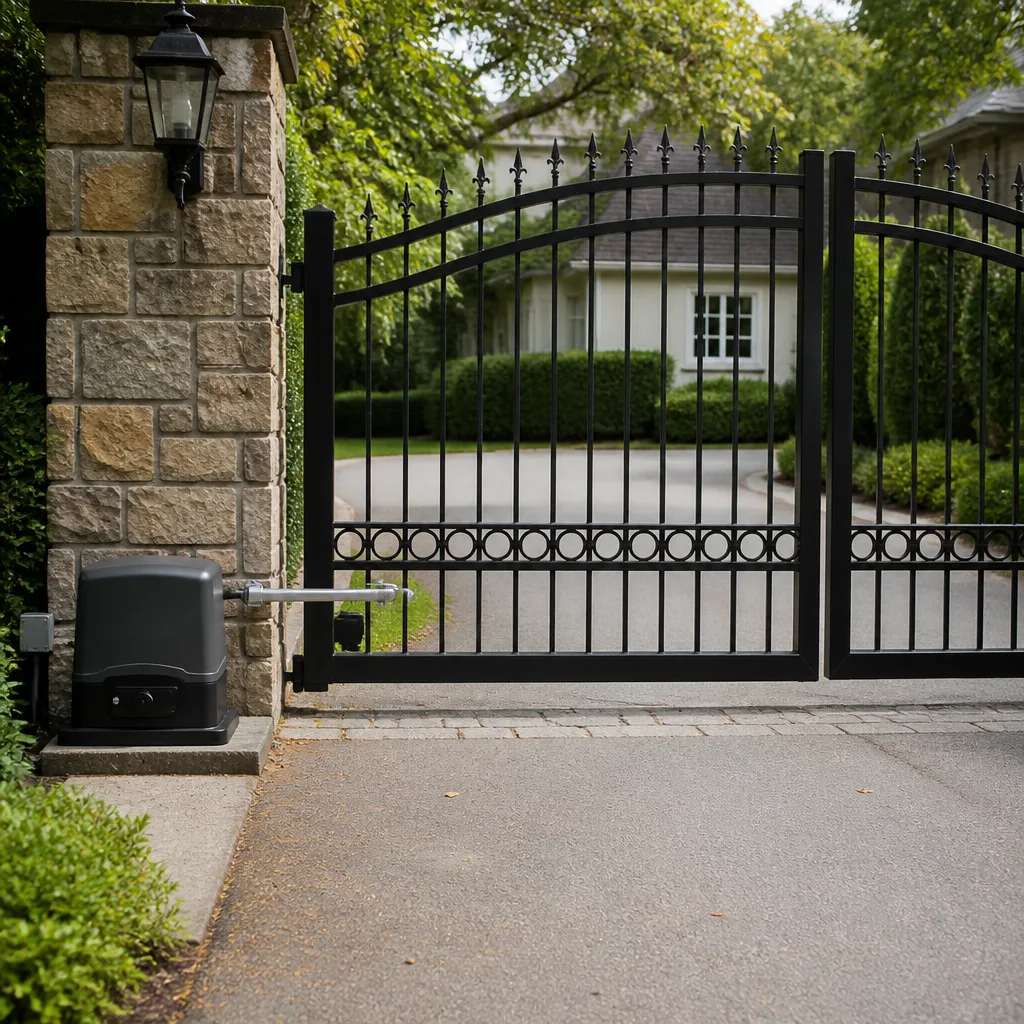 LiftMaster operators
Free on-site gate assessment - hinges, posts, and your LiftMaster or Nice gate operator checked before anything is quoted
The assessment is free and the quote is the invoice.
Get your free estimateThe Complete Guide to Gate Repair in Norfolk
Most gate failures aren’t sudden. They’re the end of a slow decline nobody watched: a hinge that’s been stiffening for months, a control board collecting moisture, a post that’s crept a quarter inch since the last hard freeze. By the time the gate stops mid-swing, the problem is usually older than the homeowner thinks. This guide maps every common Norfolk gate failure to its likely cause, separates the repairs that are genuine security risks from the ones that can wait a few days, and explains why the brand on your operator changes who can actually fix it. You’ll finish knowing what your gate is telling you.
Quick Answer
Gate repair in Norfolk means diagnosing a system, not swapping a part. A gate that won’t open is usually a failed operator, a misaligned sensor, a control-board fault, or a mechanical bind at the hinges or track, and which one it is depends on your gate type and brand. A specialist who works on your specific operator can usually identify the cause on the first visit and get you back up and running, whether it’s a residential swing gate or a commercial slide gate.
Styles & brands we work with
- Wrought iron
- Wood & steel frame
- Farm & ranch
- Sliding driveway gates
- LiftMaster operators
Table of Contents
- Why Gates Fail in Norfolk: Climate, Soil, and Voltage
- Swing, Slide, and Barrier Arm: Why Repair Logic Differs
- Which Repairs Are Urgent and Which Can Wait
- Why Brand Matters: Firmware, Parts, and Who Can Fix It
- How a Proper Gate Diagnosis Works, Step by Step
- Repair or Upgrade? When a Fix Stops Working
- Commercial and HOA Gates: What’s Different
- What Actually Prevents Repeat Failures
Why Gates Fail in Norfolk: Climate, Soil, and Voltage
Norfolk sits in a part of Virginia where the air holds a lot of moisture for much of the year, and that shapes gate repair in ways that don’t show up in a general repair manual. Metal parts that would last years inland often show wear faster here. The pattern repeats across the city: gates that worked fine through a dry stretch start acting up after a wet season, and operators that ran quietly in spring get sluggish in the summer humidity.
Three forces do most of the damage:
- Humidity and moisture. Control boards, terminal blocks, and wire connections live inside a housing that breathes. Persistent damp accelerates oxidation on circuit contacts and corrodes hinge pins, latch hardware, and weld seams on steel frames. It’s rarely one dramatic failure. It’s a slow buildup that ends in an intermittent fault.
- Soil movement. Gate posts sit in soil that swells and shifts with wet and dry cycles and freezes and thaws. A post out of plumb by a fraction of an inch throws off the geometry of the whole gate. Swing gates start to bind or drag; slide gates jump the track. Homeowners often blame the operator when the real problem is the footing.
- Voltage fluctuation. Automated operators are sensitive to low or erratic voltage. Brownouts and surges can put a control board into a fault state or shorten a motor’s life. An operator that “randomly” stops is sometimes reporting a power problem, not a mechanical one.
In our experience, the gates that fail earliest are the ones where all three forces overlap: a steel slide gate on a shifting post with an operator in a moisture-prone enclosure. That combination is common in Norfolk, and it’s why we treat a repair as a full system check rather than a single-part replacement. For a focused look at the automated side, see our page on electric gate repair.
Swing, Slide, and Barrier Arm: Why Repair Logic Differs
The single biggest reason a gate repair goes wrong is that someone applies swing-gate thinking to a slide gate or a barrier arm. The three families share electronics, but their mechanical logic and failure patterns are different, and so is the order in which you check things.
Swing gates
Swing gates pivot on hinges and are driven by an arm or an underground operator. The mechanical weak points are the hinges and the gate’s alignment with the post. When a swing gate drags or stops halfway, we check hinge wear and post plumb before we touch the operator. If the gate can’t swing freely by hand, no operator will fix it.
Slide gates
Slide gates roll on wheels along a track or hang from an overhead rail. Failures cluster at the track, the rollers, and the guide posts. A slide gate that jumps track or grinds is usually telling you about the foundation and the track, not the motor. Slide gates also carry more crushing risk when a panel comes off the track, so a slide gate that’s off its rails is a safety issue, not just a convenience one.
Barrier arms
Barrier arms are common at commercial entrances, parking areas, and HOA access points. The mechanism is simpler, but the electronics and access control usually aren’t. Repair here is often about the control logic, loop detectors, and card or keypad readers rather than the arm itself.
Each type gets a different diagnostic sequence, a different set of safety checks, and often a different set of parts. When we look at a gate, the first question is always what kind of system it is. Our gate repair service covers all three, but the plan for each is built from the ground up.
Which Repairs Are Urgent and Which Can Wait
Not every gate problem is an emergency, and treating them all the same wastes money and time. The useful question is what the gate protects and what happens if it stays stuck. A gate is your first line of security, so the classification is about access and safety, not convenience.
These are genuinely time-sensitive:
- A gate stuck open at a property line. An open gate at a home, HOA entrance, or commercial lot leaves the property exposed. Treat it as urgent.
- A gate stuck closed when it’s the only vehicle access. If the gate is the sole way in or out for cars, a failure traps or blocks people. That needs prompt attention.
- A slide gate off its track or hanging. A heavy panel that’s come off the rails can fall or crush. Keep people clear and get it looked at quickly.
- Any sign of electrical fault. Burning smells, buzzing, tripped breakers, or exposed wiring at the operator are stop-and-call situations. Don’t keep cycling the gate to “see if it works.”
- A safety sensor that’s failed. If the gate no longer reverses when something is in its path, the safety function is compromised. That’s a priority repair.
These can usually be scheduled within a few days without real risk:
- A gate that opens and closes but is noisy, slow, or stiff.
- Intermittent keypad or remote issues where a manual backup still works.
- Cosmetic corrosion, a sticking latch on a manual gate, or a gate that needs adjustment rather than repair.
- An operator that works but is past its useful life and due for replacement.
When you call, describe what the gate is doing and what it protects. That’s enough for us to tell you whether it’s a same-day situation or something to book in. Call (844) 410-6351. We answer 24/7. Fast dispatch from 7am to 7pm, Sunday through Friday.
Why Brand Matters: Firmware, Parts, and Who Can Fix It
Here’s the part most homeowners learn the hard way: automated gates aren’t universal. Each manufacturer builds its own control boards, its own logic, and its own firmware, and those differences decide who can actually complete a repair. A general handyman or a fence contractor can hang a gate. Diagnosing a proprietary control board is a different job.
We work on the brand you already have, and that’s the point. Our technicians have up to 9 years of experience with the named systems that show up across Norfolk, from residential operators like Ghost Controls and Mighty Mule to commercial-grade equipment like DoorKing and FAAC. That range matters because the repair logic changes with the brand.
- Residential operators such as Ghost Controls and Mighty Mule are common on driveway swing gates. Repair often centers on the control board, the limit settings, and the safety sensors.
- Mid-range and multi-brand systems like Linear and Viking appear on both residential and light commercial gates. Parts availability and board behavior vary by model, so identifying the exact unit is the first step.
- Commercial access systems like DoorKing and FAAC sit at the center of access control, loop detectors, and reader integration. These repairs touch the whole entry system, not just the operator.
Proprietary parts are the bottleneck in any gate repair. If a control board or motor has to be matched to a specific model, the wrong diagnosis means ordering the wrong part and a second visit. A specialist who already works with these boards and logic systems avoids that cycle. If you’re not sure what brand you have, the model plate on the operator usually tells you, and we can work from there.
How a Proper Gate Diagnosis Works, Step by Step
A good diagnosis follows the same order every time, and it starts with the gate itself, not the electronics. Skipping steps is how a simple bind gets misdiagnosed as a dead motor.
- Observe the failure. What exactly happens, and when? Stops mid-travel, won’t start, reverses immediately, or runs slow. The pattern narrows the cause fast.
- Test the gate by hand. With the operator disengaged, does the gate move freely? If it binds, drags, or catches, the problem is mechanical and no amount of electrical work will fix it.
- Check the structure. Posts plumb, hinges and rollers sound, track and guide posts aligned. Soil movement shows up here.
- Check power and the operator. Voltage at the supply, the control board’s fault indicators, the motor, and the limit switches. This is where brand-specific knowledge pays off.
- Check the safety system. Sensors, loops, and reversal functions. A gate that ignores an obstruction is a hazard.
- Confirm the fix and the price before any work. We explain what failed, what it takes to fix it, and quote the job. The price is agreed before we start, so there’s no invoice surprise at the end.
That sequence is why a free estimate is genuinely useful. In our experience, the first-visit fix rate goes up when the gate is tested by hand before anyone reaches for a multimeter. If your gate is dead and you’d rather not wait, we offer same-day service where the schedule allows. Call (844) 410-6351 for a free estimate.
Repair or Upgrade? When a Fix Stops Working
Some gates need a repair. Some need a component upgrade, and calling the second one a repair is how homeowners end up paying twice. The tell is recurrence: if the same failure keeps coming back after a fix, the system is telling you something is undersized or worn beyond the point of patching.
Lean toward repair when:
- The failure is isolated to one part: a hinge, a sensor, a single board.
- The operator is otherwise healthy and the gate moves freely once the part is replaced.
- The structure is sound and the geometry is correct.
Consider an upgrade when:
- The same board or motor keeps failing, which points to an underlying power or moisture problem a replacement part won’t solve.
- The operator is underpowered for the gate’s weight and the duty it sees.
- Repairs are stacking up faster than the gate runs reliably.
- You’ve outgrown the system: a residential operator on a gate that now carries commercial traffic, or an entry that needs access control it was never built for.
The good news is that repair and installation are the same call. We handle full gate installation as well as repair, so if a component upgrade is the right move, you don’t have to find a second contractor to do it. You can read more about the city and the areas we cover on our Norfolk page.
Commercial and HOA Gates: What’s Different
Commercial and HOA gates fail for the same reasons residential gates do, but the stakes and the systems are bigger. An HOA entrance or a commercial lot gate controls access for a lot of people, and downtime gets noticed fast. The repair logic shifts toward the access-control layer: card readers, keypads, loop detectors, and the control board that ties them together.
HOA managers and commercial property owners deal with a few things homeowners don’t:
- Higher duty cycles. A gate that cycles dozens of times a day wears mechanically faster and stresses the operator. Duty rating matters as much as brand.
- Integrated access control. When the gate and the reader are one system, a fault in either can look like a failure in the other. Diagnosis has to cover both.
- Liability and safety. A commercial gate with a failed safety sensor is a serious exposure. These repairs are almost always time-sensitive.
- Coordinating access. A gate that must stay closed means planning around the repair, not just fixing it.
Brands like DoorKing and FAAC are common in these settings, and they reward a specialist who knows the control boards and the access logic. If you manage a property in Norfolk, a free on-site estimate gives you a clear picture of what’s failing and what it takes to get the gate reliable again.
What Actually Prevents Repeat Failures
Most gate failures are preventable with a small amount of attention at the right intervals. The goal isn’t a service plan. It’s knowing what to look at so a small issue gets handled before it becomes a stuck gate.
- Exercise the gate by hand now and then. Disengage the operator and move the gate. If it drags or binds, you’ve found a mechanical problem early.
- Keep the moving parts clean and lubricated. Hinges, rollers, tracks, and latches. In Norfolk’s humidity, this matters more than it would in a drier climate.
- Watch the posts. A post that’s leaning or a gate that’s started to sag is a structural sign. Catch it early and it’s an adjustment, not a rebuild.
- Check the safety sensors. Make sure the gate reverses when something’s in its path. This is a safety function, not an optional feature.
- Keep the operator housing sealed and dry. Moisture is the enemy of control boards. A compromised enclosure invites the failures we see most.
- Notice the small stuff. A new noise, a slower cycle, an occasional fault light. Those are the 6-to-18-month warning signs before a real failure.
If something looks off, a single maintenance visit priced per job after we look at the gate is a cheap way to avoid a bigger repair. There’s no plan or membership involved. Just a look and an honest read on what the gate needs.
Common Mistakes to Avoid
- Assuming a dead gate means a dead motor. The most common misdiagnosis is replacing an operator when the real problem is a binding gate or a bad sensor. Test the gate by hand first.
- Calling a general handyman for an automated gate. A fence contractor can hang a gate, but a proprietary control board needs someone who works with that brand. This is where repairs get expensive.
- Ignoring a slide gate that’s off track. A heavy panel that’s come off its rails can fall or crush. Keep people clear and get it looked at quickly; don’t cycle the gate to see if it recovers.
- Blaming the operator for a leaning post. Soil movement throws off gate geometry, and the operator gets the blame. If the post is out of plumb, fix the structure.
- Running the gate to “see if it works” after an electrical fault. Burning smells, buzzing, or tripped breakers mean stop. Keep cycling a faulted operator and you risk the motor and the board.
- Patching a recurring failure. If the same board or motor keeps failing, the cause is usually moisture, voltage, or an undersized operator. A like-for-like part won’t stop it.
- Skipping the safety check. A gate that no longer reverses when something’s in its path is a hazard. That’s a priority repair, not a someday item.
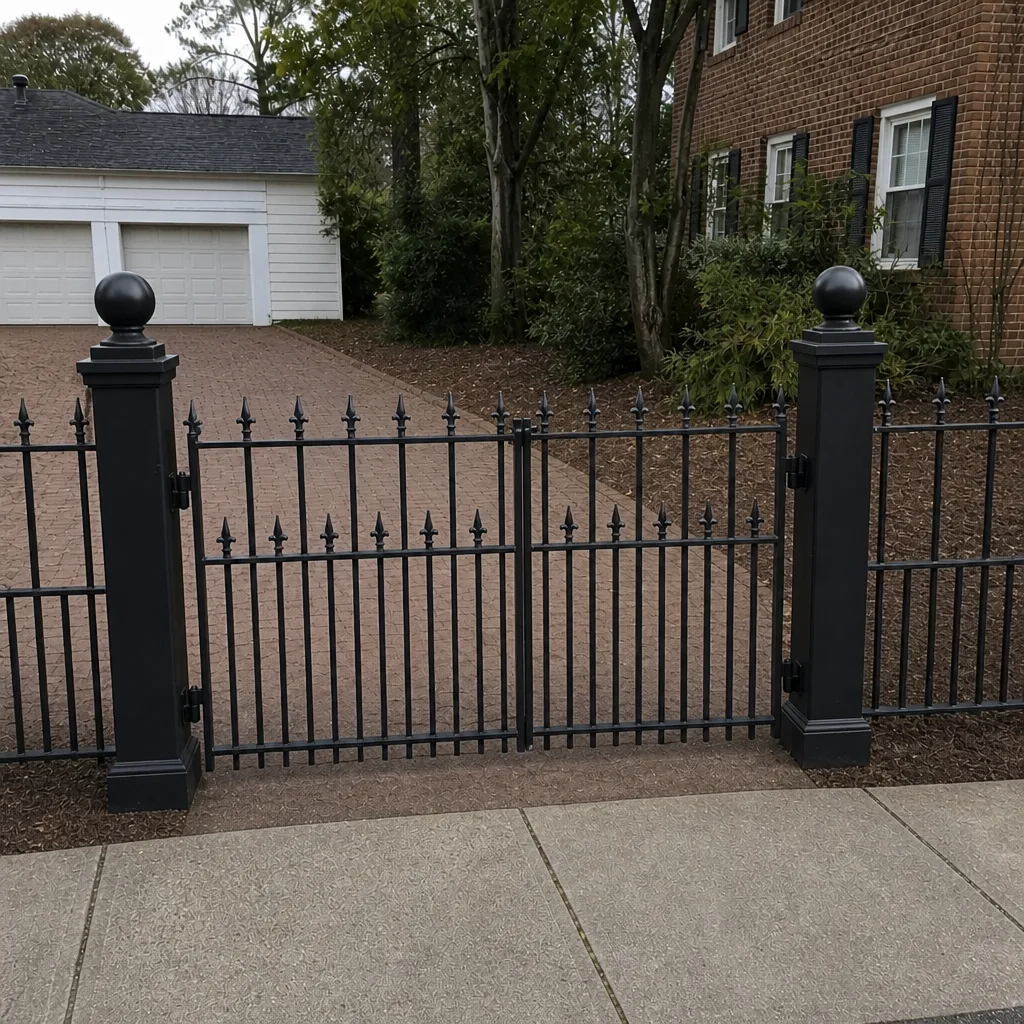
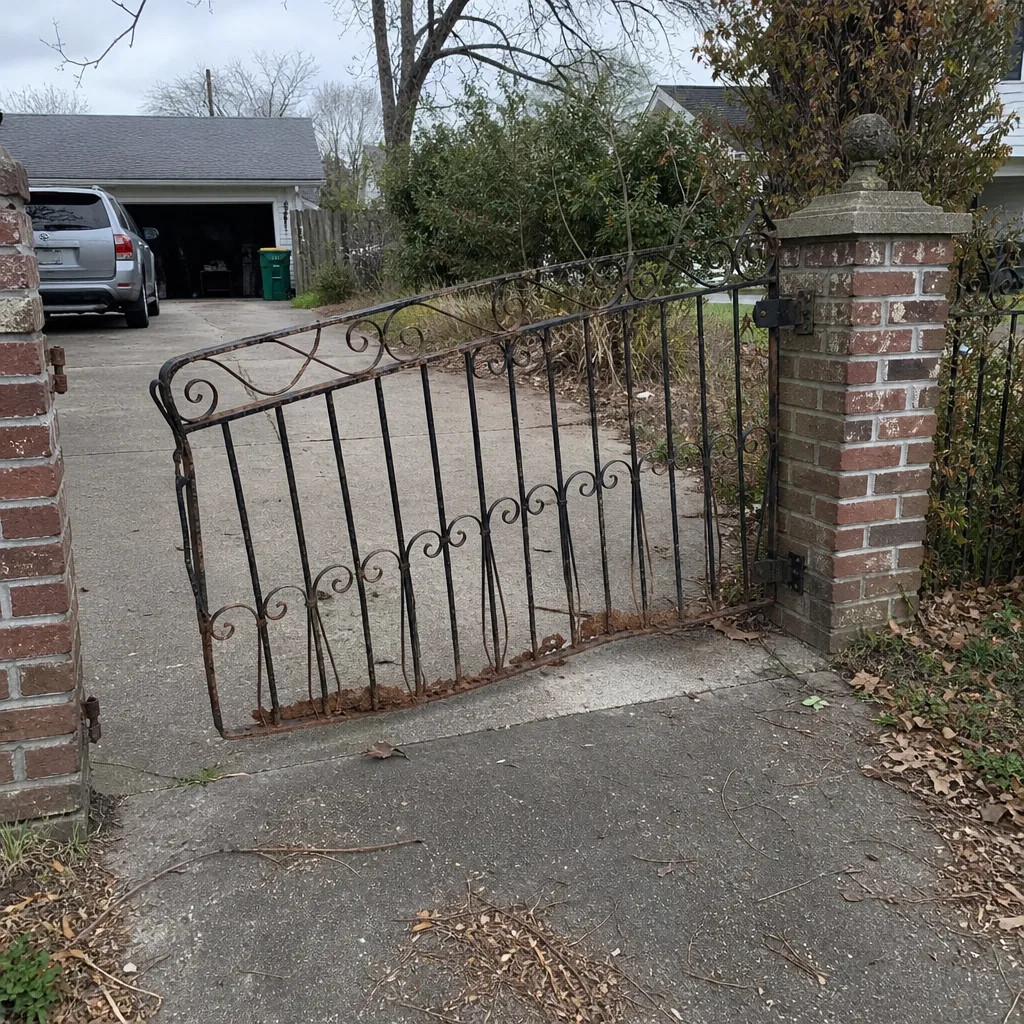
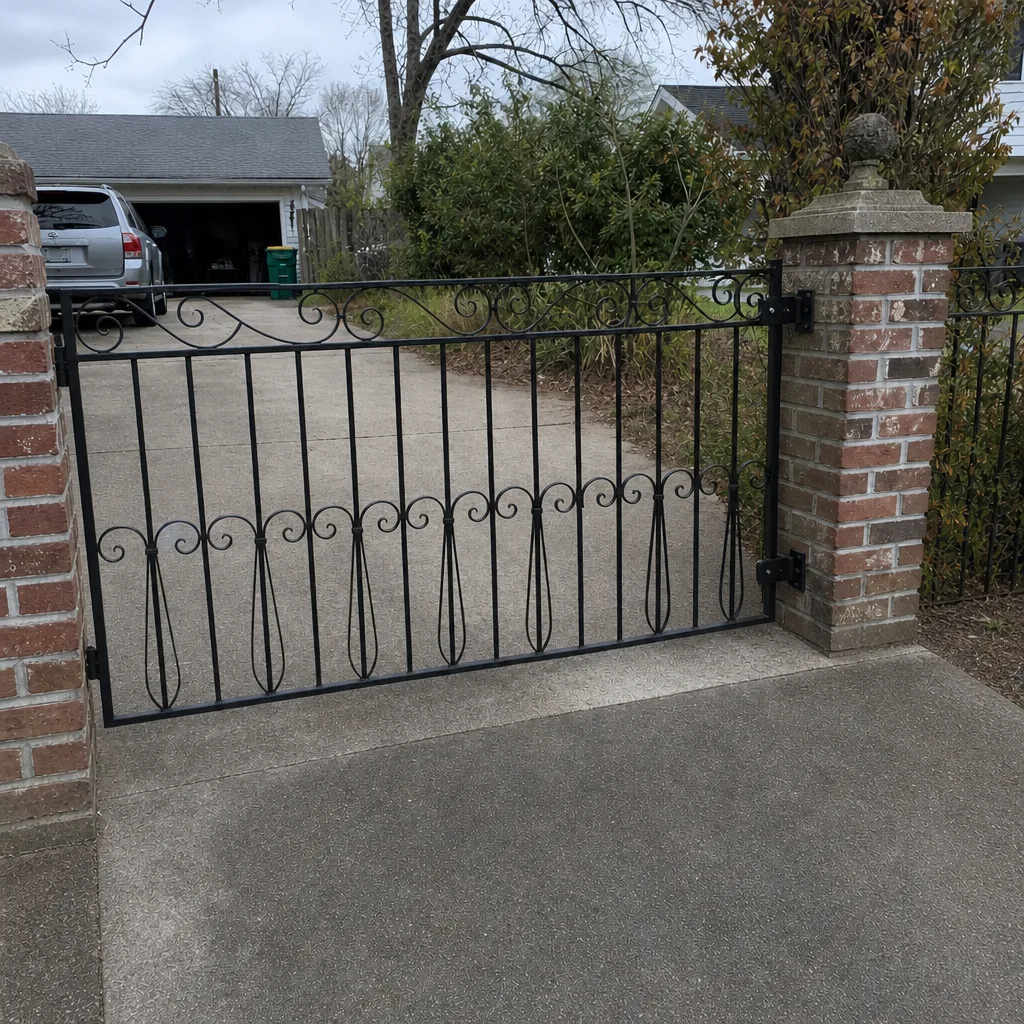
See the difference
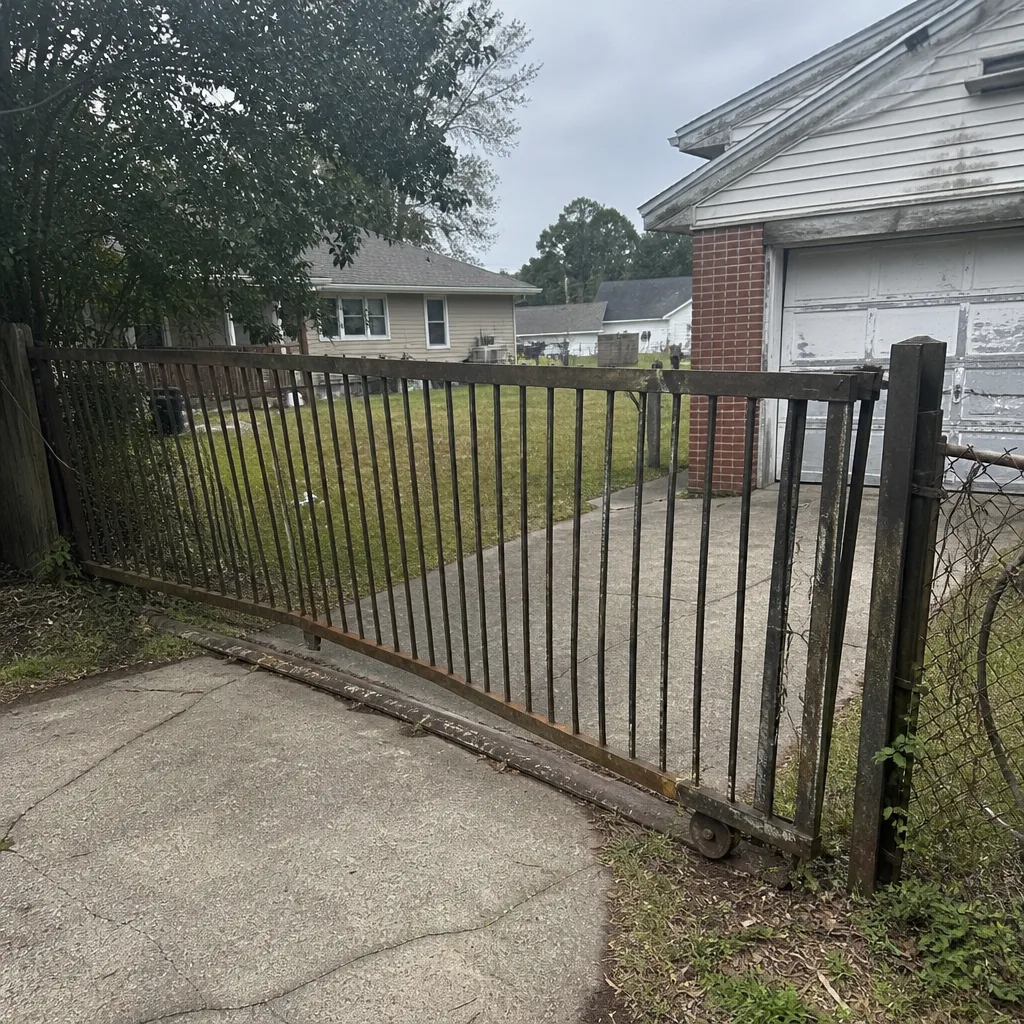 Before
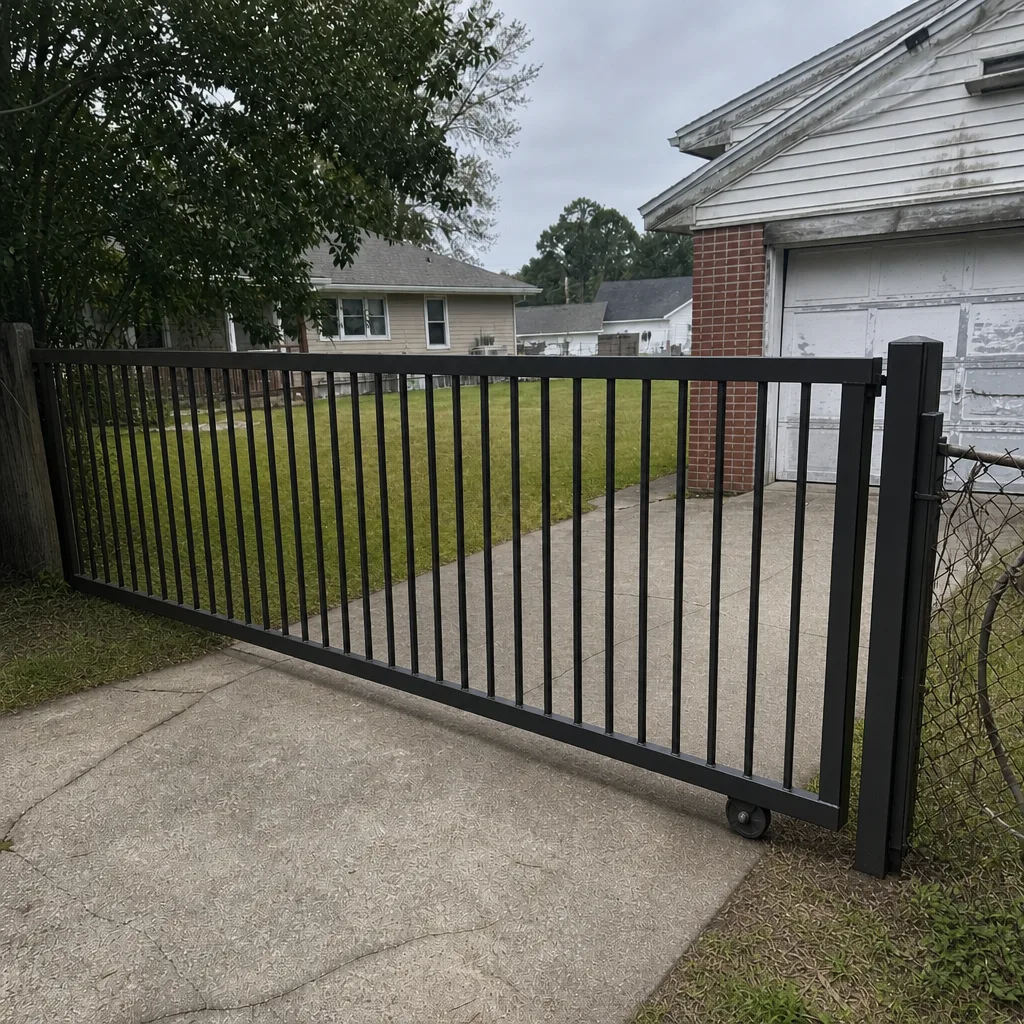 After
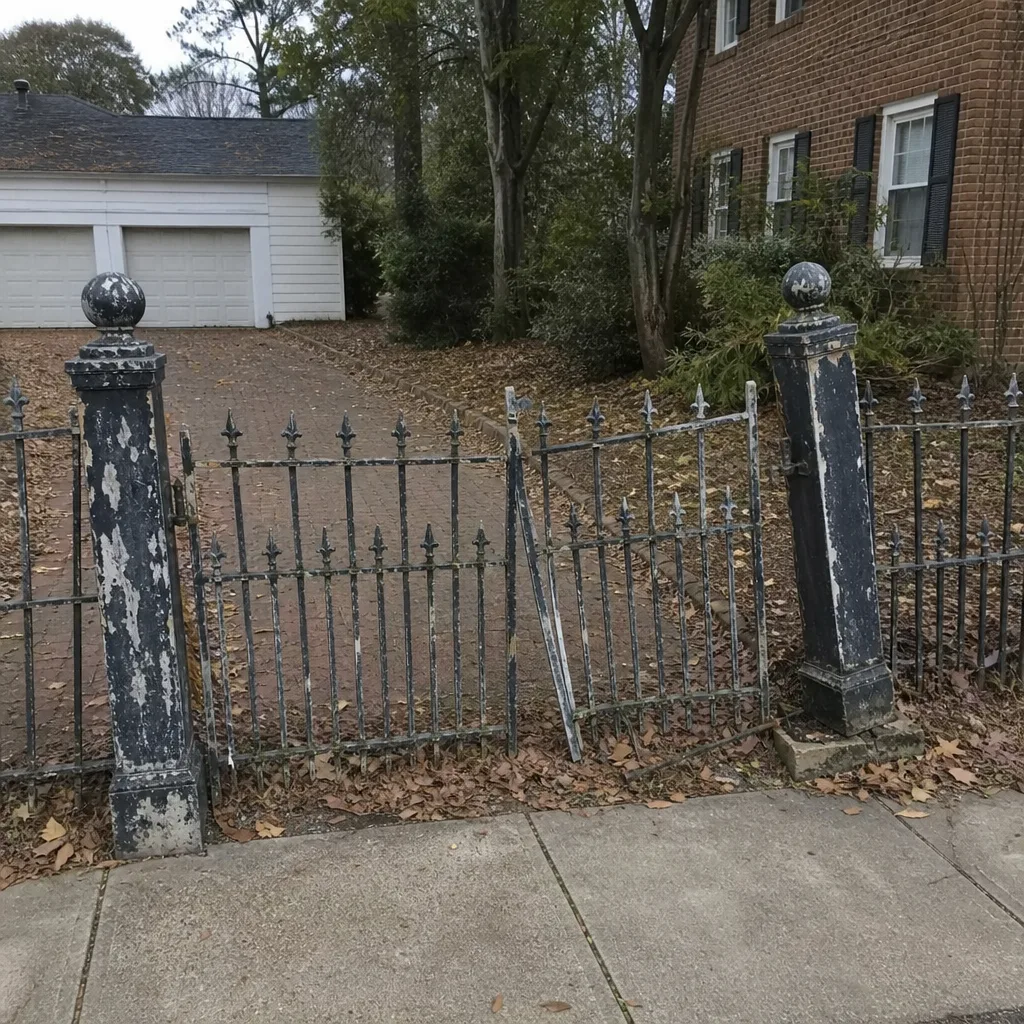 Before
 After
 Before
 After
When to Call a Professional
Call a professional when the gate is stuck open at a property line, stuck closed on the only vehicle access, off its track, or showing any sign of electrical fault. Call when the safety sensor has failed or the gate no longer reverses on an obstruction. Call when the same part keeps failing and you want to know whether it’s a repair or an upgrade. And call when you simply can’t identify the brand or the fault. Gate Repair Norfolk offers free estimates in Norfolk: call (844) 410-6351. We answer 24/7. Fast dispatch from 7am to 7pm, Sunday through Friday. Our technicians have up to 9 years of experience, and our Gate Repair Norfolk team works on the brand you already have. For a wider view of what we do, start here.
Frequently Asked Questions
Gate repair in Norfolk is priced per job by a written estimate, so the cost depends on what’s actually failing. A sensor or hinge adjustment is a small job; a control board or motor replacement is larger. The estimate is free, and the price is agreed before any work starts. Call (844) 410-6351 for an exact quote.
Often yes. We offer same-day service where the schedule allows, and we prioritize gates stuck open, gates stuck closed on the only access, and any electrical or safety fault. Call (844) 410-6351 and tell us what the gate is doing and what it protects. We answer 24/7. Fast dispatch from 7am to 7pm, Sunday through Friday.
Yes. We work on the brand you already have, across residential and commercial systems. Our technicians have up to 9 years of experience with brands like Linear, Viking, Ghost Controls, and DoorKing, and we diagnose the actual control boards and motors rather than applying a one-size-fits-all fix.
Yes, and it should be treated as urgent. A slide gate that’s come off its rails or a panel that’s hanging can fall or crush. Keep people clear and call (844) 410-6351 so we can get it looked at quickly.
Yes. Electric gate repair is one of our core services, and it covers the operator, the power supply, the control board, the sensors, and the safety edges. A gate that no longer reverses on an obstruction is a safety issue and a priority repair. Call (844) 410-6351 for a free estimate.
Repair when the failure is isolated to one part and the gate moves freely once it’s replaced. Consider a component upgrade when the same part keeps failing, the operator is undersized, or the gate has outgrown the system. We handle both repair and full installation, so one call covers either path.
The Bottom Line
Most gate failures in Norfolk are the end of a slow decline, not a sudden break. Humidity and moisture go after the control board and the hinges, soil movement throws off the gate’s geometry, and voltage fluctuation stresses the operator, and which of those is actually happening depends on your gate type and your brand. Separate the urgent repairs from the ones that can be scheduled, identify the brand before you order parts, and fix the cause rather than the symptom. When you need a diagnosis, call (844) 410-6351 for a free estimate. We answer 24/7. Fast dispatch from 7am to 7pm, Sunday through Friday.
Written by the team at Gate Repair Norfolk.